





Looking for a vehicle already impounded or removed by police? Maps Towing does not locate or release police/OPG impounded vehicles. For a City of Los Angeles tow, use the official OPG vehicle lookup or the responsible agency’s official instructions. Call Maps Towing only to arrange customer-requested towing, not to find a missing vehicle.
A towed car in Los Angeles does not always go to the same kind of place. A tow that you request for a breakdown usually goes to the destination you choose. A vehicle removed under police, parking-enforcement, or property authority may go to an authorized impound or storage facility instead.
Maps Towing handles customer-requested towing and does not perform police impounds. Understanding that distinction helps you call the right organization and avoid losing time when a vehicle is missing.
Private-Request Towing Goes to Your Chosen Destination
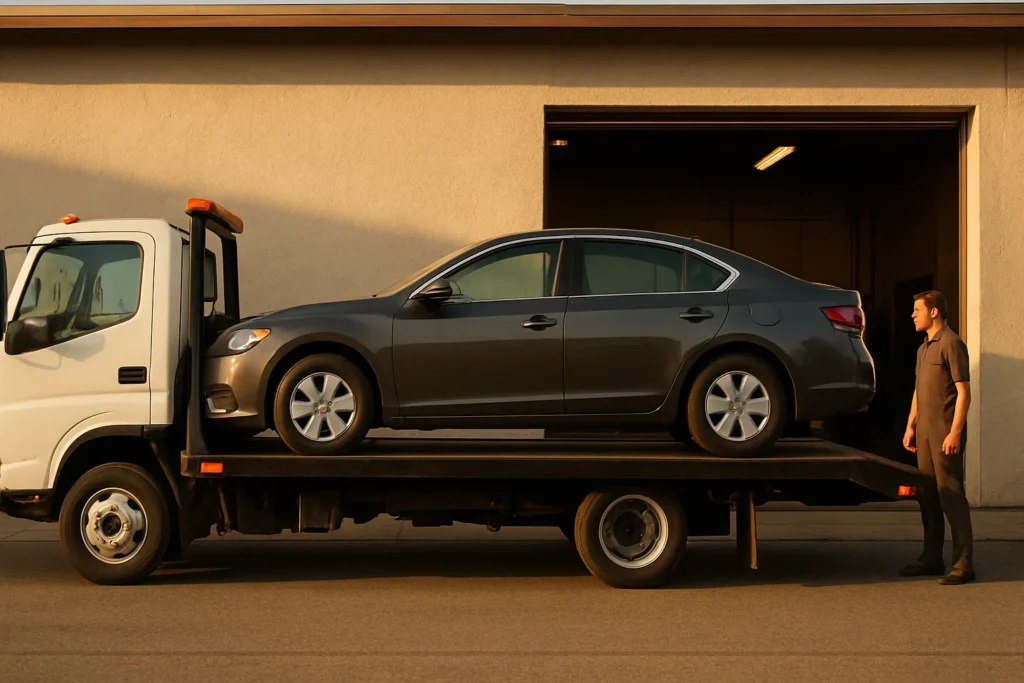
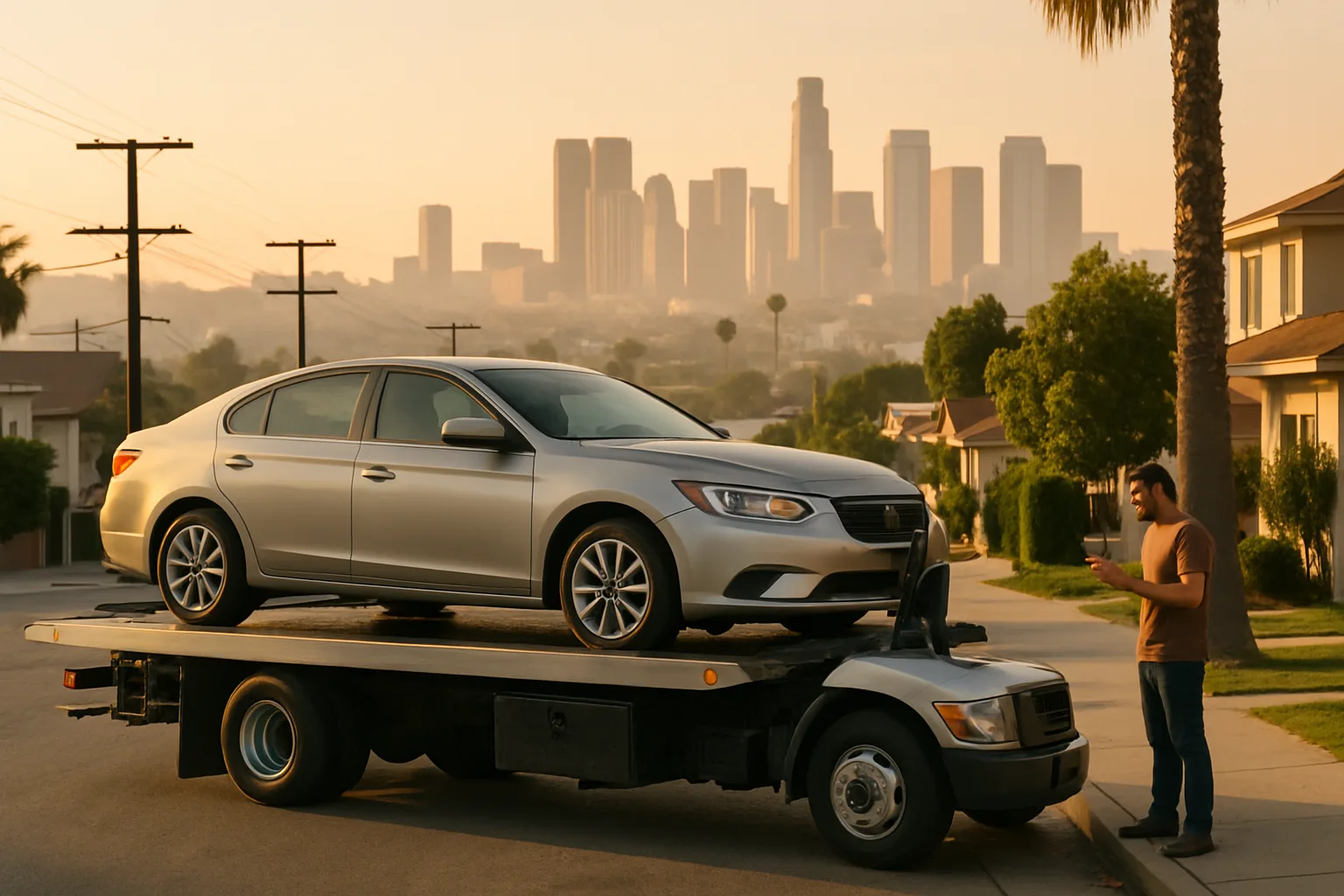
When you arrange a tow for your own disabled vehicle, you normally tell dispatch where it should go. Common destinations include a repair shop, dealership, tire shop, body shop, home, or another lawful location that can accept the vehicle.
Confirm the destination before loading. If it is a business, check that it is open or has an approved after-hours drop procedure. Give the operator the correct entrance, contact name, and key instructions. A customer-requested tow truck moves the vehicle according to that agreed destination rather than automatically taking it to an impound lot.
Why destination access matters
A shop may have a locked gate, limited curb space, underground entrance, or designated night drop. A residence may have a steep driveway or parking restriction. The receiving location must be safe and lawful for unloading. When in doubt, speak with the destination before the truck arrives.
Police or Parking-Enforcement Impounds Are Different
A vehicle ordered removed by a law-enforcement or parking authority generally goes through that authority’s official towing and storage process. The location, release requirements, and charges are controlled by the responsible agency and facility, not by a towing company you independently call afterward.
Again, Maps Towing does not do police impounds and cannot release, redirect, or provide authoritative status for a vehicle in that system. This article offers general information only, not legal advice.
Private-property removals can follow another process
A vehicle removed from a privately controlled parking area may be handled under a property owner’s authorized process. The sign at the property, notice left at the location, property manager, and official records may identify the towing or storage operator. Do not assume that every missing car was taken by LAPD.
How to Locate an Impounded Car
Start by confirming the exact place and time where the car was last seen. Look for posted parking restrictions, temporary construction notices, event restrictions, curb signs, or private-property towing information. Ask the property manager when the car disappeared from an apartment, retail, or office lot.
For a possible City of Los Angeles or police-related tow, use official city or law-enforcement vehicle-location channels. Contact the responsible agency through its published non-emergency information and follow the official instructions it provides. If you do not know which agency handled the location, begin with the jurisdiction where the vehicle was parked.
Have the license plate, VIN if available, year, make, model, color, registered-owner information, and last known location ready. If official sources have no tow record and you believe the vehicle was stolen, report that concern through the appropriate law-enforcement channel.
What to Confirm Before Retrieval
Use the facility or agency’s official contact information, not an unverified number from a message or advertisement. Ask what identification, ownership documents, authorization, payment method, and appointment or access rules apply. Requirements can vary, so rely on the current instructions from the agency or facility holding the car.
Inspect the vehicle when it is released and document visible condition before driving away. If it is damaged or mechanically unsafe, arrange transport rather than driving it. Our Los Angeles accident guide covers practical scene and vehicle steps without replacing professional advice.
How Choosing Your Own Tow Can Avoid Impound-Related Fees
When your car breaks down and no authority has ordered an impound, calling for your own tow lets you choose a repair shop, home, or other approved destination. Because the car goes directly to that destination instead of entering an impound system, you can avoid impound-related towing, release, and storage fees.
This does not mean a private call can cancel an official removal. Once an agency has ordered or completed an impound, contact that agency or its authorized facility. If you still have control of a disabled vehicle, arrange help early, communicate with responders, and follow any instructions at the scene.
Plan a Voluntary Tow Clearly
Give dispatch the pickup location, vehicle condition, access details, and complete destination address. Confirm who will receive the car and where keys should go. Review how to choose a towing company and how towing cost is determined before authorizing a customer-requested move.
Maps Towing covers communities across the Greater Los Angeles service area, including routes around Van Nuys, Burbank, Hollywood, Glendale, and nearby neighborhoods. Availability and destination access still depend on the specific call.
Request Customer-Authorized Towing
Maps Towing provides customer-requested towing from offices in Van Nuys and Burbank; we do not perform police impounds. For help moving your own disabled vehicle to a destination you select, Call (818) 797-1560.
Share: