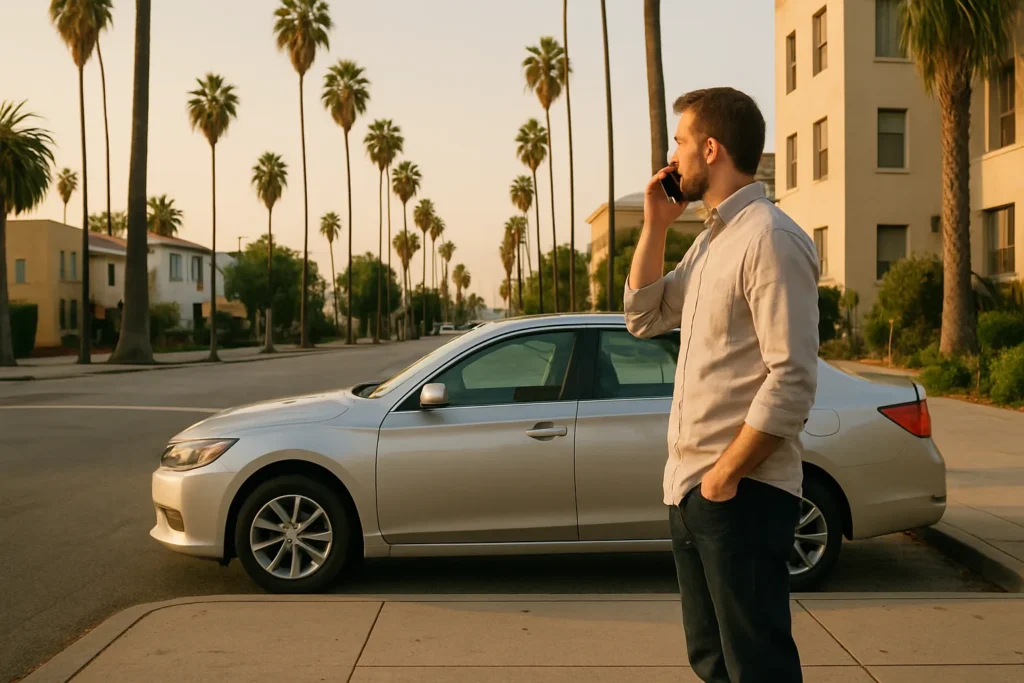






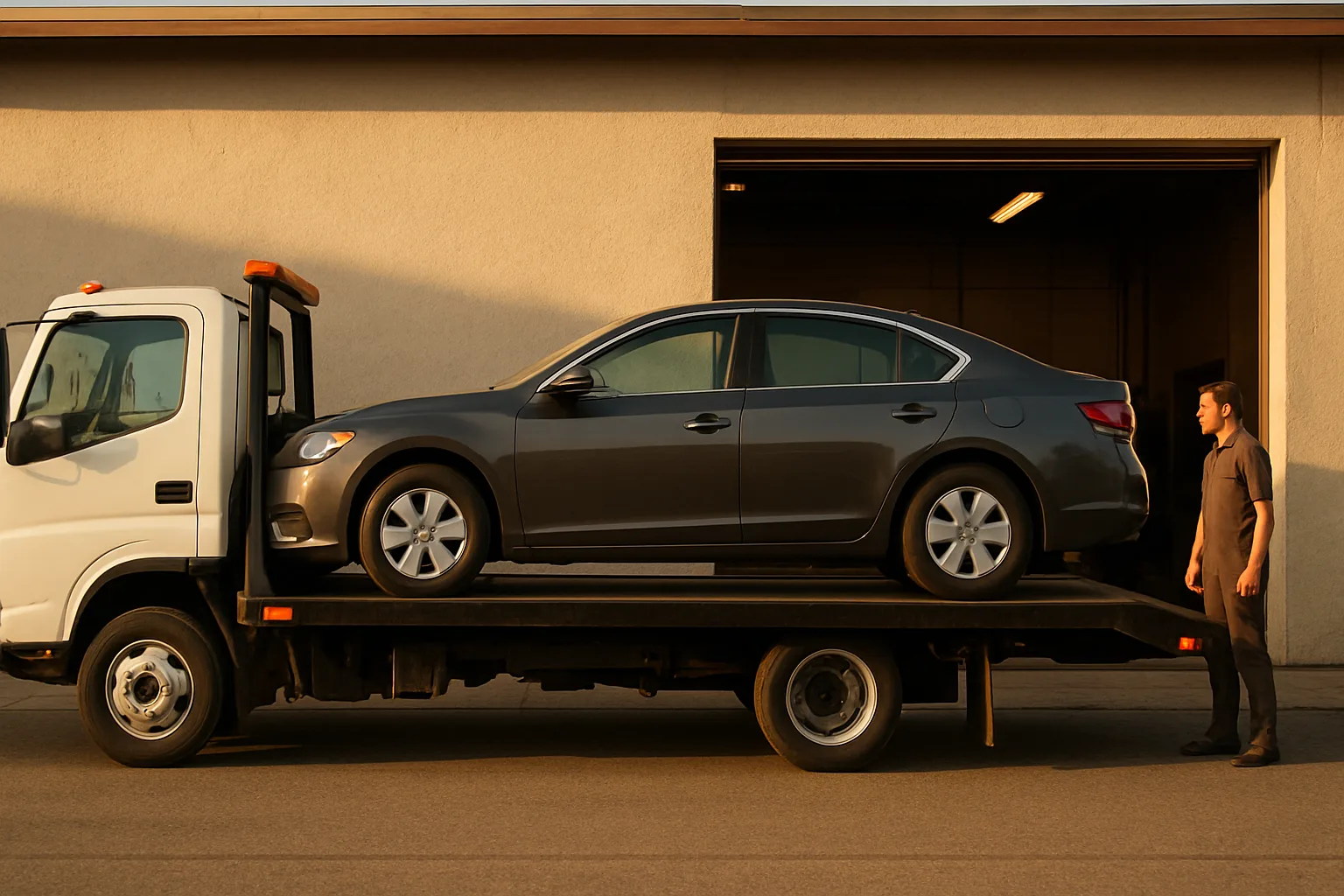
If your car needs a tow to a repair shop in Los Angeles, contact the shop before you arrange the pickup. Confirm that it accepts your vehicle, can receive it in its current condition, and has an agreed place for unloading. Then give towing dispatch the pickup details and the receiving location’s instructions.
It sounds straightforward, but the handoff is where avoidable problems happen. A shop’s street address may not be its vehicle entrance. A confirmed appointment may not mean the lot has room for a non-running car. Planning both ends of the trip makes your vehicle towing request much clearer.
Get the repair shop’s agreement first
Ask whether the shop can accept your make and model and the kind of problem you are describing. Tell it if the car will not start, cannot shift, has a damaged wheel, or was involved in a collision. Describe symptoms rather than presenting your guess as a confirmed diagnosis.
Get the name of the person who will receive the vehicle and a useful contact method. Ask whether an appointment, reference number, or other arrival information should accompany it. Keep those details available for dispatch, but do not publish personal information in an online post or public review.
Identify the correct vehicle entrance
Street address versus unloading access
The entrance customers use on foot may be different from the entrance a tow truck should use. Ask the shop which street, driveway, or gate provides vehicle access. Explain if your car cannot roll or steer normally so the shop can consider where the operator can unload it.
For a destination in Van Nuys, verify the exact address rather than saying “the shop on Sepulveda.” If the destination is in Burbank, use the same approach: business name, full address, vehicle entrance, and receiving contact. Neighborhood familiarity does not replace accurate handoff instructions.
After-hours arrangements
If the business will be closed, ask it directly whether after-hours delivery is accepted and how the vehicle and keys should be handled. Do not assume that an unlocked lot is an approved drop-off area. Give dispatch the shop’s actual instructions before agreeing on the destination.
Tell towing dispatch what happened to the car
Explain the symptoms, where the car is parked, and whether there is a working key. Mention warning messages, collision damage, a flat tire, or a vehicle that stalls after starting. Tell dispatch about access restrictions at the pickup as well as the destination. The operator needs to plan for the whole job, not just the drive between addresses.
If the car was damaged in a crash, ask about accident towing and describe visible wheel or body damage. Do not assume it can be loaded like an otherwise intact no-start vehicle. Emergency responders’ instructions and scene safety take priority over arranging a preferred destination.
Decide whether roadside help is still appropriate
If you are unsure whether the vehicle needs transport, explain the problem and ask whether roadside assistance is appropriate. A towing call should not turn into a promise that a battery, tire, or engine problem can be resolved at the pickup location.
If a repair professional has already advised you not to drive the car, pass that information along. Do not drive it a short distance to “see whether it improves” just to simplify collection. Dispatch can discuss a towing request; diagnosing the mechanical fault and authorizing repairs are separate conversations with the repair facility.
Prepare what you need for the handoff
Before pickup, collect personal essentials from the car if it is safe to do so. Think about medication, your phone, house keys, work items, and anything needed for the rest of the day. Ask how the vehicle key will be transferred, and avoid handing over an entire key ring when only the vehicle key is needed.
From a safe place, note the car’s condition and take ordinary photos if helpful. Record any existing damage or items the receiving shop needs to know about. Do not crawl underneath the vehicle or handle fluids to investigate the fault. Share observations with the people handling the transport and repair.
Plan your own transport separately
A tow transports the vehicle; it does not automatically establish how every occupant will reach the destination. Ask dispatch about any passenger needs before pickup, and have an alternative plan if necessary. If someone else will meet the car at the shop, make sure they know the receiving contact and handoff arrangements.
Keep your phone charged and reachable while the pickup is being coordinated. If the shop changes its instructions, contact dispatch before the vehicle leaves. A new address or a closed entrance should be reviewed, not passed along as an assumption after the trip has started.
Confirm the plan before the truck is dispatched
Read back the pickup address, destination address, vehicle condition, access details, and agreed receiving arrangements. Ask for the quote and current ETA using those details. The towing arrival estimate and the shop’s repair schedule are different things; one does not promise the other.
After delivery, confirm receipt with the repair shop and discuss its next steps directly. Do not assume that being unloaded means a technician has inspected the vehicle or started work. Clear separation between transport and repair keeps expectations practical.
Call Maps Towing to arrange the transport
Maps Towing has offices in Van Nuys and Burbank and provides customer-requested towing. Once your receiving location is confirmed, have both addresses and the vehicle details ready. Call (818) 797 – 1560 to discuss pickup, current availability, and your ETA.
Share: