





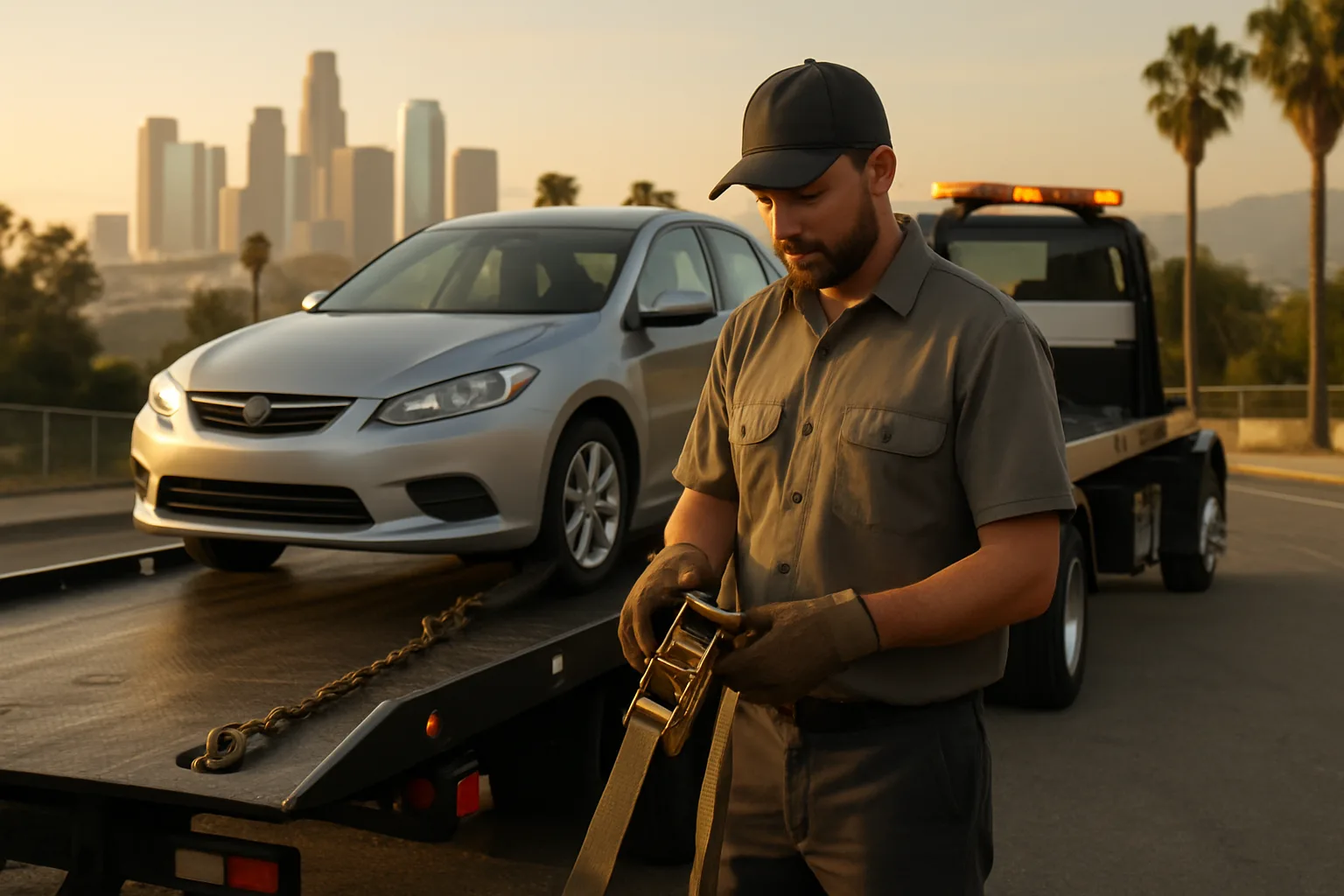
Choosing a towing company is easier when you know what information a professional dispatcher should request and what you should confirm before a truck is sent. In Los Angeles, the correct equipment and approach can depend on freeway direction, garage clearance, drivetrain, collision damage, and destination access. A useful conversation is specific, not rushed.
Use this checklist to compare providers based on clear communication, safe operating practices, and their ability to handle your actual vehicle and location.
Start With Verifiable Business Information
Ask for the company name, a working callback number, and the name of the dispatcher handling the request. Confirm that the company serves your pickup area and destination. A provider should be able to explain what kind of truck is being sent and why it fits the vehicle.
Online reviews can reveal patterns, but a rating alone does not answer the important questions. Look for consistent descriptions of communication, vehicle care, arrival updates, and clear authorization. Be cautious when the business identity changes during the call or the person refuses to provide basic contact information.
Maps Towing lists coverage throughout the Greater Los Angeles service area, allowing drivers to confirm whether a neighborhood is within range before discussing the job.
Describe the Vehicle Before Accepting a Truck
Drivetrain and condition matter
Provide the year, make, model, drivetrain, and current condition. Say whether the vehicle is front-wheel drive, rear-wheel drive, all-wheel drive, four-wheel drive, or electric. Mention low ground clearance, modifications, locked wheels, collision damage, a failed suspension component, or an EV battery warning.
A dispatcher should use those facts to choose a loading method. The guide to flatbed versus wheel-lift towing explains why all-wheel-drive cars, many EVs, and damaged vehicles may need all four wheels off the road.
Ask what equipment will arrive
Depending on the job, the operator may need a flatbed, wheel-lift, dollies, skates, ramps, or winching equipment. A flatbed towing service should account for approach angle and securement points, not simply put every vehicle on the deck the same way.
Explain the Pickup Access Clearly
Give the exact street, direction, cross street, freeway exit, garage level, or gate instructions. Say whether the vehicle is in a lane, shoulder, driveway, underground structure, or tight curb space. If a collision blocks traffic or anyone is injured, call 911 before a towing company.
A professional dispatcher should ask about working room and scene safety. The operator cannot perform a tire change safely on every shoulder or lower a flatbed in every garage. For urgent removal from an exposed location, discuss emergency towing and whether the vehicle should first be moved to a protected area.
Confirm the Scope Before Dispatch
Pickup, transport, and drop-off
State the destination and confirm that it can receive the vehicle. Ask whether the requested service covers recovery from the current position, loading, transport, and unloading at that destination. A car deep in a garage, down a slope, or on blocked wheels may require a recovery step before normal transport begins.
The article on how a Los Angeles towing quote is determined explains why distance, access, vehicle condition, and equipment affect the scope. Get the agreed details in a message or written authorization when available, and ask how changes will be communicated if the scene differs from the description.
Destination and key handling
Confirm repair-shop hours, after-hours drop instructions, gate access, and where the keys will go. If the vehicle is being taken home, make sure the unloading area is legal and accessible. Remove medication, identification, electronics, and other essential items before the truck leaves.
Watch for Communication Red Flags
Be cautious if the provider will not identify the company, cannot explain the truck type, avoids confirming the destination, or pressures you to change the drop-off without a clear reason. The operator should inspect the vehicle and explain any material change in the recovery plan before proceeding.
After a crash, do not let urgency replace basic documentation. Follow the steps in the Los Angeles accident guide, photograph the vehicle from a safe place, and confirm where it will be taken.
Confirm the Truck and Operator at Arrival
Ask dispatch for the operator name or truck description, then confirm that information before handing over keys. The operator should identify the company and repeat the pickup vehicle and destination. If an unrequested truck arrives first, do not assume it was sent by the provider you called. Use the original callback number to verify any change.
Choose Clear Answers Over Big Promises
No towing company controls Los Angeles traffic, road closures, weather, or every access condition. A responsible dispatcher explains what is known, what may change, and which details affect the response. Clear, vehicle-specific answers are more useful than broad guarantees.
Need a Los Angeles Towing Company?
Maps Towing serves Greater Los Angeles from our Van Nuys and Burbank offices. Call for your current ETA; arrival depends on location, traffic, truck availability, service type, weather, and access. For 24/7 help, Call (818) 797 – 1560.
Share: