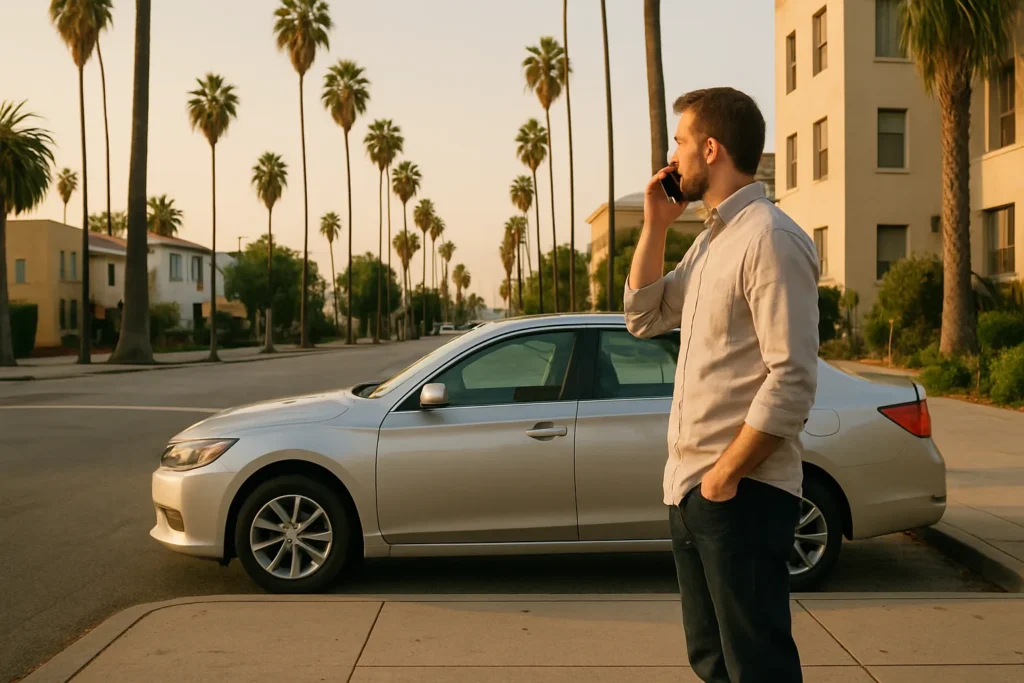







You turn the key or press the start button and nothing happens. Maybe the dash goes dark, the engine clicks, or it cranks without starting. Those clues matter. “Car won’t start” describes several different problems, and the right fix depends on what the vehicle does when you try.
Start with a safe location, put the vehicle in Park, set the parking brake, and avoid repeated attempts that drain the battery. Then pay attention to the lights and sounds.
1. The Battery Is Weak or Dead
A weak battery is one of the most common reasons a car will not start. Interior lights may be dim, the dashboard may flicker, or you may hear rapid clicking. Heat, age, short trips, and an electrical light left on can all reduce the battery’s available power.
A jump start may get the engine running, but it does not prove the battery is healthy. If the battery is old or the car needs repeated jumps, it should be tested. Stop if the battery is cracked, leaking, swollen, frozen, or producing a strong odor. Those conditions need professional attention, not jumper cables.
Loose or corroded battery connections
Sometimes the battery has power but cannot deliver it through a poor connection. Heavy corrosion around the terminals, a loose cable, or a damaged ground can cause intermittent starting. Do not touch corrosion with bare hands, and do not place tools across battery terminals. A roadside technician can inspect and secure the connection safely.
2. The Starter Motor Is Failing
A single solid click with normal dashboard lights can point toward the starter or its control circuit. The starter is the electric motor that turns the engine during startup. Worn internal parts, a failed solenoid, wiring trouble, or a bad relay can stop it from working.
Repeatedly pressing the start button rarely solves a failing starter and may overheat components. If a jump does not change the symptom, the car may need diagnostic work and a tow to a repair shop.
3. The Alternator Is Not Recharging the Battery
The alternator supplies electrical power while the engine runs and recharges the battery. If it fails, the car may start after a jump and then die again. A battery or charging warning light, dimming headlights, electrical faults, or a whining sound before the shutdown can be useful clues.
Do not plan to drive across Los Angeles after a jump if the charging system is failing. The engine can stop again without warning once the remaining battery power is gone.
4. The Engine Is Not Getting Fuel
An empty tank is easy to overlook, especially if the fuel gauge is inaccurate or the car is parked on a steep slope. A failed fuel pump, fuse, relay, or sensor can also allow the engine to crank without starting.
If you simply ran out of fuel in a safe location, roadside fuel delivery may be enough. If you smell raw gasoline, see a leak, or suspect the wrong fuel was added, do not keep cranking the engine. Move away from ignition sources and arrange professional service.
5. The Key or Security System Is Not Recognized
Modern vehicles may block startup when the immobilizer does not recognize the key. A weak key-fob battery, damaged key, steering lock, or electronic fault may trigger a security symbol on the dashboard. Try the spare key if it is available and check the owner’s manual for the correct emergency start position.
Also confirm the transmission is fully in Park. If the car allows it and you are in a secure location, try Neutral. A worn park/neutral safety switch can prevent the starter circuit from engaging.
6. A Fuse, Relay, or Sensor Has Failed
Starting depends on several electrical circuits and computer signals. A blown fuse, failed relay, crankshaft sensor, brake-pedal switch, or clutch switch can interrupt the process. Randomly replacing parts is usually slower and more expensive than proper diagnosis.
Note any warning messages and tell the technician exactly what happens: no sound, rapid clicks, one click, slow cranking, or normal cranking without ignition. That description narrows the possibilities.
7. The Engine Has a Mechanical Problem
Overheating, loss of oil pressure, internal damage, or a seized accessory can prevent an engine from turning. A loud mechanical noise before shutdown, a burning smell, heavy smoke, fluid loss, or an engine that stops abruptly calls for caution.
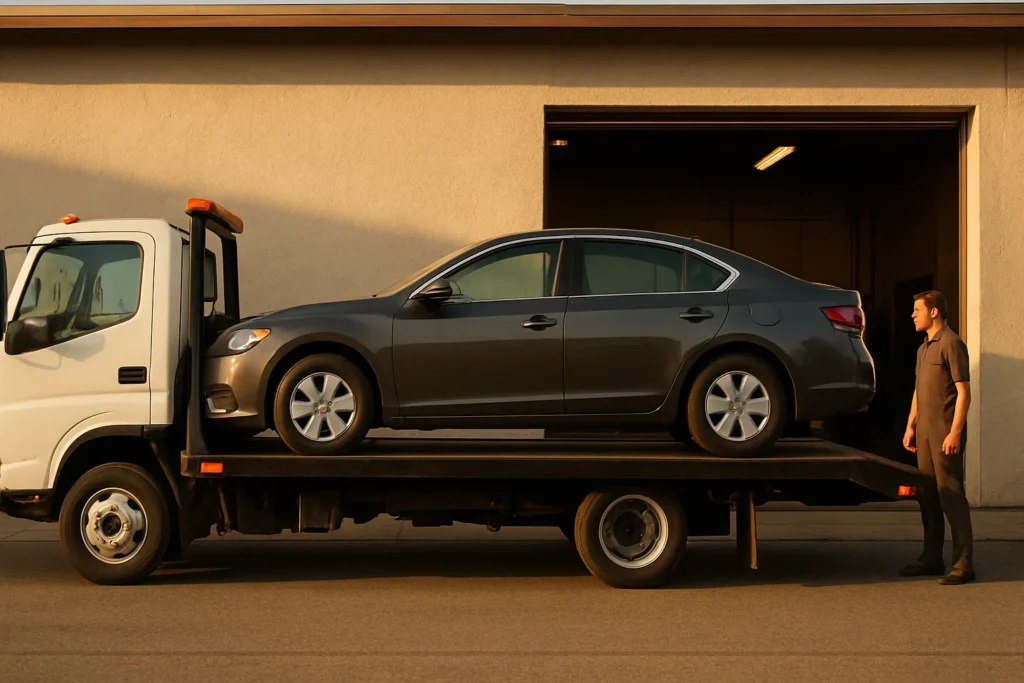
Do not continue attempting to start a vehicle after severe overheating or an oil-pressure warning. More cranking can increase damage. Have the car transported for inspection.
When Roadside Assistance Makes Sense
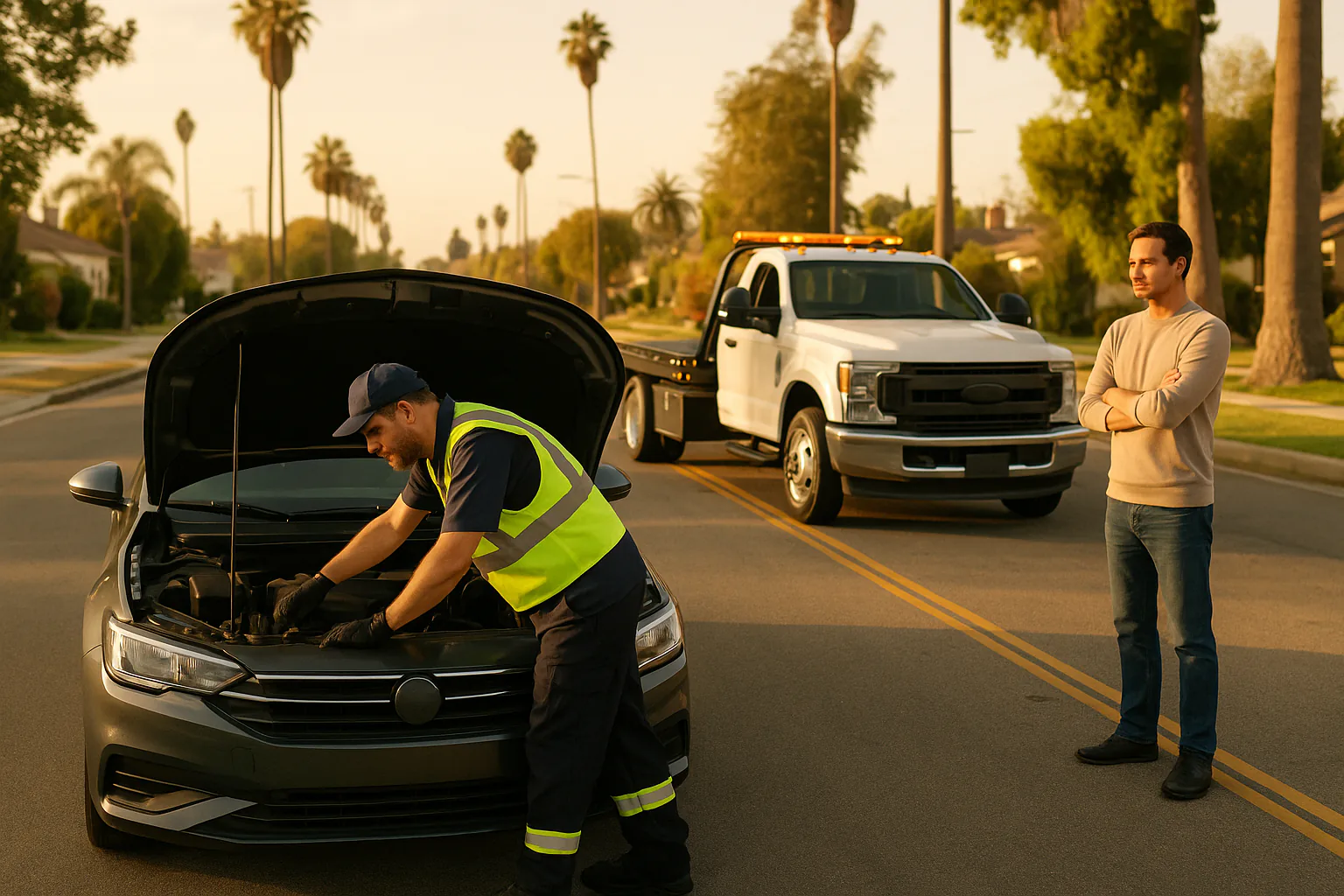
A professional can check basic battery and connection issues, provide a jump start, deliver fuel, and determine whether the car can continue safely. If the problem requires shop equipment, the same call can arrange a tow. Tell dispatch your location, vehicle model, dashboard message, and the sound it makes.
Get Help With a No-Start in Los Angeles
Maps Towing provides 24/7 roadside assistance and towing across Greater Los Angeles from Van Nuys and Burbank. If your car will not start, call (818) 797-1560. Describe the lights and sounds you notice so we can send the right help.
Share: