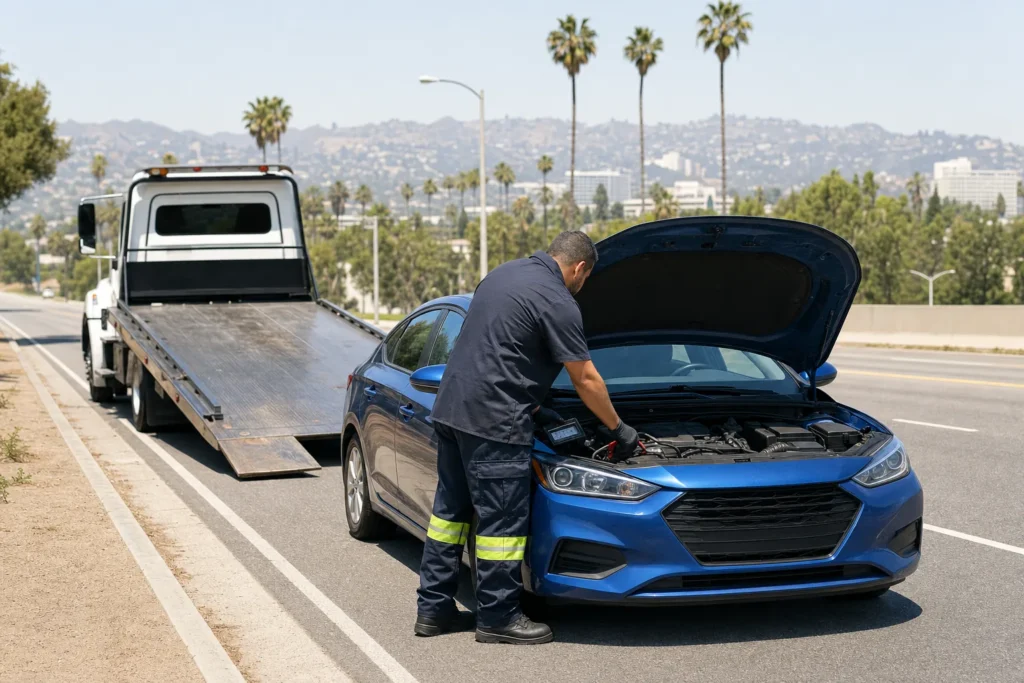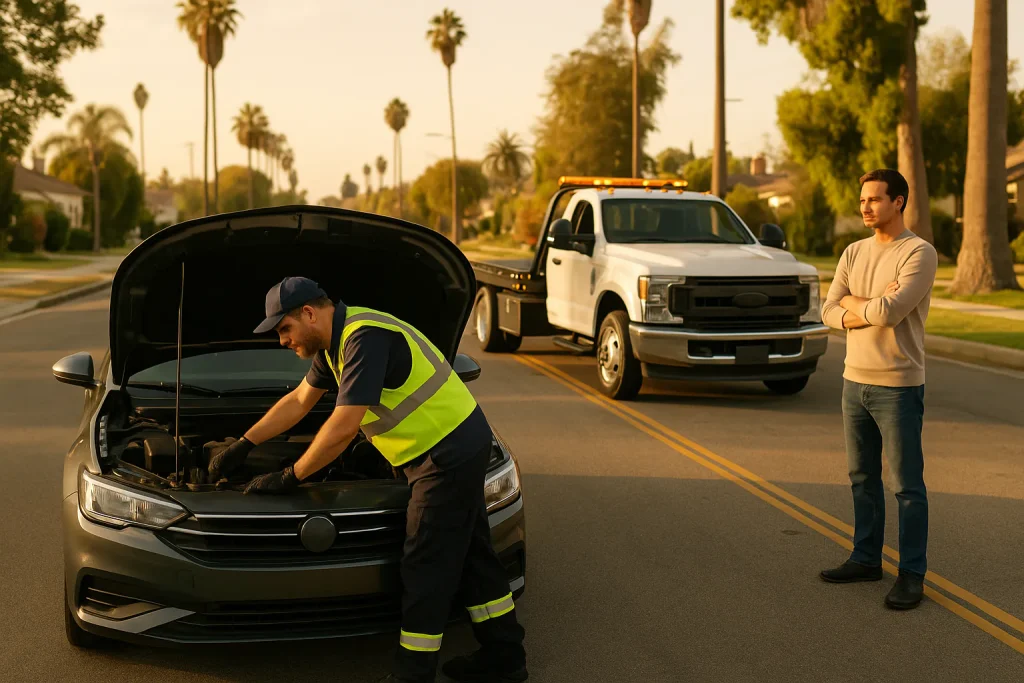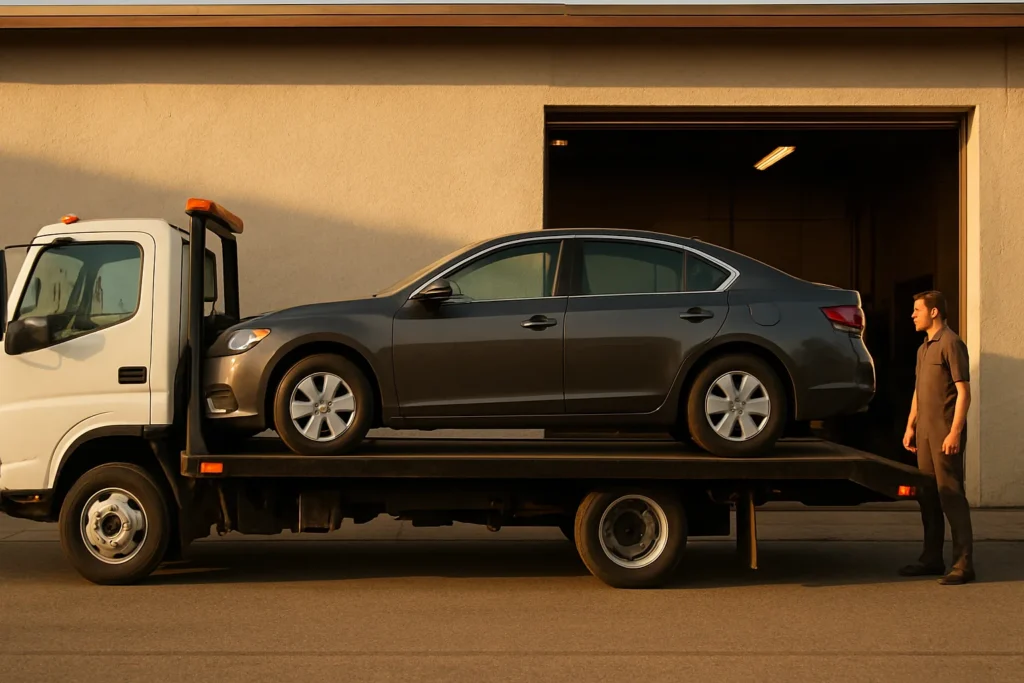




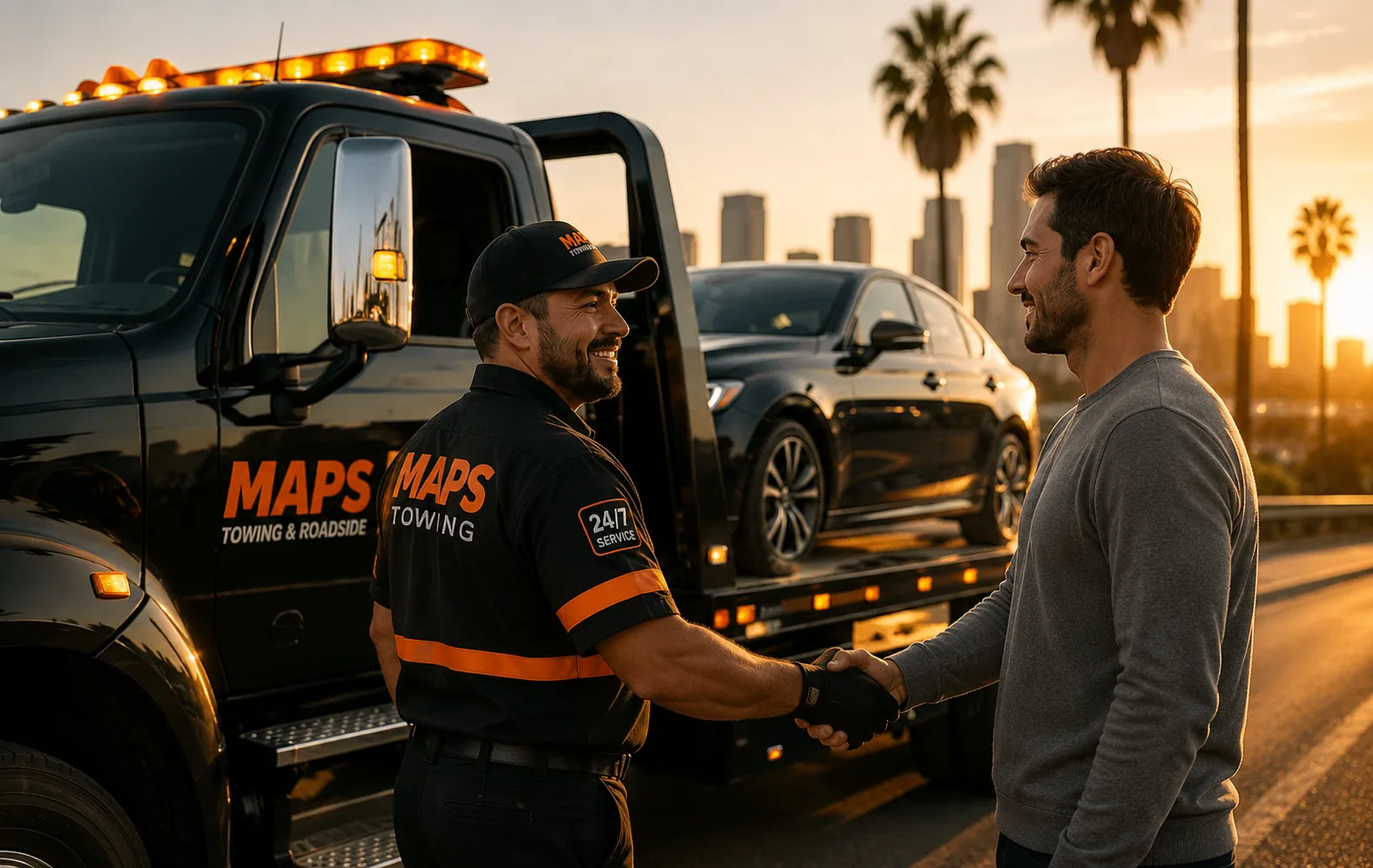


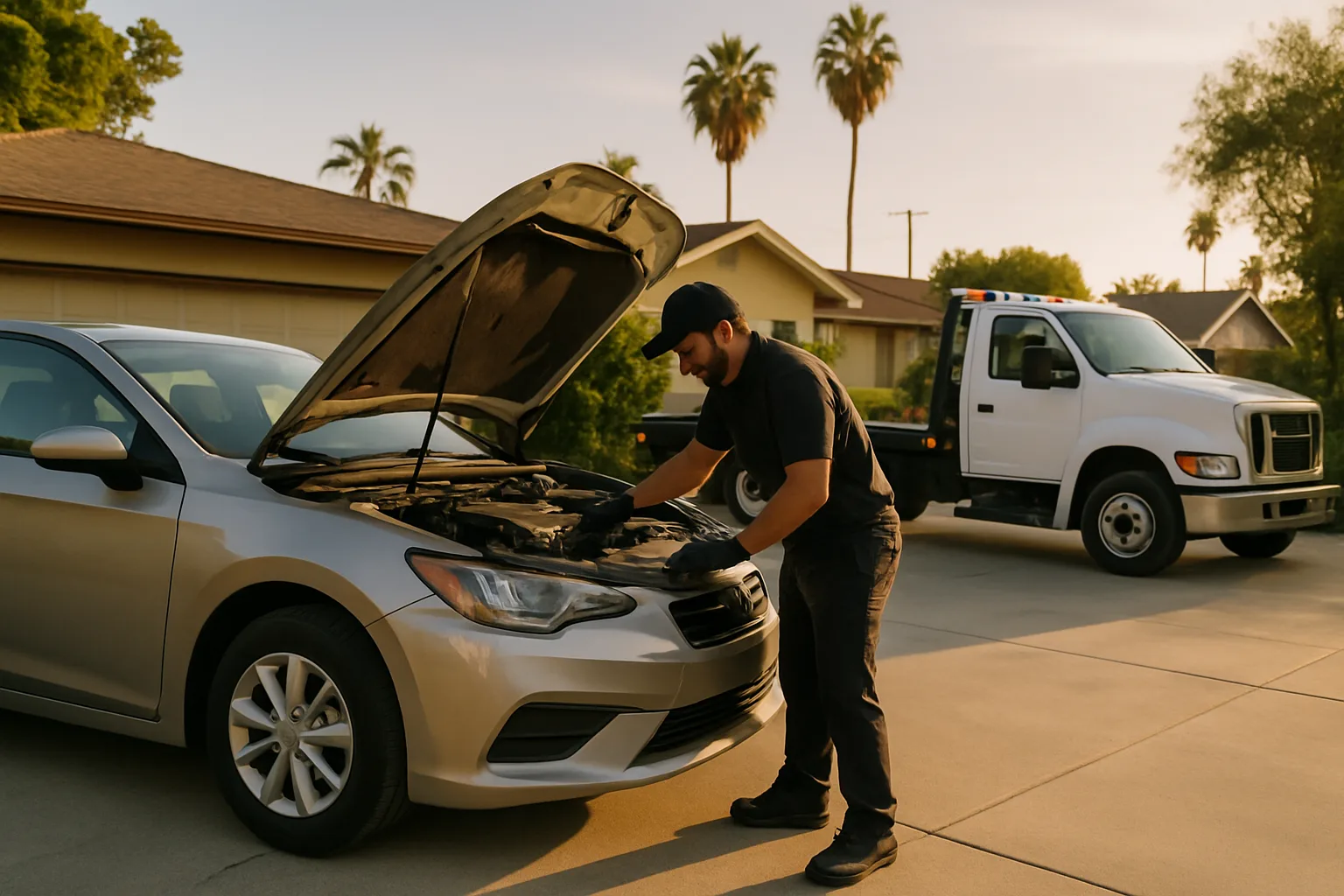
A car problem does not always require the same kind of help. A mobile mechanic may be able to diagnose or repair a vehicle that is safely parked. Roadside assistance may solve a simple battery, tire, fuel, or lockout problem. A tow truck is the right call when the vehicle is unsafe to drive, cannot move, or needs equipment and repair at another location.
The fastest way to choose is to separate a minor service problem from a mechanical failure and a traffic hazard. Start with safety, then consider what the vehicle can still do.
Call a Tow Truck When Driving Could Cause Harm
Do not keep driving when the vehicle has lost steering or braking ability, has serious collision damage, is overheating, is leaking fluid, has a wheel or suspension problem, or cannot move under its own power. Continuing may worsen the damage or expose you and other drivers to danger.
A tow is also appropriate when the car is disabled in an active lane, freeway shoulder, intersection, or another exposed place. Request emergency towing, describe the traffic conditions, and follow instructions from emergency or freeway personnel at the scene.
Symptoms that usually point to towing
- The brake pedal behaves abnormally or the car will not stop predictably.
- Steering is extremely difficult, disconnected, or stuck.
- A tire, wheel, axle, or suspension part is visibly damaged.
- The temperature warning remains on or steam is present.
- The transmission will not engage or the vehicle will not move.
- Crash damage affects lights, body panels, airbags, or safe control.
If you cannot confidently rule out a safety problem, transport is the cautious choice. A tow moves the car to a shop where it can be inspected with proper equipment.
Call a Mobile Mechanic When the Car Is Safely Parked
A mobile mechanic can make sense when the vehicle is at home, at work, or in another lawful place with enough room to inspect it. The problem should be suitable for on-site diagnosis or repair, and the mechanic should confirm that the location and symptoms fit the service offered.
Examples may include a known minor component issue, maintenance work, a diagnostic visit, or a repair that does not require a lift, alignment rack, major disassembly, or shop-only equipment. The mechanic—not the driver—should decide whether the repair can be completed safely at that location.
When a mechanic may still recommend a tow
An on-site diagnosis can uncover a failed transmission, internal engine problem, unsafe electrical fault, damaged suspension, or a repair that needs parts and equipment at a shop. In that case, the mechanic’s visit answers the diagnosis question, but the vehicle still needs transport.
Use Roadside Assistance for a Simple, Defined Problem
Roadside assistance in Los Angeles is designed for problems that may be resolved where the vehicle sits: a jump start, eligible tire change, fuel delivery, or lockout. The location must be safe enough for the service, and the car must not have another condition that makes driving unsafe afterward.
A dead battery is a good example. A jump may restore power when the battery is discharged, but it will not fix a failed alternator, damaged cable, or recurring electrical problem. Our jump-start-or-tow guide explains what to observe before deciding.
The same distinction applies to tires. A usable spare and an undamaged wheel may support a roadside change, while sidewall failure, wheel damage, multiple flat tires, missing hardware, or an unsafe roadside position can require towing. See the Los Angeles flat-tire guide for the basic checks.
Match Common Symptoms to the Right Call
The engine will not start
If the lights are weak and you have a simple discharged battery, roadside help may be appropriate. If the engine cranks normally but will not run, warning messages appear, or the problem returns after a jump, a mechanic or tow may be needed.
The engine starts but the car will not move
Do not force the accelerator or repeatedly shift between gears. A transmission, axle, brake, or driveline problem may be involved. Tell dispatch whether the car rolls, steers, and releases the parking brake so a tow operator can choose the equipment.
A warning light came on
A warning light alone does not identify the severity. Red temperature, oil-pressure, brake, or charging warnings can indicate conditions that should not be ignored. Pull over when safe, shut the vehicle down if the owner’s manual directs it, and seek qualified guidance.
The car was hit but still drives
Visible damage can hide bent suspension, leaking fluids, damaged tires, broken lights, or bodywork rubbing a wheel. Driving away is not the test of whether the car is safe. When there is uncertainty, have it inspected or transported.
LA Location Can Decide the Service
A repair that is reasonable in a Van Nuys driveway may be unsafe on the 405 shoulder. A mobile mechanic may not be able to work in a tight Downtown garage, on a steep canyon road, or beside fast traffic. Scene access matters as much as the mechanical symptom.
Give the exact location, direction of travel, nearest cross street or exit, and vehicle condition. Check the Maps Towing service area for coverage across Greater Los Angeles.
Choose Safety First
Maps Towing serves Greater Los Angeles from offices in Van Nuys and Burbank. If the vehicle is unsafe, immobile, or needs to reach a repair facility, share the symptoms and location so the correct towing setup can be planned. For help, Call (818) 797-1560.
Share: