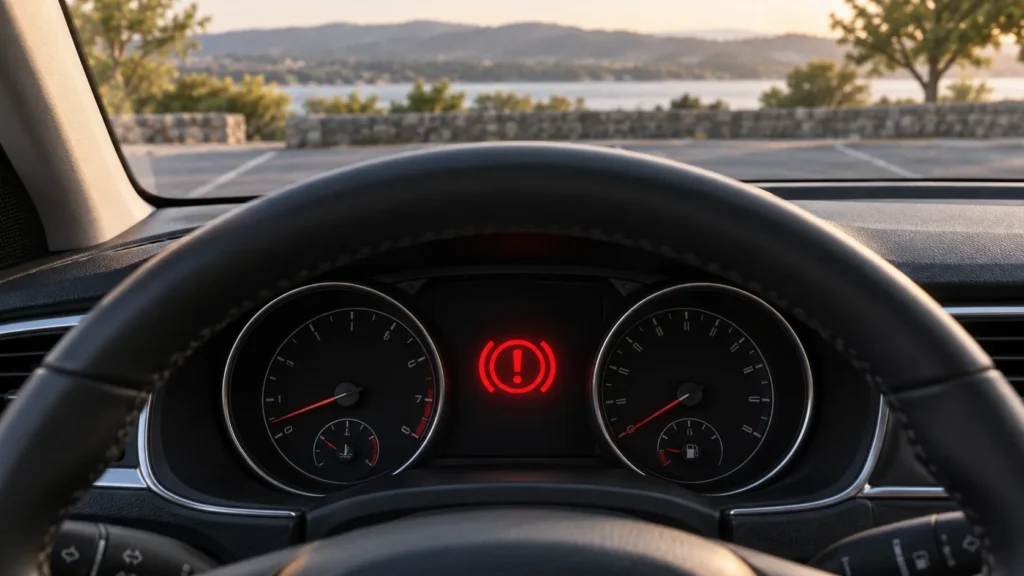







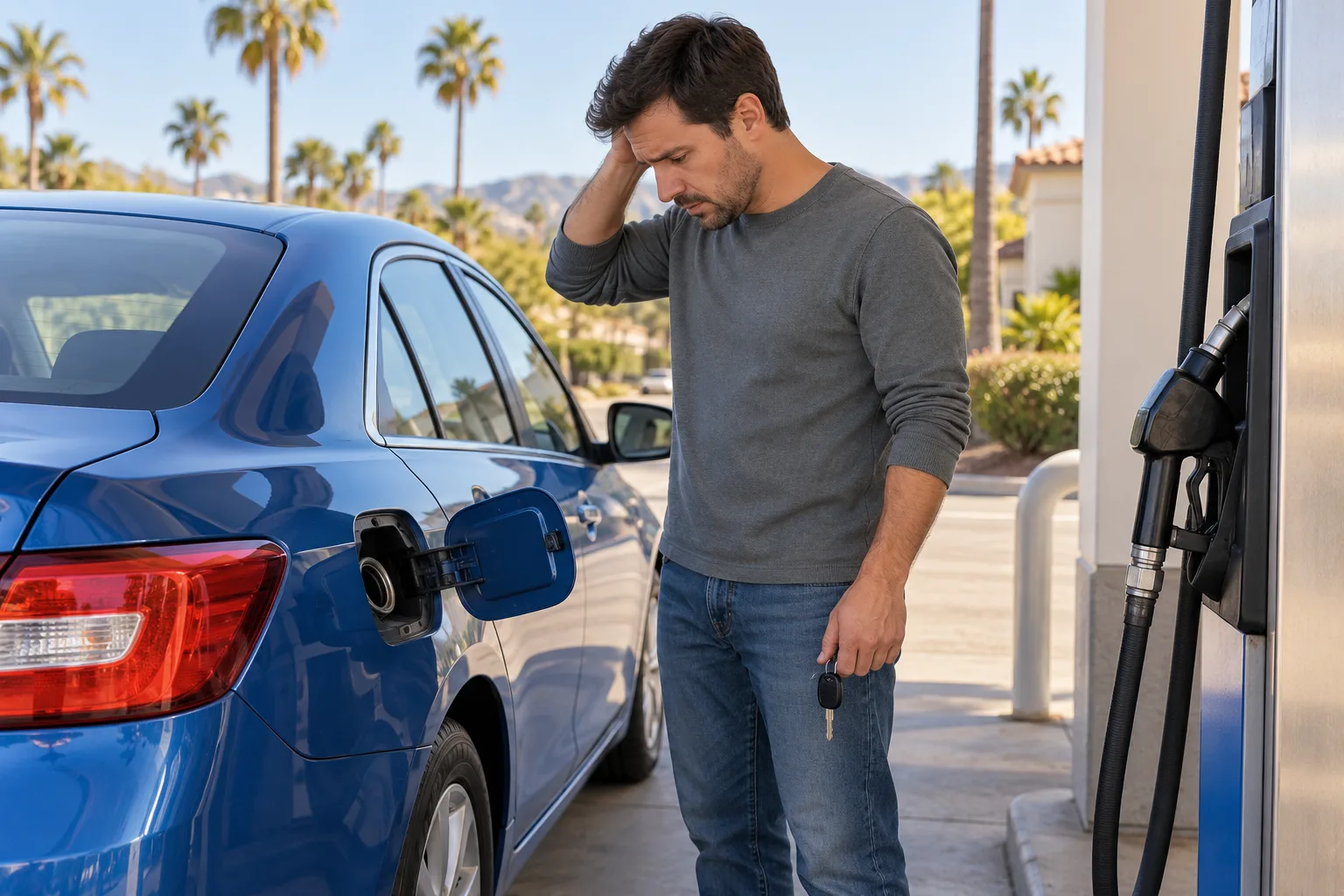
If you realize that gasoline went into a diesel vehicle, or diesel went into a gasoline vehicle, do not start the engine. Tell the station attendant and arrange professional guidance. Moving away from the pump is a coordination problem; starting the car to clear the space can make the mechanical problem worse.
If you discover the mistake while driving, reach a safe stopping place if possible, switch the engine off once stopped, and do not attempt another start. For a vehicle creating an immediate traffic danger, call 911 and follow the responder’s instructions.
Leave the engine off and explain what was added
Ford’s guidance on incorrect fuel warns against starting a misfueled vehicle and explains that switching on the ignition can circulate gasoline mixed into diesel. Keep the vehicle off while obtaining instructions specific to its model. Tell the technician if you have already switched on the ignition, started the engine, or driven away.
Do not try to siphon or drain the tank, dilute the fuel, or add a treatment as a roadside experiment. Professional inspection and any fuel-system work are separate from transporting the car. This article does not promise roadside draining or repairs.
What if you chose the wrong gasoline grade?
Regular versus premium gasoline is a different question from mixing gasoline and diesel. Check the fuel-door label and owner’s manual and call the manufacturer or repair professional with the exact product used. Do not assume that advice about one fuel mistake applies to another.
Save the facts the repair facility will need
- The vehicle’s year, make, model, engine, and normal fuel type.
- The product shown on the pump and receipt.
- The approximate amount added and the amount already in the tank, if known.
- Whether the ignition was switched on or the engine started.
- Any distance driven and symptoms noticed before stopping.
Keep the receipt and take a picture of the pump label only if it is safe. If a detail is uncertain, say so. A precise sequence of events helps the repair facility assess the situation without treating your guess as a diagnosis.
Request transport, not an ordinary fuel delivery
Emergency fuel delivery addresses an empty tank with compatible fuel. Suspected contamination is a different request. State “wrong fuel may be in the tank” at the start of your call so it is not mistaken for running out of gas.
Discuss vehicle transport to a repair facility and ask the facility whether it accepts misfueling cases. Confirm its receiving address and where the vehicle should be unloaded. Do not assume every shop can immediately handle fuel removal or the subsequent diagnosis.
Coordinate a pickup from the fuel station
Give dispatch the station address, pump number, nearest entrance, and the car’s position. Tell the attendant that you are arranging assistance, and ask about site access without attempting to push the vehicle through moving cars.
For a station in Burbank, identify which driveway leads to the pump. If requesting flatbed towing in Glendale, describe the available space and let dispatch confirm the equipment and approach. These details matter more than assuming the truck can enter from either side.
Do not operate unfamiliar transport settings to release the car from Park. Share the owner’s manual with the operator and make clear that avoiding an engine start is part of the request.
Call with the fuel and vehicle details
Reach Maps Towing at (818) 797-1560 to discuss the pickup and destination. Ask dispatch to confirm availability, an appropriate transport setup, the quote, and the current arrival estimate. Mechanical diagnosis, repair cost, and any coverage questions belong with the repair facility and your provider.
Share: