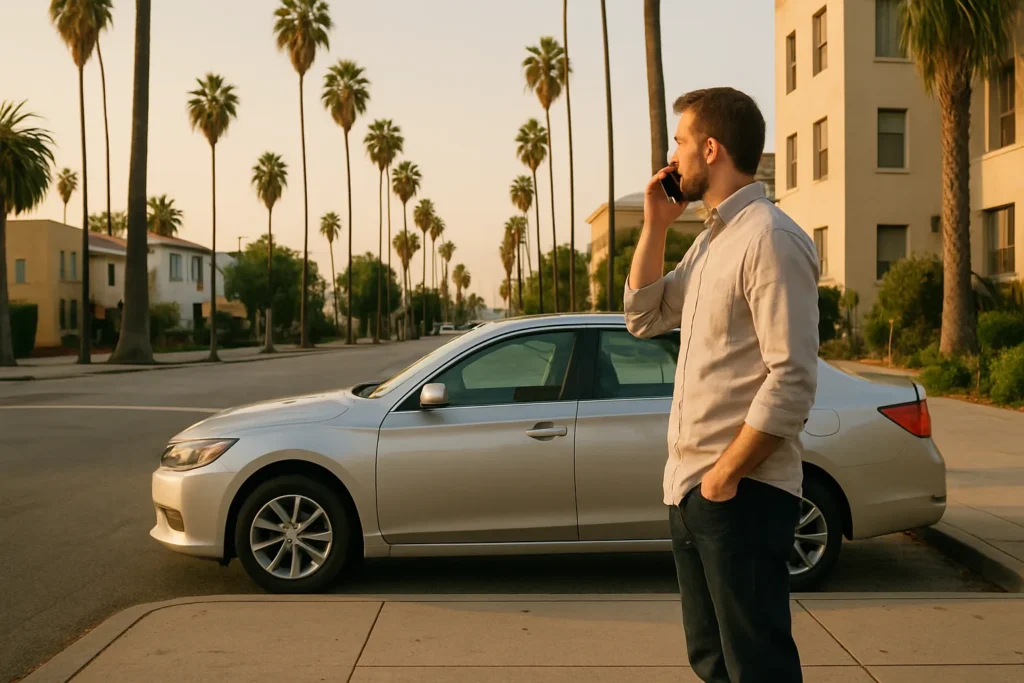






A vehicle does not need to be badly damaged to become stuck. Loose sand, mud, a soft shoulder, steep driveway edge, curb, or shallow ditch can leave the drive wheels spinning without enough traction to move. Continuing to accelerate often digs the tires deeper and can place more stress on the drivetrain.
A professional winch-out service in Los Angeles uses controlled pulling force to return the vehicle to stable ground. The safest recovery begins with an accurate description of the scene and a plan based on the vehicle’s position.
Stop Before the Vehicle Becomes More Stuck
If the tires spin without moving the vehicle, release the accelerator. Repeated attempts can bury the tires, overheat components, or slide the vehicle farther from the roadway. Set the parking brake when appropriate and keep passengers in a safe location away from traffic and slopes.
Do not stand downhill from the vehicle or near a potential travel path. If the car is unstable, leaning, close to an edge, or exposed to traffic, tell dispatch immediately. A complex recovery may require more than a routine roadside winch.
Describe the Recovery Scene Clearly
Share the exact location, vehicle type, surface, slope, and which wheels are stuck. Explain whether the vehicle can steer, roll, and shift into neutral. Mention visible damage, leaking fluid, a loaded trailer, or obstacles such as walls, trees, parked cars, and low-clearance structures.
Photos taken from a safe position are particularly useful. A wide view can show the approach for the tow truck, while a closer view can show tire depth and ground conditions. Good information helps the operator choose rigging, truck position, and whether additional recovery equipment may be necessary.
How a Professional Winch-Out Works
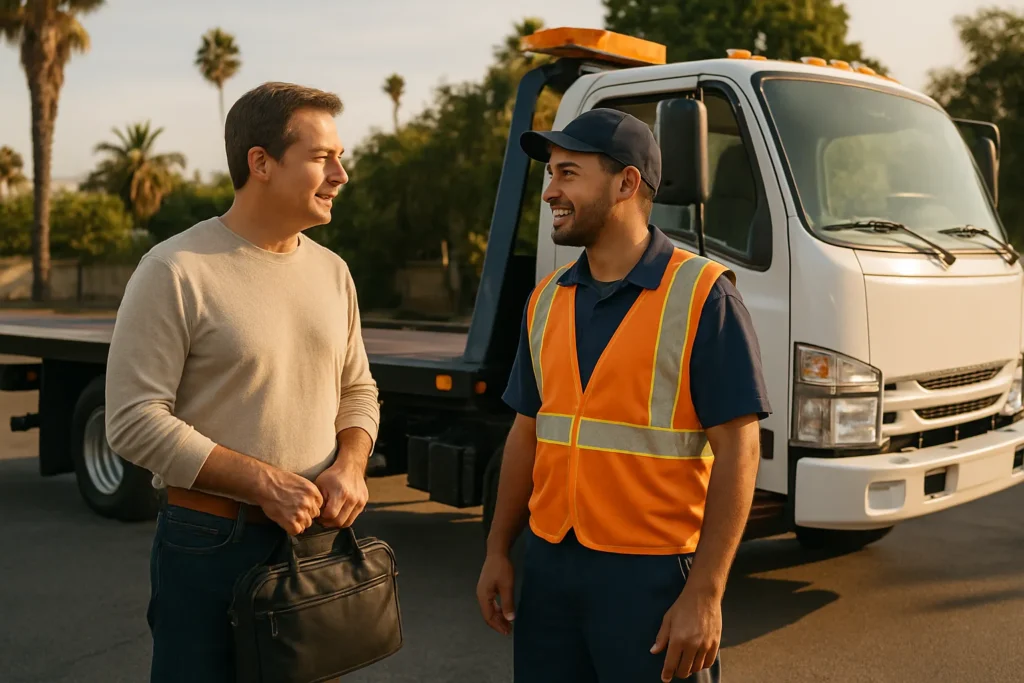
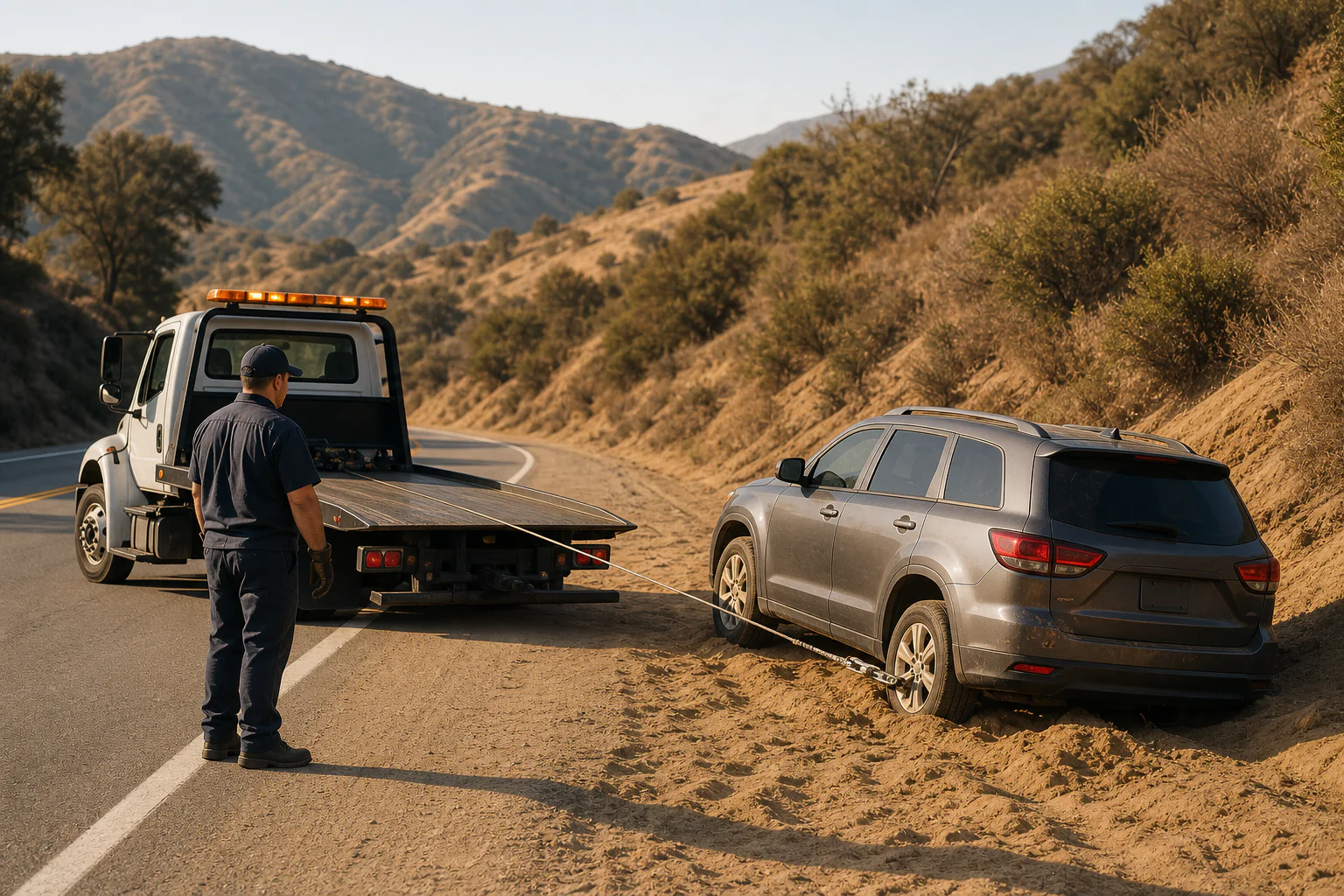
The operator evaluates the vehicle, terrain, access, and intended direction of travel. The tow truck must be positioned on stable ground with a suitable pulling angle. The winch line is attached to a manufacturer-approved recovery point or another appropriate structural point selected by the operator.
Once the area is cleared, controlled tension is applied while the vehicle is guided toward stable ground. The process may include blocks or other equipment to adjust line direction and reduce stress. Slow, deliberate movement is more useful than a sudden pull.
Stay Clear of the Winch Line
A tensioned cable or synthetic line stores energy. Passengers and bystanders should remain well outside the recovery zone and never step over, touch, or stand beside the line. Follow the operator’s directions about where to wait and when it is safe to approach the vehicle.
Avoid attaching straps to bumpers, suspension pieces, tow balls, or other parts that were not designed as recovery points. Improvised attachments can break and cause damage or injury. This is a key difference between professional recovery and trying to pull a stuck car with another passenger vehicle.
Winch-Out, Roadside Assistance, or Towing?
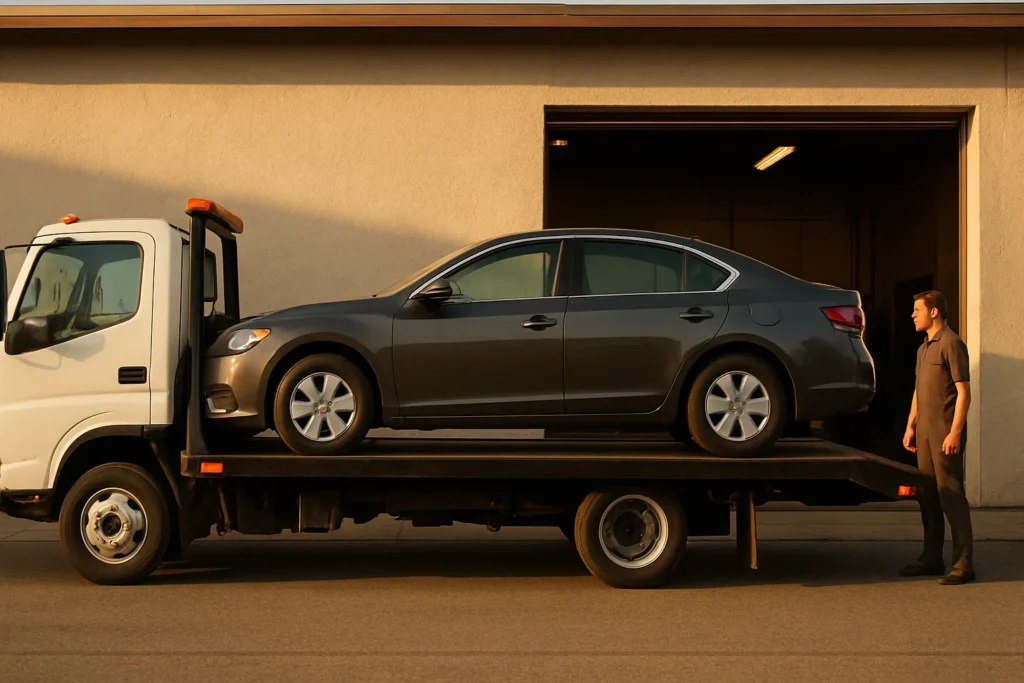
A basic winch-out may be enough when the vehicle is undamaged and can be driven safely after reaching firm ground. If a tire, wheel, steering component, underbody, or drivetrain part is damaged, the vehicle may need tow-truck transport after recovery.
Other situations may be solved through roadside assistance, such as a flat tire or dead battery on stable pavement. Dispatch can help determine the likely response, but the operator will make the final assessment after seeing the scene.
Inspect the vehicle after it reaches stable ground
Before driving away, look for a low tire, loose trim, fluid leaks, steering changes, or warning lights. Sand and mud can pack around brakes and suspension parts, while a hard curb or ditch edge may damage a wheel or underbody component. If anything appears unusual, do not test the vehicle at road speed.
The operator may recommend towing when damage cannot be ruled out at the roadside. Recovering the vehicle and confirming that it is roadworthy are separate decisions; reaching pavement does not automatically mean the car is safe to drive.
Los Angeles Terrain Creates Different Challenges
Dry shoulders can hide deep loose sand, while canyon and hillside roads may offer limited space for truck positioning. Rain can soften soil quickly and make an ordinary roadside edge difficult to exit. Steep residential driveways and narrow access roads add another layer of planning.
Our guide to hillside towing in Hollywood Hills and Bel Air explains why access, grade, and equipment matter in elevated neighborhoods. In any location, avoid making the scene worse while waiting for a trained operator.
Choose a Qualified Recovery Provider
When calling, ask whether the company understands the vehicle position and is sending suitable recovery equipment. A clear dispatch conversation is more valuable than assuming every tow truck handles every recovery. Our guide to choosing a Los Angeles towing company lists practical questions to ask.
Request a Winch-Out in Los Angeles
Maps Towing provides 24/7 towing and roadside assistance across Greater Los Angeles from Van Nuys and Burbank. Call (818) 797-1560 and describe the vehicle, terrain, access, and any damage. We will coordinate appropriate available assistance and help move the vehicle toward stable ground safely.
Share: