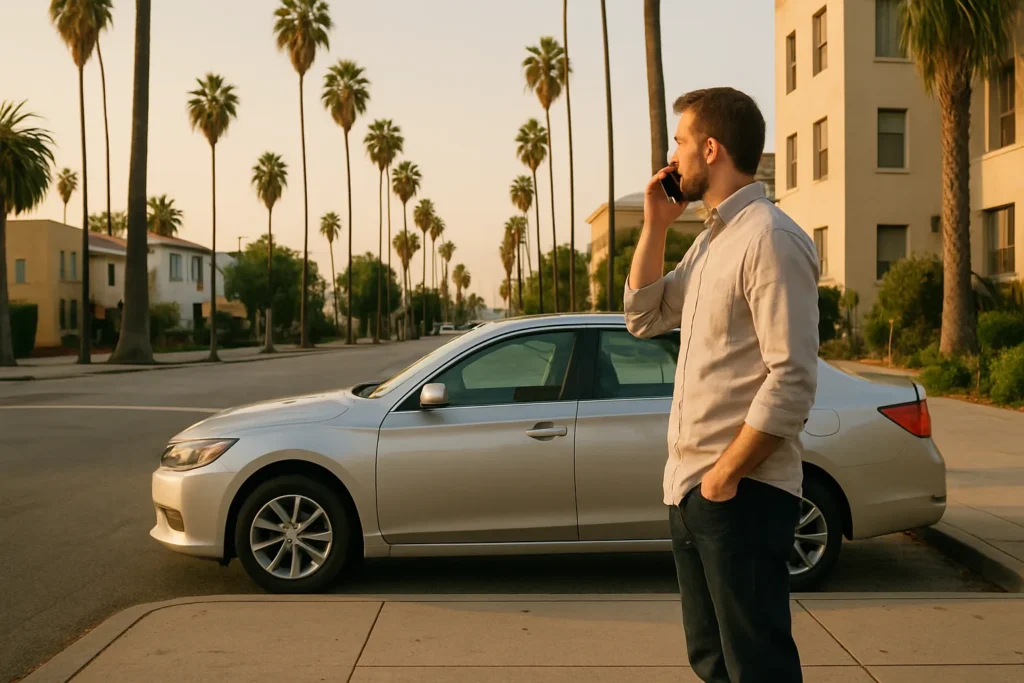





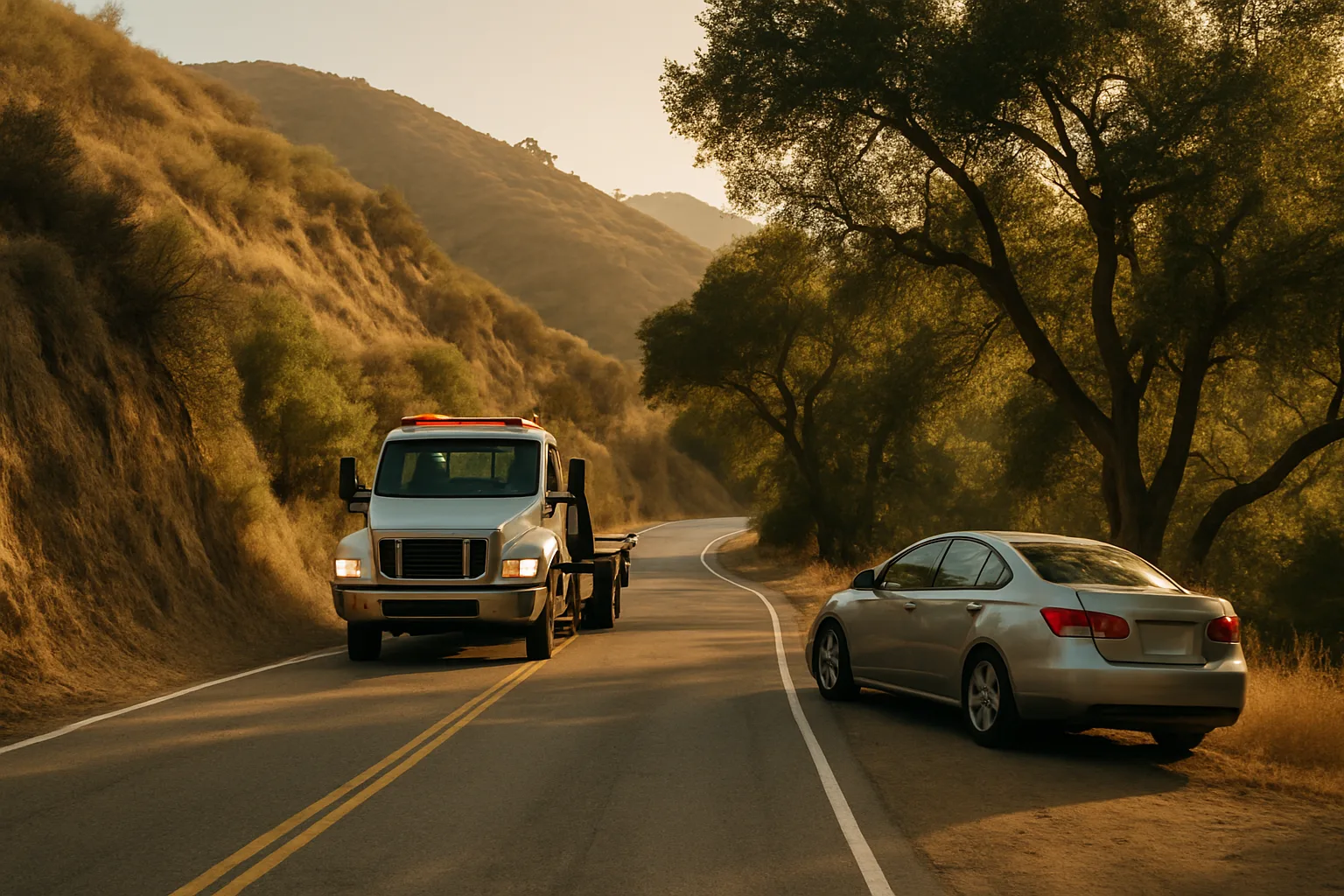
Laurel Canyon Boulevard, Coldwater Canyon Avenue, and Topanga Canyon Boulevard cross the hills between major parts of Greater Los Angeles, but they do not behave like ordinary city streets. Curves limit sight distance, shoulders can disappear, driveways may be steep, and mobile reception may vary. A breakdown that would be inconvenient on a wide boulevard can become hazardous on a canyon road.
Good towing preparation starts with a safe stopping position and an accurate description of the road. The operator needs to know not only which canyon you are in, but also your direction, nearest cross street, vehicle condition, and the amount of working space around the car.
Why Canyon-Road Breakdowns Are Different
Curves and grades reduce reaction time
A stopped vehicle may be hidden from approaching traffic until the last part of a bend. If the car is still controllable, turn on the hazards and continue only as far as necessary to reach a wider turnout, side street, or driveway entrance. Do not stop just beyond a blind curve if a safer position is reachable without risking mechanical damage.
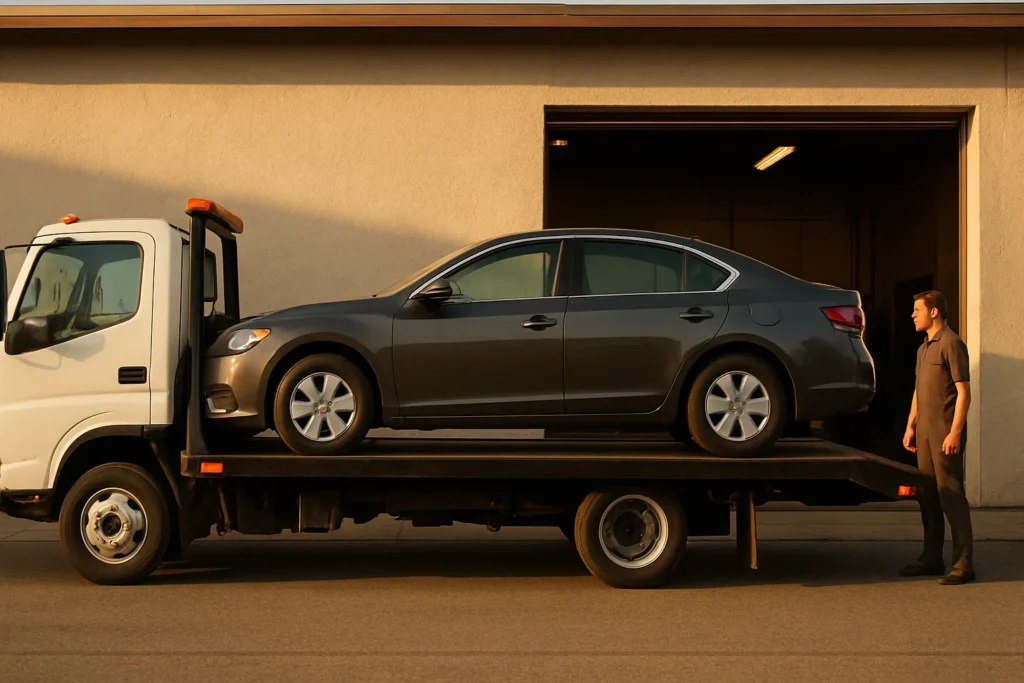
Grades also affect loading. A car with a locked wheel, damaged suspension, or failed transmission may not roll normally. The tow operator may need a controlled winch pull, wheel skates, or another method that keeps the vehicle stable while it is aligned with the truck.
Access can determine the truck type
A full-size flatbed needs room to align and lower its deck. On a narrow lane or steep driveway, a more compact truck may be used to recover the vehicle to a safer staging area. That does not mean every car can be transported by the same method. Drivetrain, ground clearance, manufacturer guidance, and damage still decide how the vehicle should travel.
Review the differences in flatbed towing before assuming that available space is the only factor. Dispatch can plan a safe sequence when the road and vehicle details are known.
Laurel Canyon Boulevard
Laurel Canyon Boulevard links the Hollywood side of the hills with Studio City. The route includes residential driveways, narrow curves, and busy approaches near both ends. Give dispatch the nearest cross street and specify whether you are heading toward Hollywood or the Valley. The Hollywood towing area and Studio City towing area provide useful local context.
If the vehicle is partly in a lane, remain in the safest available location and call 911 when traffic control is needed. Do not stand behind the car on a downhill grade or between the vehicle and a retaining wall.
Coldwater Canyon Avenue
Coldwater Canyon Avenue crosses between the Beverly Hills side and the Valley near Studio City. Curving segments and residential access can make a pin ambiguous. State the direction you were traveling, the last intersection you passed, and whether the car is above or below that point.
Overheating, brake concerns, and tire damage deserve extra caution on a grade. Do not open a hot cooling system or continue driving on a damaged tire. If a roadside repair cannot be performed entirely outside the travel lane, roadside assistance may need to begin with relocating the vehicle.
Topanga Canyon Boulevard
Topanga Canyon Boulevard, State Route 27, connects the western Valley with the coast through Topanga. The route is longer and more rural in character than the other two, with winding sections and changing road conditions. Identify whether you are heading toward the Valley or Pacific Coast Highway and share a cross street, landmark, or map pin.
Do not rely on a general place name alone. A truck approaching from the wrong end may face a substantial detour. If weather, a closure, or emergency activity affects access, follow directions from local authorities and update dispatch.
What to Tell the Dispatcher
Describe the road width, shoulder or turnout, slope, nearby curves, and whether traffic can pass. Give the vehicle year, make, model, drivetrain, and symptoms. Say whether the steering works, all wheels roll, the transmission selects neutral, and the keys are present. Mention a low bumper, EV battery warning, collision damage, or a blocked wheel.
Photos can help if they are taken from a safe position. A wide image showing the road and vehicle orientation is often more useful than a close-up of the dashboard. Never step into a lane to photograph the scene.
Wait Where the Road Cannot Funnel Traffic Toward You
Keep hazard lights on and remain belted if the vehicle is safely off the roadway and there is no immediate fire or smoke danger. If a substantial barrier is safely reachable without crossing traffic, move well behind it and stay away from the downhill path of the vehicle. Keep children and pets secured. Do not walk around a curve to direct the tow truck; use the phone to describe the final approach and let the operator choose a safe staging position.
Need Help on a Los Angeles Canyon Road?
Maps Towing serves Greater Los Angeles from our Van Nuys and Burbank offices. Call for your current ETA; arrival depends on location, traffic, truck availability, service type, weather, and access. For 24/7 help, Call (818) 797 – 1560.
Share: