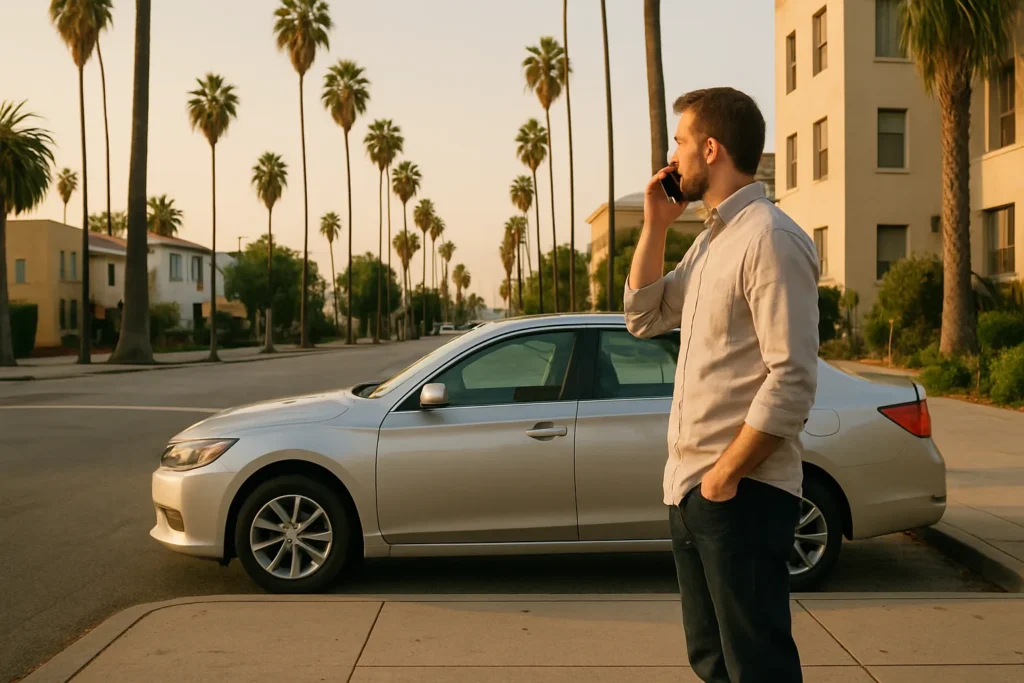






Do not assume you can ride with the tow truck driver. Ask about passenger arrangements when you first call, and explain how many people need to leave the pickup location. Whether anyone can ride depends on the assigned vehicle, available seating, and the provider’s policy. Your car’s towing arrangement and your own transportation need to be confirmed separately.
For Maps Towing, call to confirm the arrangements for your specific request; this article is not a promise of passenger seating. If your vehicle is disabled and you need emergency towing, mention passengers at the start of the call, alongside the location and vehicle condition.
Ask before a truck is assigned
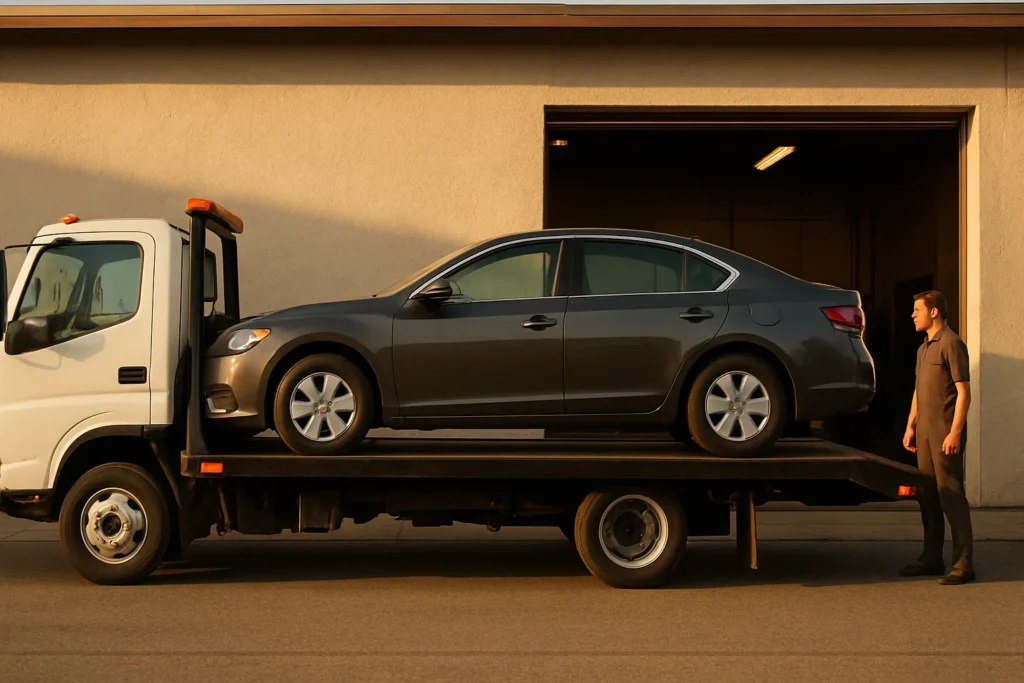
A photo of a tow truck is not a reliable guide to the seating available for your pickup. Tell dispatch how many adults and children are with the vehicle, whether anyone needs assistance getting into another vehicle, and whether you have luggage or mobility equipment. Keep the description practical; you do not need to share a detailed medical history.
Ask for a clear answer about what has been arranged and what you need to organize yourself. If seating cannot be confirmed, plan separate transport. Waiting until the operator arrives can leave you trying to solve a second problem while the car is being prepared for loading.
Do not plan to ride inside the car being towed
The disabled vehicle is not your passenger compartment during transport. Do not plan to stay inside it while it is carried or towed. Keep people away from the loading area, and follow the operator’s instructions about where to wait while the vehicle is being moved and secured.
Retrieve personal essentials beforehand if access is safe. Once loading begins, do not approach the truck or climb onto its platform to collect a forgotten item. Tell the operator what you need and wait for their direction.
Make a separate plan for children and accessibility needs
Traveling with children
Tell dispatch that children are present and that appropriate child restraints will be needed for onward travel. Do not assume a truck cab has suitable seating or the right installation points for your seat. Arrange a suitable alternative vehicle if the requirements cannot be confirmed. Follow the child-seat and receiving vehicle manufacturers’ instructions.
Keep an adult responsible for the children while towing details are being discussed. Avoid placing them beside the loading area, between parked vehicles, or in a location exposed to traffic while someone sorts out a ride.
Mobility equipment and getting into the cab
Describe relevant access needs, including whether someone uses a wheelchair or walker and whether equipment must travel with them. A truck cab may involve steps and a higher seating position. Ask what is actually available; towing service should not be assumed to provide accessible passenger transport or medical transport.
Pets, luggage, and items you need immediately
Ask about a pet before making assumptions about cab access. You may need a separate vehicle that can safely accommodate the animal and its carrier. Keep the pet controlled and away from the work area, and do not leave an animal unattended in a disabled vehicle while arranging the tow.
Take your phone, charger, house keys, essential medication, and other immediate necessities if it is safe to retrieve them. Our LA breakdown-kit checklist can help you prepare for future trips. A useful kit does not replace a safe waiting location or confirmed onward transportation.
Choose a meeting point that is safe to reach
If a friend, family member, taxi, or rideshare will collect you, describe a safe and accessible meeting location. Do not ask someone to stop in a live traffic lane or cross a freeway to reach you. If the vehicle is in a dangerous location, contact emergency services and follow their guidance before arranging an ordinary passenger pickup.
On surface streets in Sherman Oaks or Encino, the car’s location and a suitable passenger meeting point may not be identical. If you move to a safer place, tell towing dispatch where you are and how the operator can reach you. Do not leave the area without agreeing on vehicle access and authorization.
You and the car may have different destinations
Your car may be going to a repair shop while you need to go home, to work, or to collect someone. Confirm the vehicle’s destination and who will receive it. Then plan your own trip around the actual arrangements rather than assuming the tow will include an extra passenger stop.
If the shop is closed, make sure there is an agreed vehicle handoff before departure. Keep your phone available for any questions during pickup or delivery. If someone else will handle the handoff, provide that person’s details privately with their permission.
Keep safety ahead of the travel plan
There is no single waiting position that is right for every breakdown. Follow emergency responders’ directions when present, and avoid moving through traffic to collect belongings or meet a ride. Our tow-truck waiting safety guide covers preparation while assistance is being arranged.
Confirm passenger needs when you call
Maps Towing has offices in Van Nuys and Burbank. Explain your vehicle problem, location, passenger count, and any access needs before dispatch arrangements are finalized. Do not assume seating until it is confirmed. Call (818) 797 – 1560 for towing availability, your current ETA, and a clear pickup plan.
Share: