




A Los Angeles breakdown kit should prepare you for heat, heavy freeway traffic, dark canyon roads, and a phone battery that may be running low when you need it most. The goal is not to turn the shoulder into a repair shop. It is to help you communicate, remain visible, and wait more safely for professional assistance.
Keep the kit in one secured container that you can reach without unloading the entire trunk. Check it when seasons change and after anything is used.
Communication and Power Come First
Charged battery pack and cable
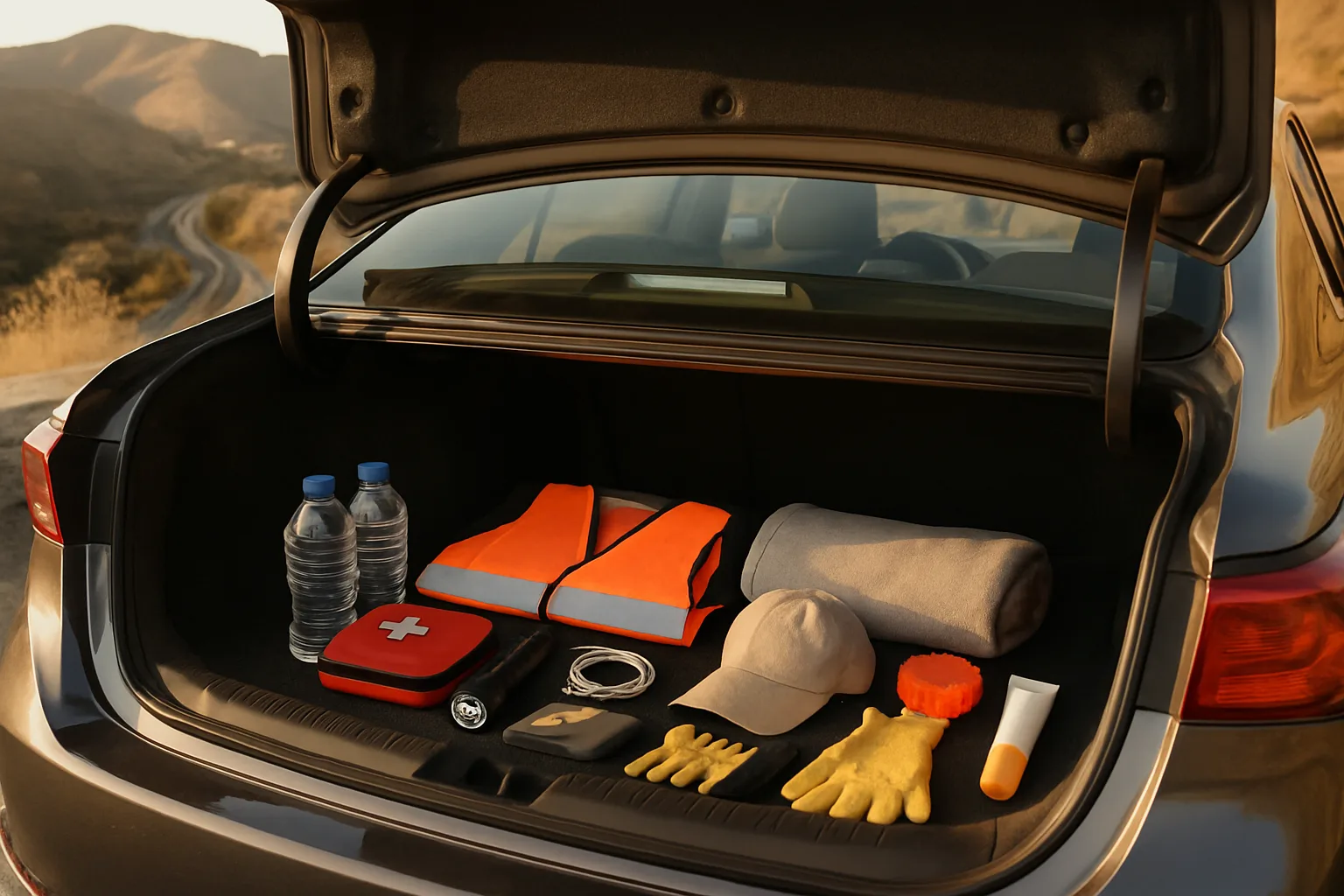
Carry a quality phone battery pack with the correct charging cable. Heat can shorten battery life, so inspect and recharge it regularly rather than leaving it forgotten for months. Store it according to the manufacturer’s temperature guidance.
Your phone provides location sharing, maps, emergency alerts, and contact with dispatch. Save your insurance, roadside, vehicle, and emergency contacts where they remain available if mobile data is weak.
Written vehicle and contact details
Keep a paper card with the vehicle year, make, model, license plate, VIN, insurer, emergency contact, and any important accessibility or medical information you choose to share. Do not leave sensitive documents openly visible. A written card can help when stress is high or the phone is unavailable.
Water and Heat Protection for LA Conditions
Carry sealed drinking water for the people who normally travel in the car, plus extra for unexpected delay. Replace it according to the container guidance and inspect for heat damage. Water for people is not a substitute for the correct coolant, and opening a hot cooling system can cause serious burns.
Add a wide-brim hat, sunscreen, lightweight long-sleeve layer, and compact shade item. Los Angeles heat can be intense on exposed pavement, in the San Fernando Valley, and along inland stretches of the 5, 101, and 405. Never sit in an unsafe traffic position just to remain near the vehicle.
Visibility Without Creating Another Hazard
Reflective vest and LED beacons
A reflective vest helps an operator or responder see you if you must exit in a safe location. Battery-powered LED beacons can provide visibility without an open flame. This matters in dry areas near Topanga, Laurel Canyon, Coldwater Canyon, and hillside roads where fire safety deserves extra care.
Do not walk into traffic to place equipment, and do not stand behind or directly in front of the disabled car. On a freeway, the safest choice may be to remain belted inside or move behind a barrier, depending on the exact scene and official instructions. Review our Los Angeles freeway breakdown safety guide before an emergency happens.
Flashlight and spare batteries
Choose a bright flashlight that can stand on its own, plus compatible spare batteries stored correctly. A headlamp can keep both hands free. Use light to identify your vehicle and surroundings, not to attempt a risky roadside repair.
Basic Personal Safety Supplies
Pack a compact first-aid kit, disposable gloves, hand wipes, basic hygiene items, and any personal necessities your household routinely needs. Include shelf-stable snacks, a light blanket, and a warm layer because canyon and coastal conditions can feel cold after sunset even when the day was hot.
If children, older adults, or pets regularly ride with you, add appropriate water, food, medication planning, leashes, carriers, and comfort items. Never store medicine in a hot vehicle unless its label and a qualified professional confirm that storage is safe.
Vehicle-Specific Items Worth Carrying
Keep the owner’s manual, wheel-lock key, removable tow eye if supplied, spare-tire tools, and a tire-pressure gauge in known locations. Add work gloves and a clean cloth. Secure every item so it cannot become a projectile during sudden braking.
A portable inflator may help with a slow pressure loss in a safe parking area, but it cannot repair sidewall damage, a separated tire, a bent wheel, or a large puncture. If a tire cannot be serviced safely, request tire-change assistance or towing instead of working beside traffic.
Jumper cables or a jump pack can be useful when used according to the vehicle and product instructions. Modern vehicles have sensitive electronics, and a battery problem may actually involve the charging system. If you are unsure, request professional jump-start service.
What Not to Treat as a Roadside Repair Kit
A breakdown kit does not make an active freeway shoulder a safe workspace. Avoid crawling under the car, reaching near moving traffic, opening a hot radiator cap, handling leaking fluids, or attempting repairs beyond your training. Flares may be inappropriate in dry vegetation or where authorities restrict them; LED devices are a practical alternative.
Do not rely on a kit to compensate for neglected maintenance. Check tires, fluids, battery condition, lights, and fuel before long drives. The kit supports you after something unexpected happens; it does not prevent the mechanical failure itself.
Store the Kit Where It Can Be Reached
A sturdy zippered bag or lidded container keeps supplies together. Label sections by purpose, place frequently used items near the top, and make sure another regular driver knows where everything is. Do not bury the flashlight or reflective vest beneath luggage.
Review the kit before crossing the Sepulveda Pass, driving late through the canyons, or taking a route with limited shoulder space. Check the Greater Los Angeles service area and keep the number for roadside assistance available before you need it.
Get Help During an LA Breakdown
Maps Towing serves Greater Los Angeles with offices in Van Nuys and Burbank. Move to the safest available location, share precise access details, and let dispatch know what the vehicle is doing. For roadside or towing help, Call (818) 797-1560.
Share: