





A strong or persistent gasoline smell, or liquid you suspect is fuel beneath the car, calls for caution. Do not start the engine to check whether the smell disappears. A suspected fuel leak is not a routine “out of gas” call, and adding fuel is not the next step.
If there is fire, smoke, an active spill creating danger, or anyone at immediate risk, move to a safe location away from the vehicle and traffic and call 911. Arrange ordinary towing only after urgent hazards have been addressed.
If there is smoke or fire, put distance first
The U.S. Fire Administration’s vehicle-fire guidance advises stopping safely, switching off the engine, getting everyone out, and moving at least 100 feet from a burning vehicle and away from traffic. Do not return to it or open the hood or trunk if you suspect a fire inside. Call 911 rather than trying to fight the fire yourself.
If you are already parked in an enclosed garage and suspect a hazardous leak, leave the area and seek emergency guidance. Do not stay beside the car to make a towing reservation or investigate the source. Tell responders about the enclosed location.
A smell alone cannot identify the repair
An article, photograph, or phone conversation cannot establish where a fuel smell originates or whether driving is safe. Tell the person assessing the vehicle exactly what you observed: an odor in the cabin, a wet patch, dripping, a recent impact, or a smell that began after refueling. Avoid turning an observation into a diagnosis such as “it only needs a cap.”
Do not crawl under the vehicle, touch or taste unidentified liquid, or start it repeatedly to reproduce the problem. Keep ignition sources away. If the situation worsens while you are waiting, contact emergency services again instead of treating an earlier towing arrangement as a safety clearance.
Why dispatch needs to hear “suspected fuel leak” immediately
A caller who says only “the car will not start” may leave out the most important fact. Start with the potential hazard, then explain your location and vehicle. A towing operator needs that information before deciding whether a normal pickup can proceed and what further assessment is required.
Maps Towing’s emergency towing service is for transport requests; this page does not promise spill cleanup, fuel-system repairs, fire response, or hazardous-material handling. Do not assume a tow truck can enter an area that responders or property management have restricted.
Prepare a clear handoff once you are safe
- Give the exact location and whether the car is outside, in a garage, or near a building entrance.
- Describe visible dripping, the size and location of any wet patch, smoke, and the timing of the smell without approaching for a closer look.
- Identify the year, make, model, and fuel or powertrain type if known.
- Explain whether the engine is off and whether emergency responders are involved.
- Provide any access restrictions or instructions you have received.
For a pickup in Van Nuys or Glendale, a precise entrance and reachable contact are more useful than a neighborhood name alone. Wait for instructions rather than moving the car to meet the truck.
Arrange a destination that can accept the problem
Explain the suspected leak to the receiving repair facility before booking the trip. Ask whether it can receive the vehicle in its current condition and where the operator should unload it. An ordinary after-hours parking space may not be suitable; the shop must make that decision.
Discuss the vehicle’s transport needs through our flatbed towing service. Equipment availability and safe loading require confirmation. For help organizing the receiving end, see arranging a tow to a repair shop.
Common questions
Should I order fuel delivery if I see a leak?
No. Report the suspected leak rather than requesting a refill. The hazard and the vehicle’s condition need assessment first.
Can I drive a short distance if there is no warning light?
Do not treat the absence of a dashboard warning as proof that a suspected leak is harmless. Leave the engine off and get appropriate assistance.
Can a tow truck clean up spilled gasoline?
Do not assume that service is included or available. Report an active hazardous spill to emergency services and follow their instructions.
Once immediate hazards are addressed, call Maps Towing at (818) 797-1560 to discuss transport. Fast Local Dispatch. Call for current ETA and confirm whether the pickup can proceed safely.
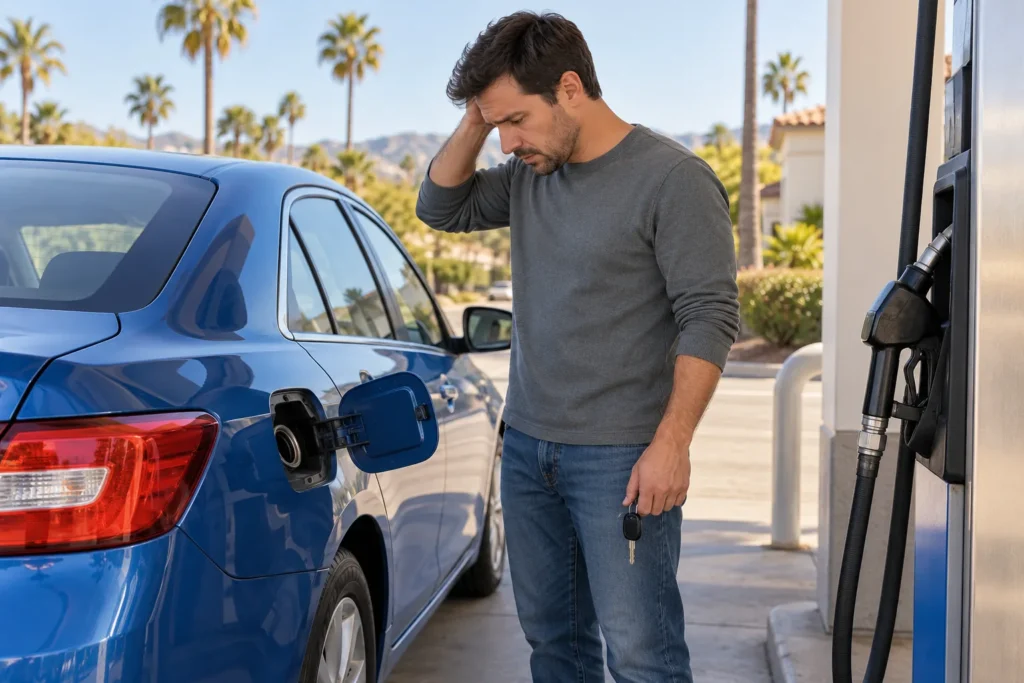
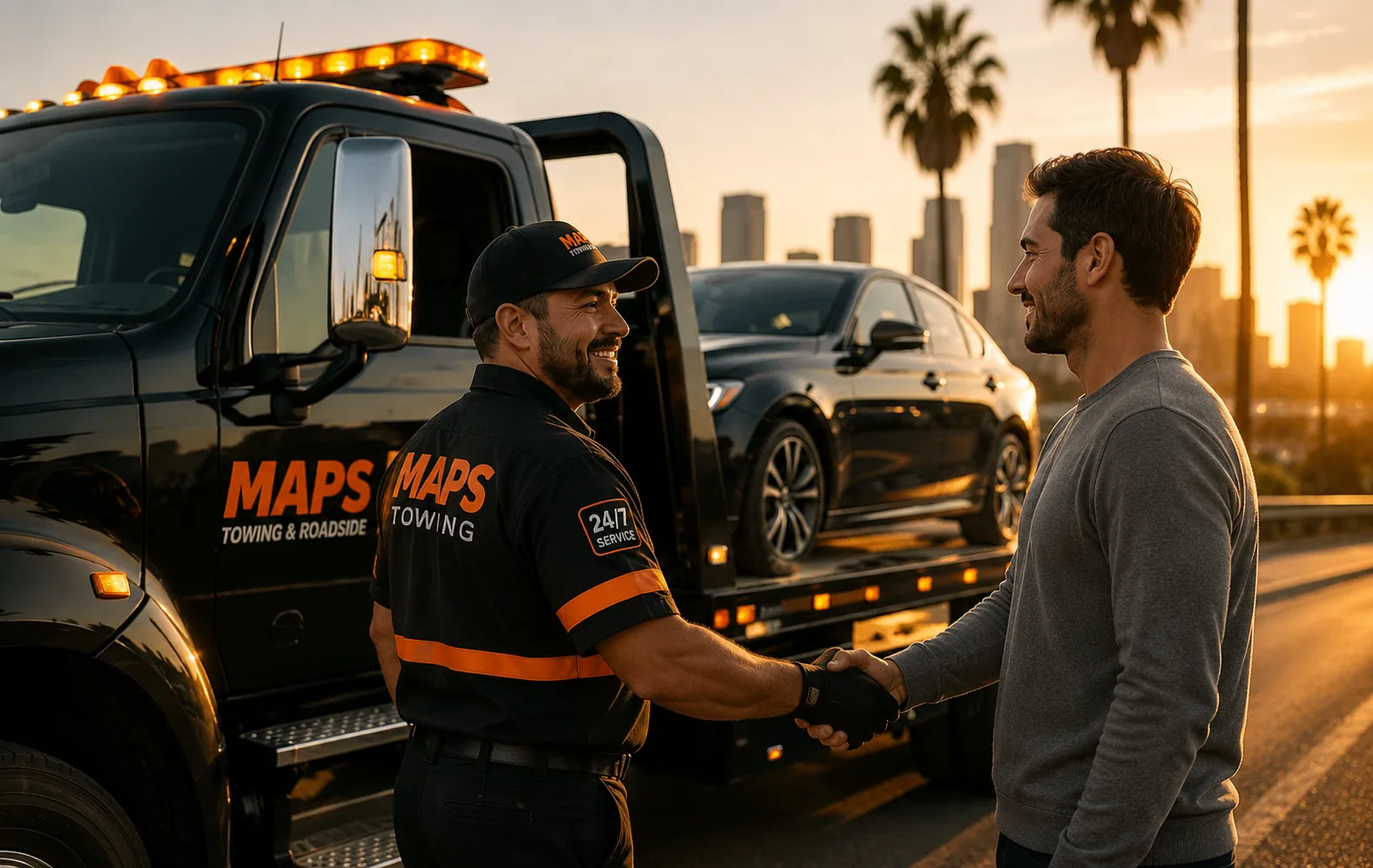
Featured image: AI-generated illustration, not a photograph of a Maps Towing customer job.
Share: