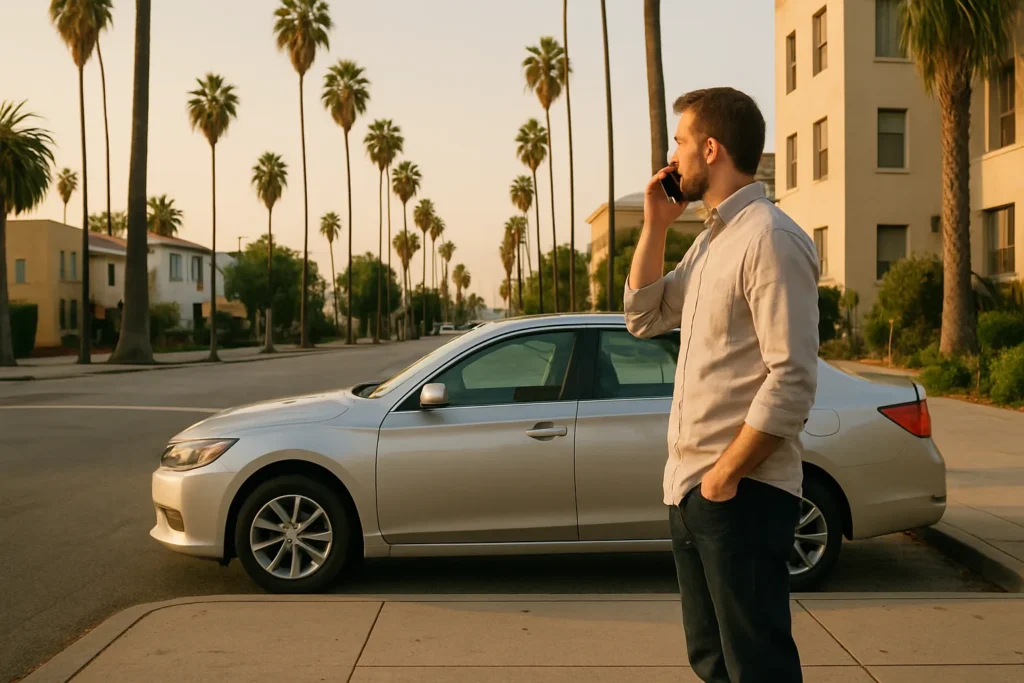





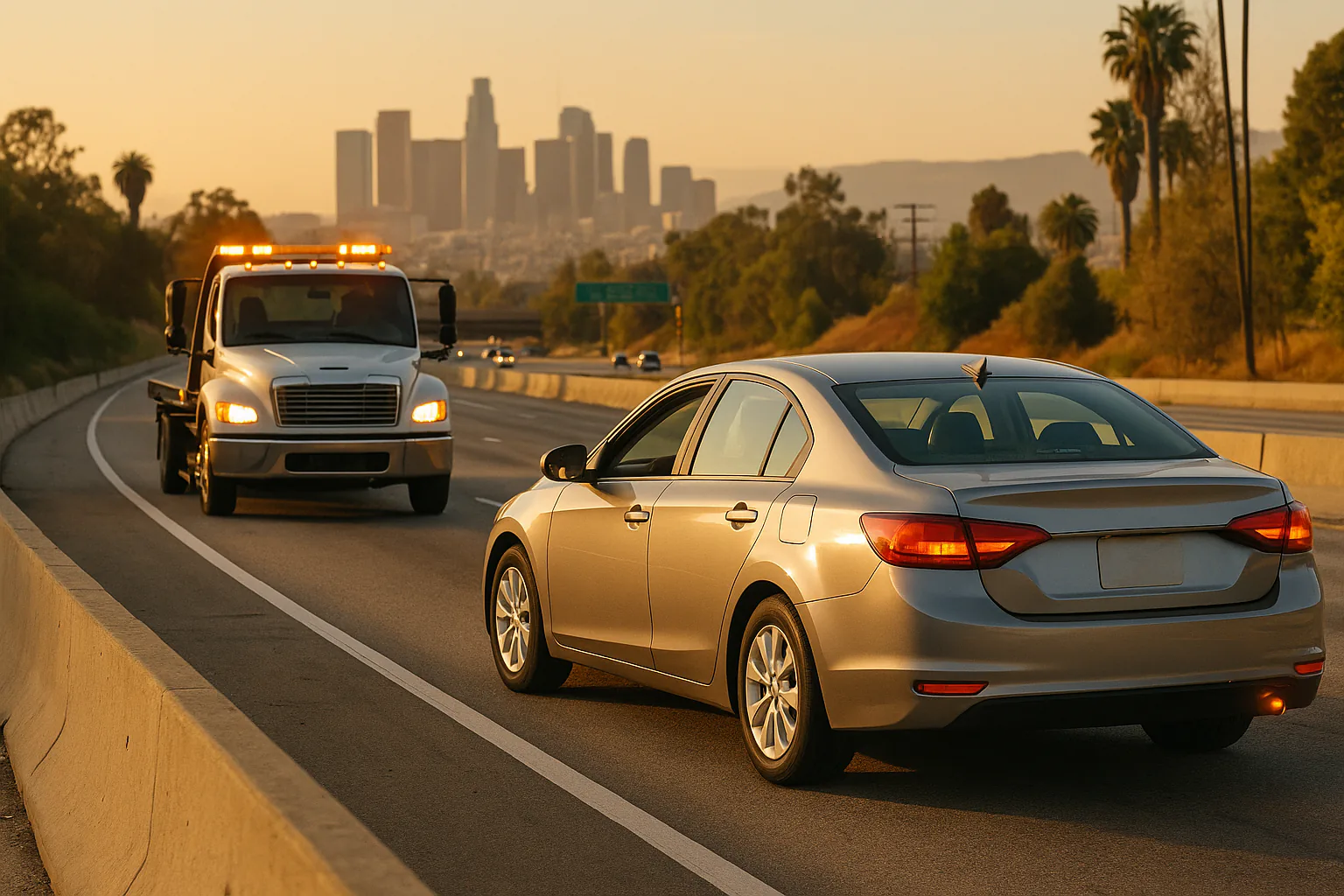
A breakdown on a Los Angeles freeway is different from a problem on a neighborhood street. Traffic is faster, shoulders can be narrow, and drivers have little time to react. Your first job is not diagnosing the car. It is getting out of the travel lane and reducing the chance of a second collision.
Use the following steps as a practical safety plan. Conditions vary, so follow directions from 911, law enforcement, fire crews, and freeway service personnel when they are present.
Move Toward a Safe Shoulder Early
At the first sign of power loss, overheating, a tire problem, or a serious warning light, turn on your hazard lights. Avoid sudden braking. Signal and move toward the right shoulder or the nearest safer area while the vehicle still has momentum and steering control.
Pull as far from moving traffic as the surface allows. Straighten the wheels, set the parking brake, shift into Park, and leave room for a tow truck to work when possible. Do not stop on a painted gore point, around a blind curve, or beside a damaged guardrail if the car can safely coast farther.
If you cannot reach the shoulder
If the vehicle stops in a live lane, keep your seat belt fastened, turn on the hazards, and call 911 immediately. Give the freeway, direction of travel, lane, and nearest exit. Do not try to push the vehicle through freeway traffic.
Decide Whether to Stay Inside
When the vehicle is well off the roadway and there is no fire, smoke, or other immediate danger, remaining inside with your seat belt on may offer protection from traffic. Moving cars can strike people standing on the shoulder, even when the disabled vehicle is visible.
If staying inside creates a greater danger—such as fire, heavy smoke, a fuel leak, rising water, or a vehicle exposed directly to traffic—exit from the side away from moving lanes if that route is clear. Move behind a substantial barrier and well away from the vehicle. Never stand in front of or behind the car.
Make the Vehicle Visible Without Entering Traffic
Keep the hazard lights on. At night, interior lights can help responders identify an occupied vehicle, but preserve battery power if the wait will be long. Do not walk into a lane to place warning triangles or flares. Visibility equipment is useful only when it can be deployed without exposing you to traffic.
If you have a reflective vest and can put it on inside the vehicle, use it before exiting in an emergency. Keep children and pets secured. A frightened pet on a freeway shoulder can create an additional crisis in seconds.
Share an Exact Freeway Location
Los Angeles freeways cross, split, and run in both directions for miles. A general location such as “on the 405” is not enough. Tell dispatch the freeway number, northbound or southbound direction, nearest exit, and whether you are before or after that exit. Mention an interchange, call box, mile marker, bridge, or large visible sign.
Use your phone carefully
A map application can provide coordinates or a dropped pin, but confirm that it shows the correct side of the freeway. Share the pin by text if dispatch accepts it. Keep the phone charged and audible so the operator can reach you for a final location check.
Call 911 for Immediate Roadway Danger
Call 911 when the car is blocking a lane, anyone is injured, a collision has occurred, there is smoke or fire, debris is in traffic, or the location is otherwise dangerous. Emergency services can help secure the scene and coordinate safe removal.
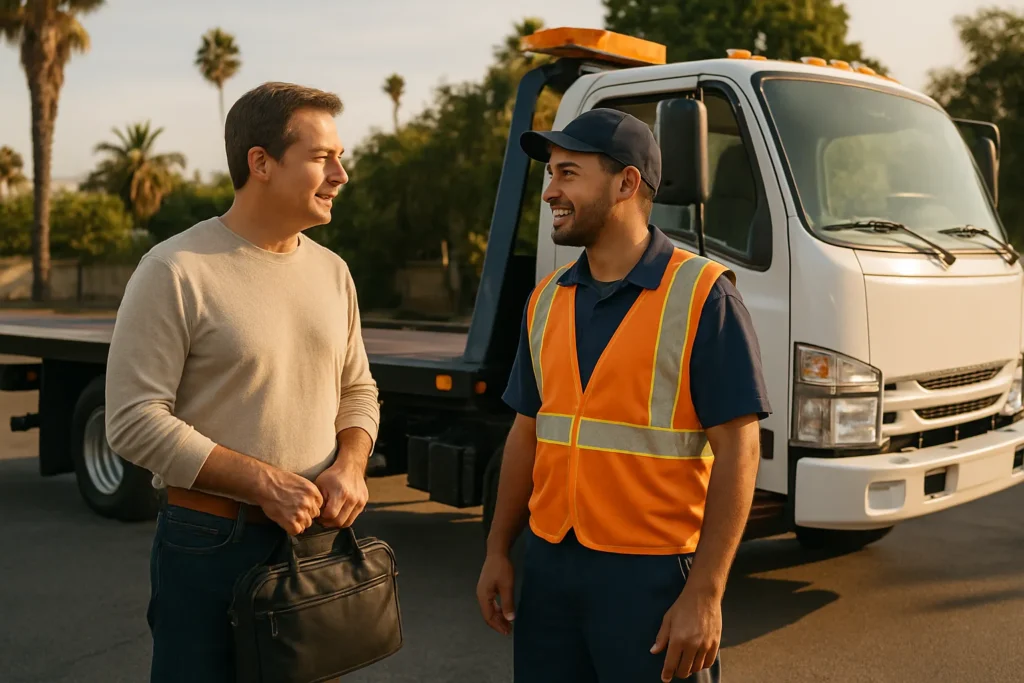
For a disabled vehicle that is safely on the shoulder, call a towing or roadside assistance provider. Describe the symptom, vehicle, shoulder width, traffic exposure, and any damage. Do not attempt repairs on the traffic-facing side of the car.
Know When a Roadside Fix Is Not Safe
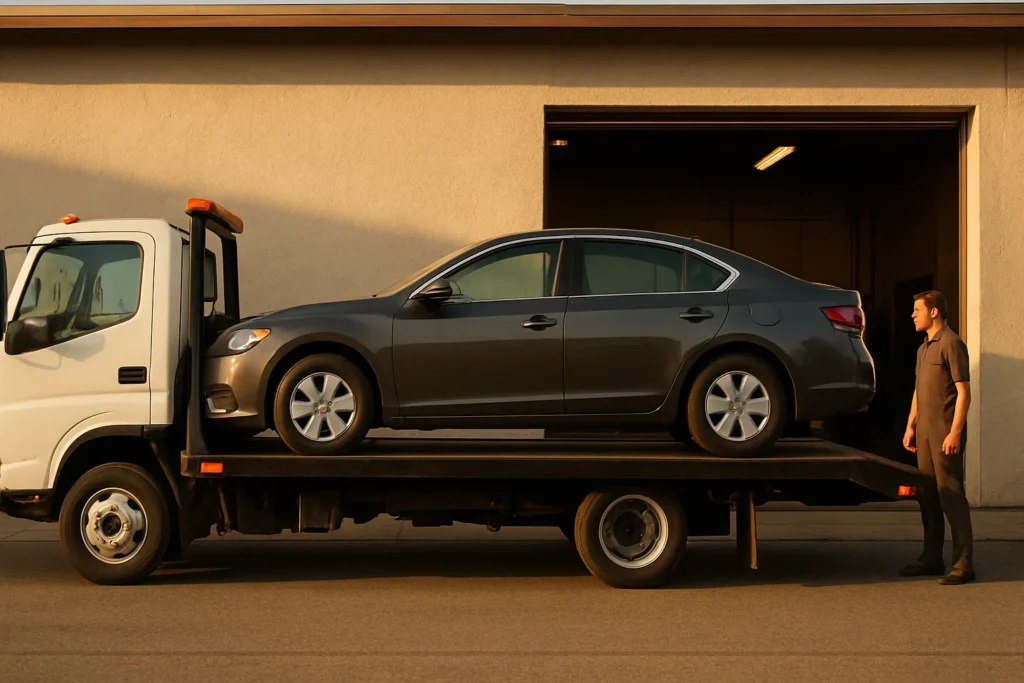
A jump start or tire change may be straightforward in a parking lot and unsafe on a narrow freeway shoulder. The operator will assess working space, traffic, surface conditions, and visibility. Sometimes the safest plan is to tow the vehicle to a protected location before checking the battery or changing a tire.
Do not crawl under the vehicle, open a coolant system, or stand next to a traffic-side wheel. If the engine overheated, shut it off and allow it to cool. If a tire failed, continue only far enough to leave the active lane when control allows; the wheel can be replaced, but roadside exposure is the larger risk.
Prepare Before the Next Breakdown
Keep a phone charger, flashlight, reflective vest, water, and basic emergency information in the vehicle. Save your insurance and roadside contacts, and learn how to find your location in your map app. Check the spare tire and wheel-lock key before a trip.
Regular tire-pressure, battery, fluid, and cooling-system checks reduce the chance of a stop, but no maintenance plan prevents every failure. A simple safety routine helps when the unexpected happens.
Need Help on an LA Freeway?
Maps Towing provides 24/7 towing and roadside assistance across Greater Los Angeles, with trucks dispatched from Van Nuys and Burbank. Once you are in the safest available position, call (818) 797-1560. Give us the freeway, direction, nearest exit, vehicle, and condition so we can find you quickly.
Share: