





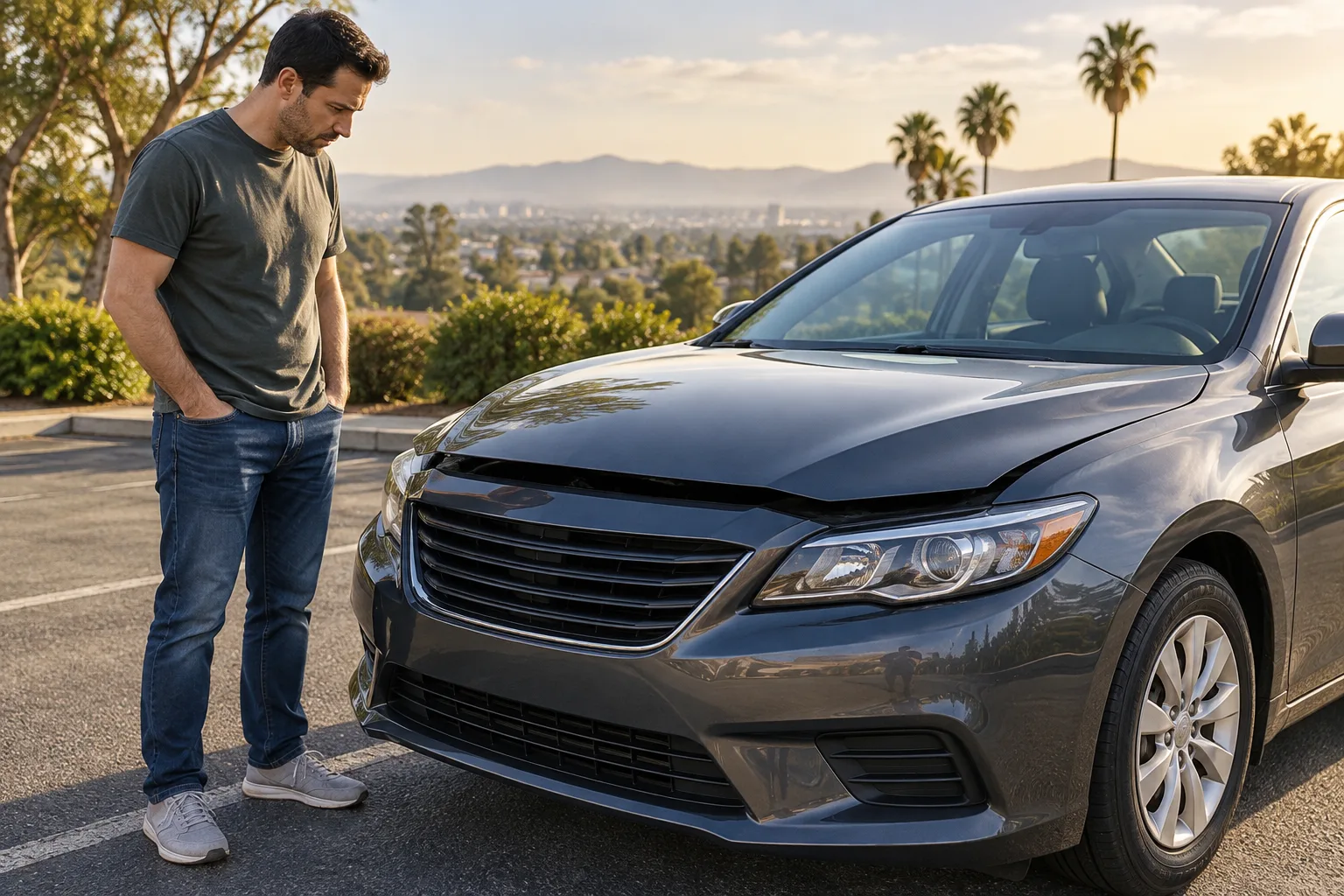
If your car’s hood will not latch securely, do not drive it to find out whether it will stay down. Keep the vehicle parked and arrange professional assessment. If you notice the hood lifting or an open-hood warning while driving, reach a safe stopping place if possible before checking it.
A short trip on surface streets is not a dependable workaround. The immediate question is whether the hood is actually secured, not whether the engine runs normally.
Why a hood that looks closed may still need attention
Hyundai’s hood instructions warn that an open hood can block the driver’s view and direct owners to verify that it is latched before driving. Use the closing procedure for your exact vehicle. Do not transfer a drop height or pressing technique from another model, especially to an unfamiliar hood or front storage compartment.
If the hood will not remain closed, sits unevenly after damage, or cannot be confirmed secure, stop trying to force it. Keep hands clear of the latch and hinges. Do not improvise with rope, tape, or a bungee cord and treat the car as ready for road use.
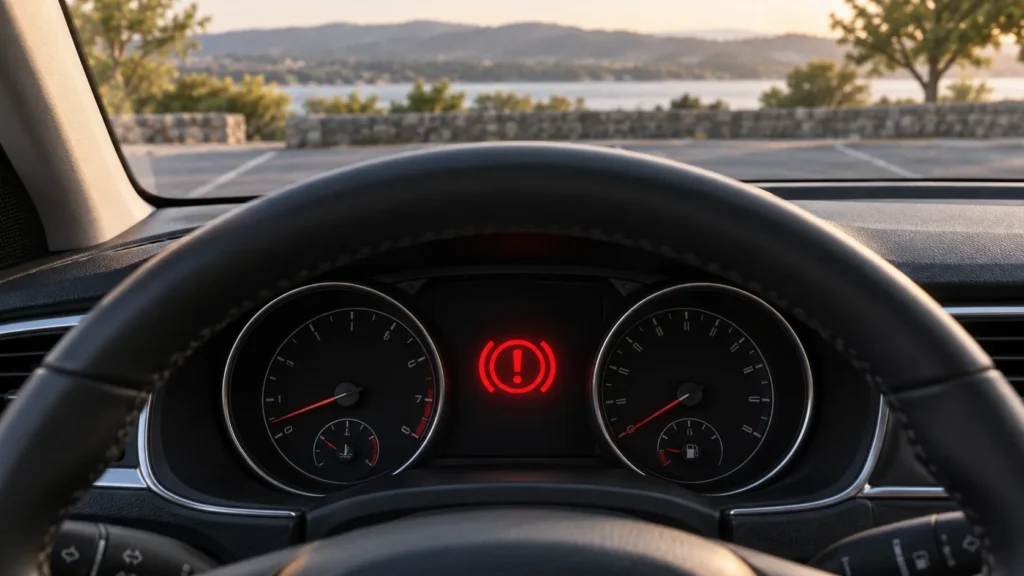
What if only the dashboard warning is on?
A warning does not tell you which part needs repair. Tell a qualified technician whether the hood visibly sits correctly and what happened before the message appeared. Do not bypass a switch or dismiss the warning as electrical without checking the actual closure. If you cannot verify secure latching, keep the car parked.
Tell dispatch about the hood before booking transport
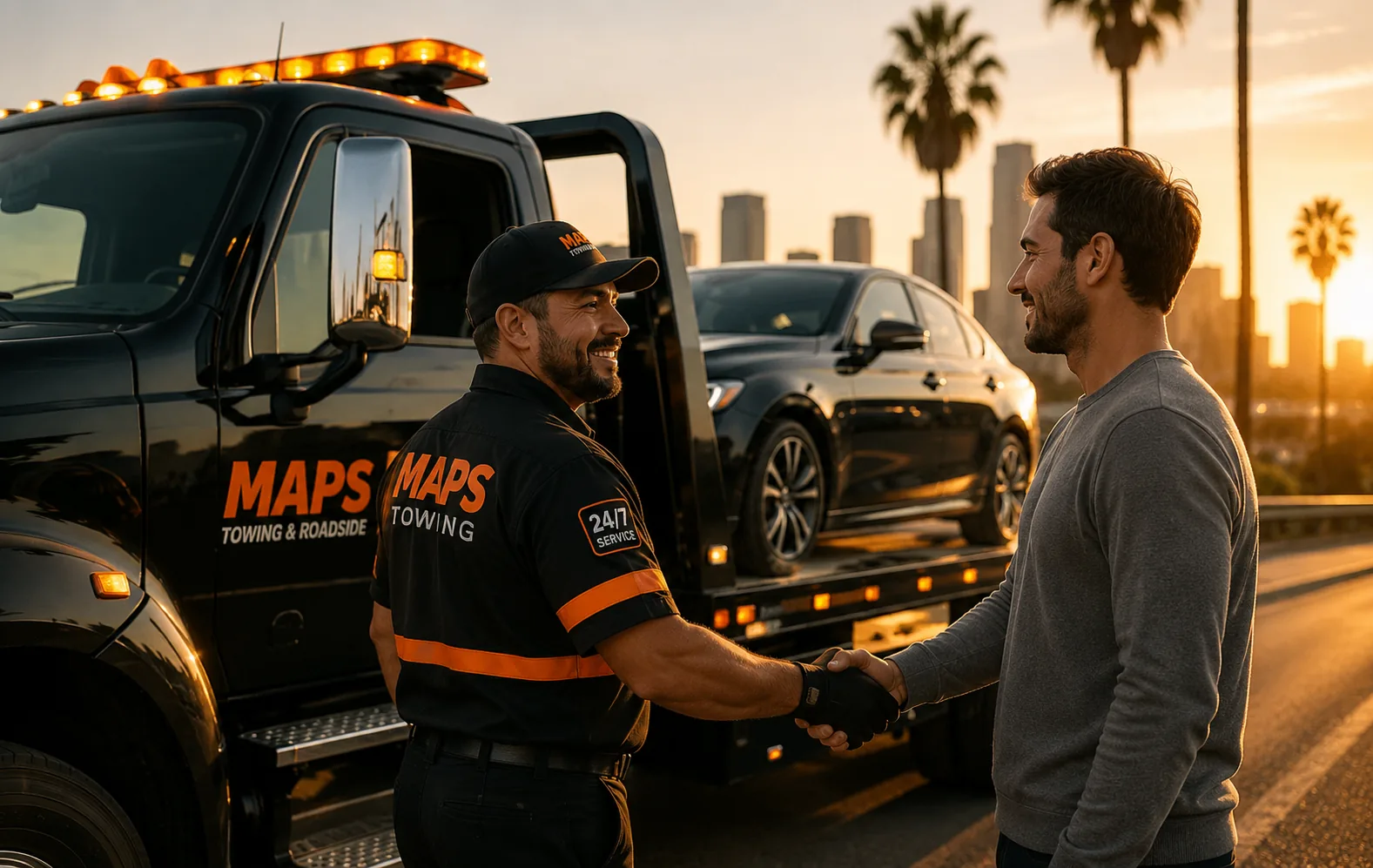
When asking about tow truck service, say specifically that the hood cannot be secured. A transport plan needs to account for the loose panel as well as the vehicle’s drivetrain and dimensions. Do not wait until loading begins to mention it.
Ask whether flatbed transport is appropriate and how the operator will assess the vehicle before movement. Being on a truck does not remove the need to evaluate unsecured bodywork. Dispatch must confirm whether the particular condition and pickup can be handled.
- Share the year, make, model, and whether the vehicle has a front storage compartment.
- Explain whether the hood stays partly open or appears closed but will not latch.
- Mention recent collision damage, service, or anything you observed before the problem.
- Describe loose parts without touching or removing them.
- Provide the pickup access and a repair facility that has agreed to receive the car.
Choose the repair destination before pickup
Ask the repair facility whether it handles the latch or bodywork concern you describe. If collision damage is involved, report that separately; a bent panel and a warning message may need different assessment. Get its unloading and key-handoff instructions before confirming the trip.
You can check your vehicle’s VIN using NHTSA’s recall lookup and ask the manufacturer about relevant instructions. A result showing no open recall does not certify that the latch is functioning. Do not postpone addressing a hood that cannot be secured while researching coverage.
Explain the local access without moving the car
For a pickup in Studio City, report any narrow driveway, gate, or slope from where you are safely standing. If requesting flatbed towing in North Hollywood, identify the entrance and available space rather than moving the car onto the street to simplify collection.
If the vehicle is exposed to moving traffic, do not stand in front of it to work on the hood. Call 911 for an immediate traffic danger and follow emergency instructions. Photos for dispatch are optional and should only be taken from a safe position.
Arrange an assessment of the transport request
Call Maps Towing at (818) 797-1560. Explain the hood condition, vehicle, exact location, and proposed repair destination. Ask dispatch to confirm current availability, whether the vehicle can be transported in its condition, the quote, and the arrival estimate.
Share: