






If the brake pedal suddenly feels unusually soft, sinks farther than normal, or the car is not slowing predictably, treat it as a safety problem. Reach a safe stopping place if possible and seek emergency help if you cannot stop safely or are creating an immediate roadway hazard. Once stopped, do not test the brakes by driving around the block.
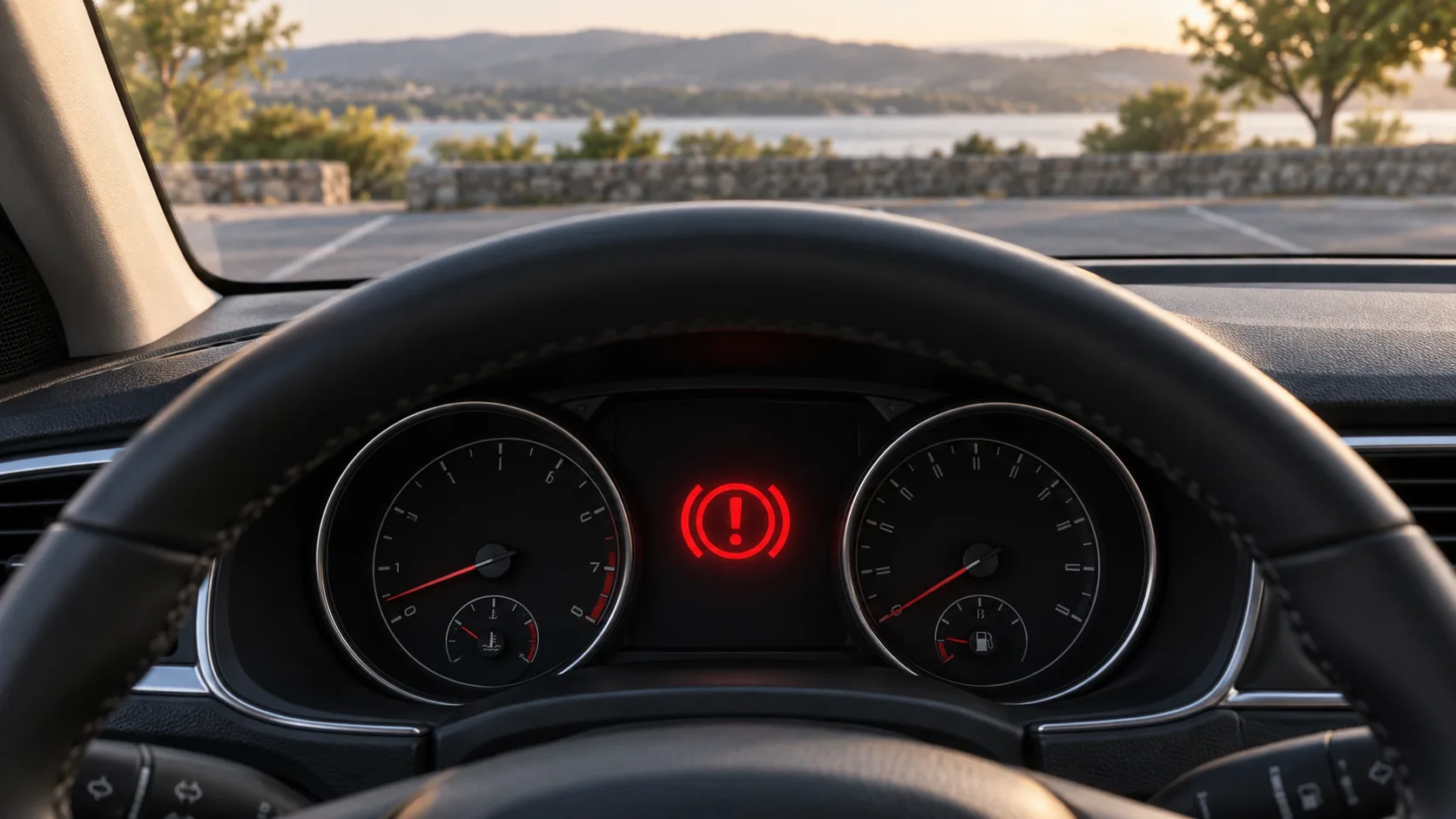
A brake warning light can have different meanings depending on the vehicle and the other warnings displayed. The exact manual and actual braking behavior matter more than a generic dashboard-light chart.
Separate the warning symbol from the driving symptom
The 2025 Honda Accord owner’s manual, for example, distinguishes brake-system warnings and combinations of indicators. It directs the driver to stop safely if the pedal has no resistance. This illustrates why the message and pedal behavior both matter; it is not a diagnostic procedure for every make and model.
A parking-brake indicator, a red brake-system warning, and an ABS warning are not automatically the same fault. Photograph the display after you are safely stopped and consult the manual. Do not assume a warning is merely a sensor problem because the car still moves.
When to keep the vehicle parked
If braking has changed, a repair professional has told you not to drive, or your manual directs you to stop, arrange inspection without another road test. The same approach applies when you cannot establish whether continuing is permitted. A short distance to the shop still requires reliable braking.
Explain the symptoms when asking about emergency towing. Do not promise that the car can be driven onto a truck. Tell the operator about the brake problem before any attempt to move or load it.
Do not turn the pickup into a brake repair
Avoid crawling under the vehicle, bleeding the brakes, opening lines, or adding fluid as an experiment. Describe visible leaks from a safe position without touching the fluid. A towing arrangement gets the vehicle to an inspection; it does not establish what failed or whether the brakes are safe after a quick adjustment.
Give dispatch a useful condition report
- Vehicle year, make, model, and any modifications you know about.
- Exact warning text and whether other lights appeared at the same time.
- What changed in the pedal or stopping behavior before parking.
- Whether the vehicle is on a slope, in a garage, or near moving traffic.
- Any known parking-brake problem, locked wheel, or steering restriction.
- The repair facility’s address and receiving instructions.
If the car is on a grade, report that immediately and stay out of its possible path. Do not release its parking brake or shift it into Neutral to prepare for pickup. Let the operator assess how to control movement before loading.
Match transport to the vehicle and location
Ask dispatch whether flatbed towing or another approved setup suits the vehicle. The brake concern, drivetrain, wheel movement, and available access all need to be discussed. The word “flatbed” alone does not answer how an unsafe-to-drive vehicle will be loaded.
For a request in Sherman Oaks, give the actual driveway or street position and mention any incline. For emergency towing in Glendale, include the entrance and garage restrictions if applicable. Report the conditions you can observe without moving the car.
Confirm the repair destination and next step
Call the shop to confirm it can accept a vehicle with a suspected braking fault and tell it the car should not be driven during the handoff without assessment. Arrange your own transportation separately; ask about passenger needs before a truck is assigned.
Call Maps Towing at (818) 797-1560 to discuss transport. Give dispatch the brake symptoms, location, and destination, then confirm current availability, vehicle suitability, the quote, and the estimated arrival.
Share: