






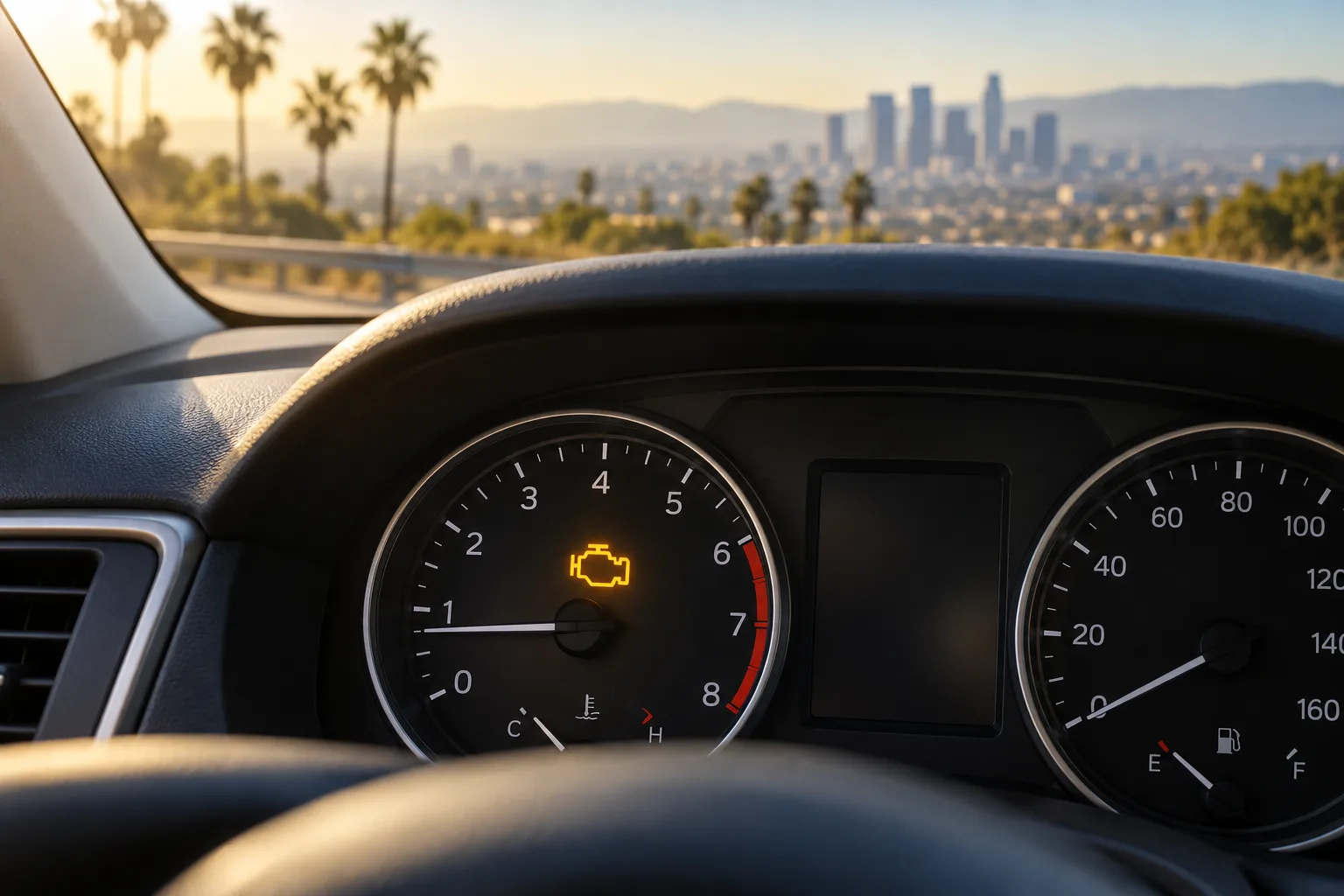
A flashing check engine light while the engine is running deserves prompt attention, especially if the car shakes, loses power, or runs unevenly. Ease off the accelerator and reach a safe stopping place if you can do so safely. Once stopped, consult the warning instructions for your exact vehicle. Do not make a freeway trip or repeated test drives to see whether the light clears.
The warning does not identify a repair by itself. Your immediate decision is whether the car can safely continue under its manufacturer’s instructions or needs transport for diagnosis.
Why flashing is different from a steady light
For example, the 2026 Honda Pilot owner’s manual distinguishes an emissions-system warning from blinking that indicates detected engine misfire. Its blinking-light instructions call for stopping in a safe place away from flammable material and switching off the engine to cool. That is a model-specific example, not a restart procedure for every car.
A steady light also needs attention, but it is not a universal permission to drive. Record the exact symbol and message after stopping. A dashboard oil-pressure or temperature warning needs its own instructions; do not group every engine-related light under “check engine.”
When arranging a tow is the cautious choice
If the vehicle cannot maintain safe movement, has persistent shaking, or comes with instructions not to drive, arrange transport. If you cannot establish what your manual allows, contact a qualified repair professional before continuing. A clear description is more useful than guessing that a spark plug or fuel cap caused the problem.
For a disabled vehicle, review our emergency towing information and describe the warning when you call. If the car blocks traffic or there is an immediate danger, call 911 and follow emergency instructions before coordinating a private tow.
What if the flashing stops?
Tell the repair professional when it flashed, how long it lasted, and whether the car shook or lost power. A change in the display is an observation to report, not proof that the cause has been repaired. Do not restart repeatedly just to reproduce the warning for a photo.
Give dispatch the symptoms and access details
- Year, make, model, and whether the vehicle is hybrid, gasoline, or diesel.
- Whether the engine is now off and what happened before you stopped.
- Exact warning messages and any shaking, smoke, unusual smell, or loss of power.
- Whether the wheels can roll, the steering works, and a key is available, based on what you already know.
- Pickup address, nearest cross street, entrance restrictions, and the receiving shop.
Ask whether flatbed transport or another manufacturer-approved setup fits your vehicle. An engine warning alone does not determine the towing method. Do not start the engine just to make loading easier; explain its condition and let the operator assess the loading plan.
Make the local pickup easy to identify
If requesting emergency towing in Van Nuys, give the actual street or parking-lot entrance, rather than only a nearby business name. For a pickup in North Hollywood, report any gate, garage clearance, or alley access from a safe place. A map pin should be checked against the entrance the truck can use.
Contact the shop before selecting it as the destination. Tell it the car may arrive with the engine off and needs diagnosis for a flashing warning. Confirm that someone can receive it, including after-hours instructions if applicable.
Discuss transport with Maps Towing
Call (818) 797-1560 with the warning, vehicle details, pickup, and proposed destination. Ask dispatch to confirm current availability, vehicle suitability, the quote, and the estimated arrival. Transport arrangements do not replace a repair diagnosis.
Share: