
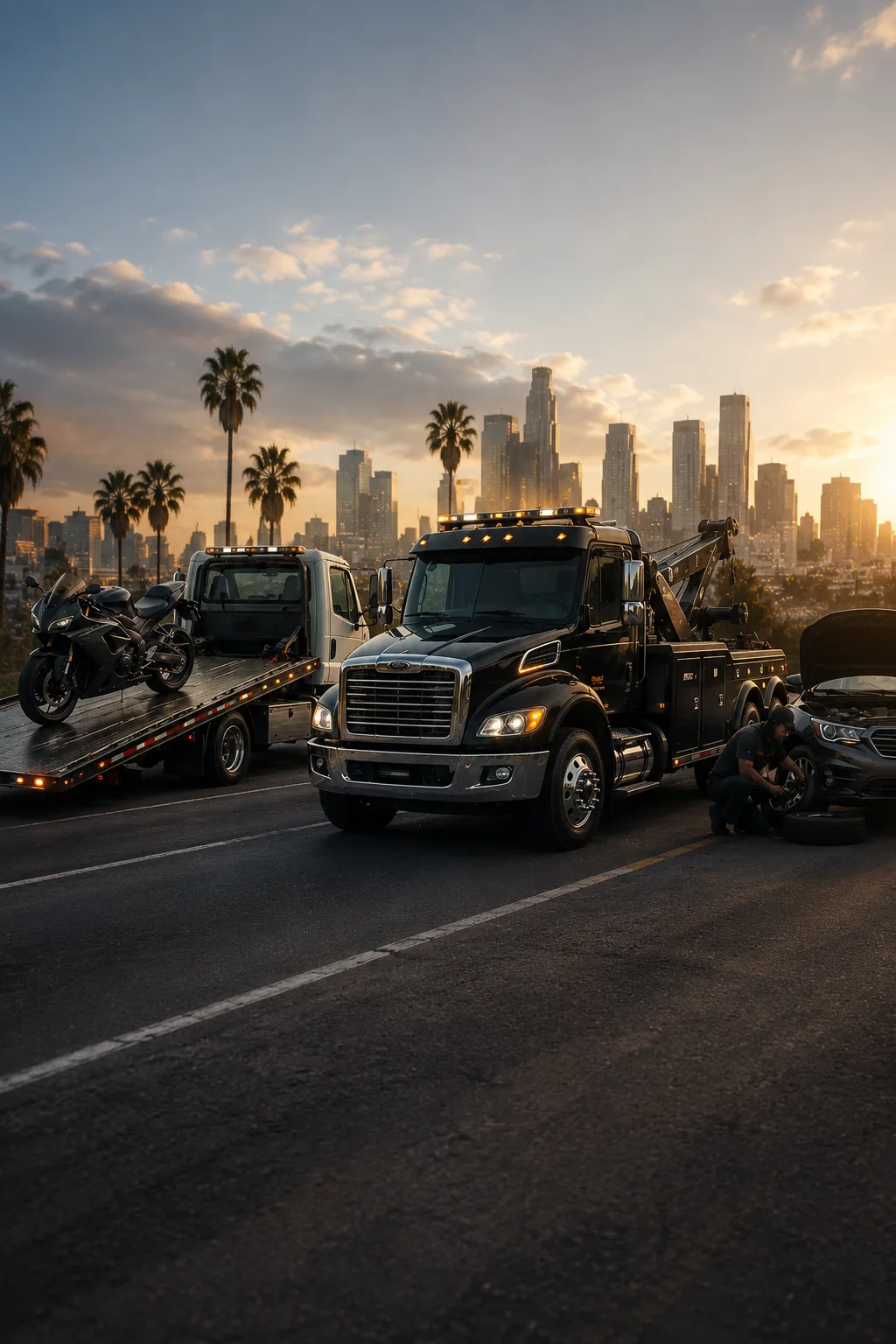




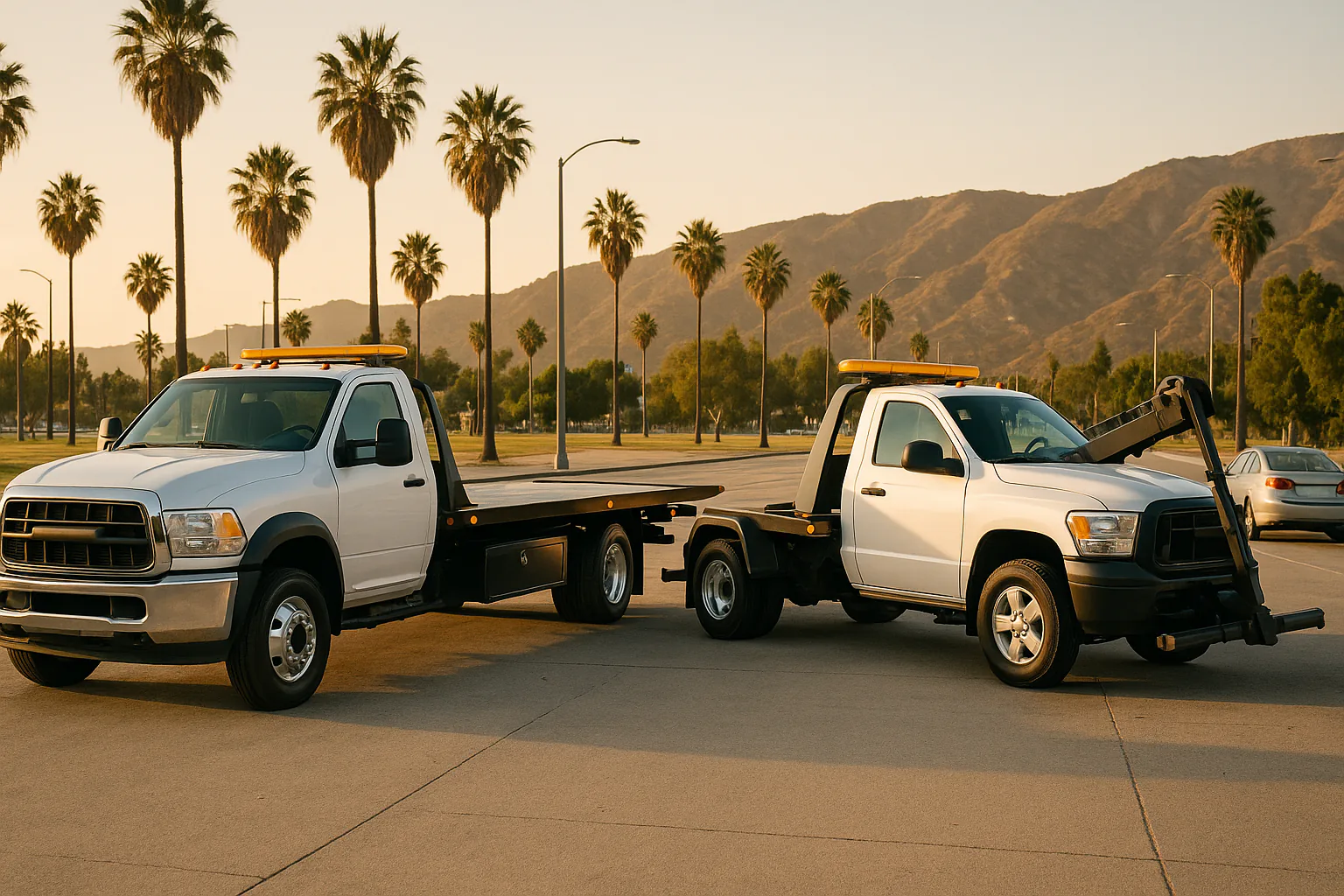
Flatbed and wheel-lift trucks can both move a disabled vehicle safely, but they do not handle every car or every situation the same way. The right choice depends on drivetrain, vehicle condition, ground clearance, distance, and the space available for loading.
A good dispatcher will ask a few questions before sending a truck. Knowing the difference between the two systems helps you understand why those details matter.
How Flatbed Towing Works
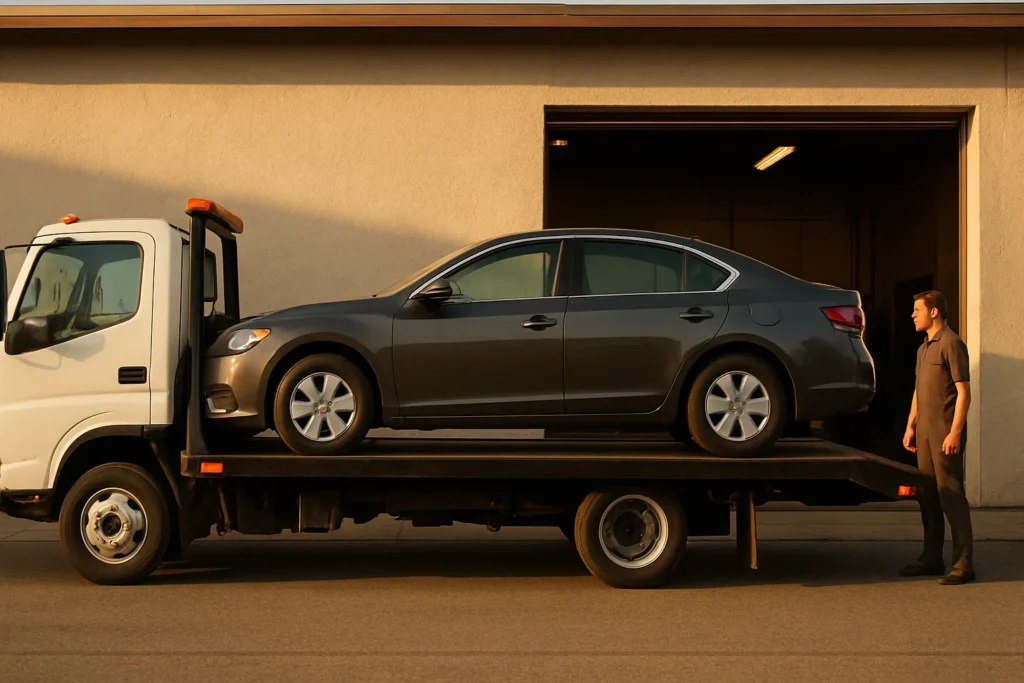
A flatbed truck carries the entire vehicle on a level deck. The operator lowers or tilts the bed, uses a winch to guide the vehicle aboard, secures it at approved points, and raises the deck for transport. All four wheels remain off the road.
Because the vehicle is fully supported, flatbed towing limits tire and drivetrain movement during the trip. It is a strong choice when a car should not roll, when damage makes wheel contact risky, or when the owner wants full off-the-ground transport.
Vehicles that often need a flatbed
All-wheel-drive cars, many electric vehicles, low-clearance models, luxury cars, classics, motorcycles, and vehicles with serious collision or suspension damage are common flatbed candidates. Manufacturer instructions still come first, especially for EVs and performance vehicles.
How Wheel-Lift Towing Works
A wheel-lift truck uses a metal yoke that fits under one pair of tires. Hydraulic arms raise those wheels while the other pair remains on the road. Modern wheel-lift equipment supports the tires rather than wrapping chains around the axle or frame.
Wheel-lift trucks are compact and maneuverable. They can work well on crowded Los Angeles streets, in some parking areas, and for compatible two-wheel-drive vehicles. They are also useful when there is not enough room to position and extend a full flatbed deck.
When dollies may be used
Wheel dollies can lift the second axle so all four tires stay off the pavement. They may make a wheel-lift setup suitable for certain vehicles or access conditions, but the operator must still follow weight limits and manufacturer guidance. Dollies are equipment, not a reason to ignore a vehicle’s towing requirements.
Drivetrain Is the First Question
If drive wheels roll on the road while the transmission is not operating normally, internal components can be damaged. A front-wheel-drive car may be towable with its front wheels raised. A rear-wheel-drive car may require the opposite orientation or another procedure. An all-wheel-drive system can be more sensitive because both axles are connected.
Do not guess based on appearance. Tell dispatch whether the vehicle is front-wheel drive, rear-wheel drive, all-wheel drive, or four-wheel drive. If you are unsure, provide the exact year and model so the towing company can choose a conservative setup.
Vehicle Damage Can Decide the Method
A broken ball joint, bent wheel, flat tire, locked transmission, or damaged axle can make normal rolling unsafe. Collision damage may also leave loose body panels or reduce ground clearance. A flatbed with a winch, skates, and careful loading may be the better option.
Ground clearance matters during loading. Low bumpers, splitters, exhaust parts, and battery enclosures need a controlled approach angle. Tell dispatch about modifications or visible damage so the operator can bring ramps or blocks if needed.
Distance and Access Matter Too
For a compatible vehicle and a short local move, a wheel-lift truck can be efficient. For longer transport, a flatbed keeps the full vehicle off the road. That does not make one truck universally better; it means the job should be matched to the equipment.
Access can reverse the decision. A flatbed needs room to align with the vehicle and extend its deck. In a tight garage or narrow curb lane, a wheel-lift truck may reach a car that a larger truck cannot. The operator may move the vehicle to an open area before changing the loading setup.
What to Tell the Towing Dispatcher
Provide the vehicle year, make, model, drivetrain, condition, exact location, and destination. Say whether the keys are available, the transmission shifts to neutral, the wheels roll, and the parking brake releases. Mention low clearance, an EV battery warning, collision damage, or a restricted garage.
Those details prevent delays and protect the vehicle. If the owner’s manual has a towing section, keep it available for the operator.
Get the Right Tow Truck in Los Angeles
Maps Towing provides flatbed and wheel-lift service across Greater Los Angeles, dispatched from Van Nuys and Burbank. Call (818) 797-1560 and describe your vehicle and location. We will use those details to send the right equipment for a safe, professional tow.
Share: