
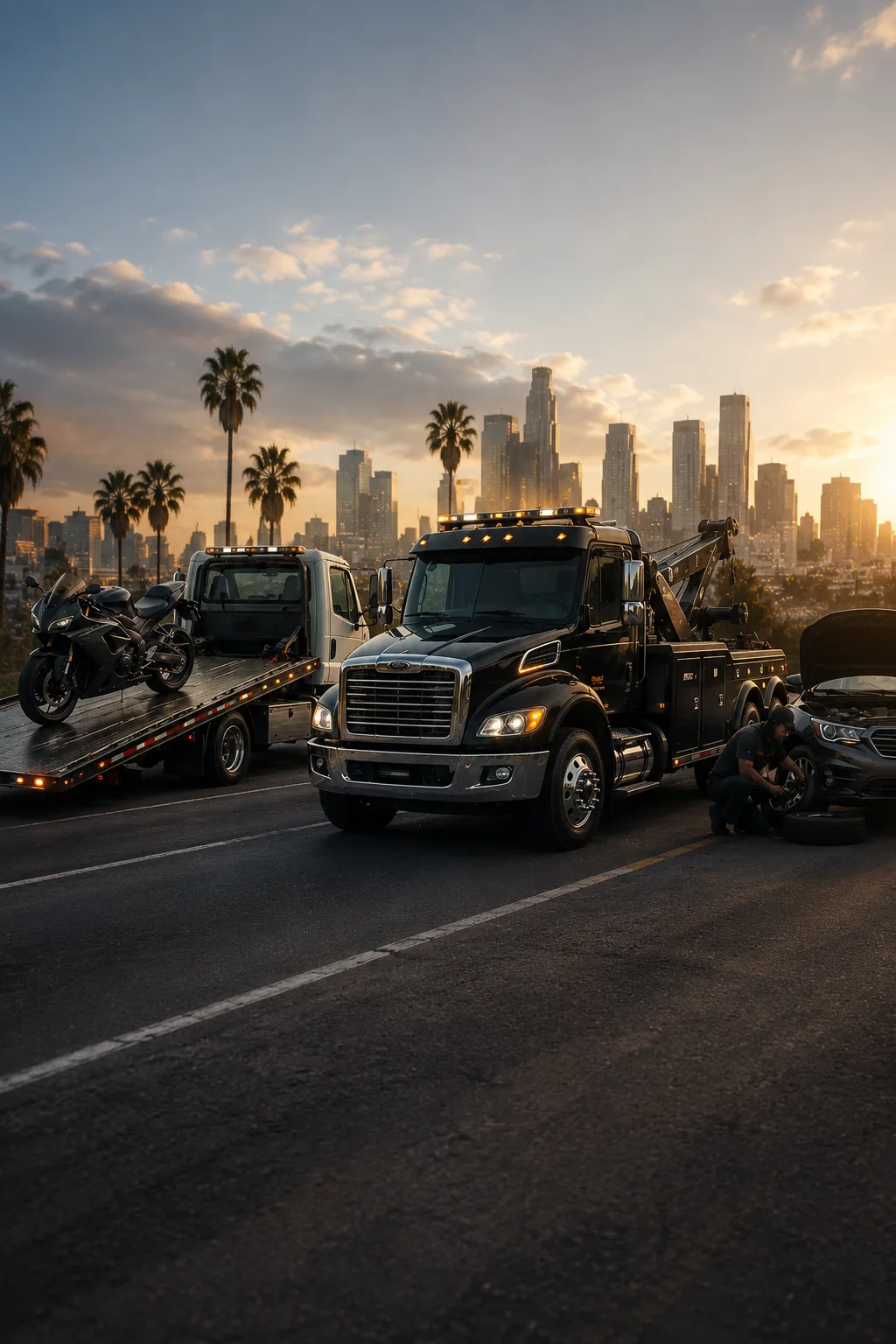




Motorcycle towing in Los Angeles requires more than placing a bike on the back of a truck. A motorcycle has a small contact patch, exposed bodywork, sensitive controls, and no stable four-wheel base. The equipment and securement method must keep it upright without damaging the suspension, fairings, wheels, or handlebars.
Whether the bike has a flat tire, mechanical failure, electrical problem, or collision damage, choosing a service prepared for motorcycle towing in Los Angeles helps protect it from pickup through delivery.
Why Motorcycles Need Specialized Towing
A car can often be moved with a wheel lift or flatbed because its weight is distributed across four wheels. A motorcycle can tip as soon as it is rolled, and ordinary rope or improvised straps can shift, loosen, or press against painted parts. Loading angle also matters for low exhaust systems, long wheelbases, and custom bodywork.
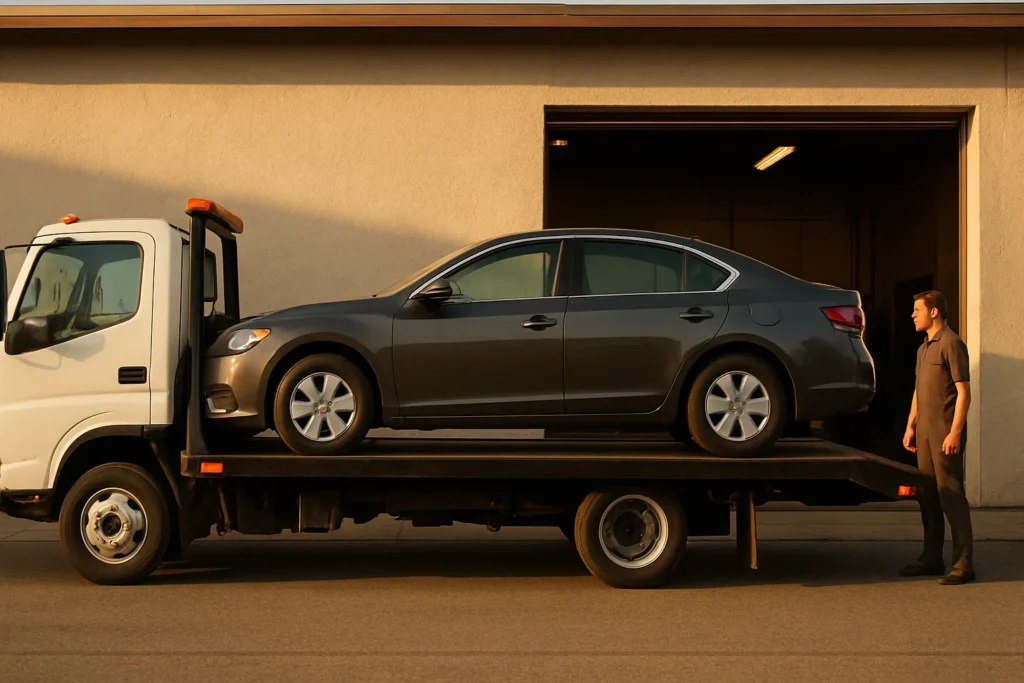
Professional transport uses equipment selected for the bike and its condition. A flat platform, wheel chock, soft straps, and appropriate tie-down points create a controlled setup. This is one reason a flatbed towing service is commonly used for motorcycles that cannot be ridden.
Information to Give the Dispatcher
Share the motorcycle’s make, model, approximate size, and current condition. Tell dispatch if the steering is locked, a wheel will not roll, the transmission is stuck in gear, the keys are unavailable, or accident damage affects the forks, bars, frame, or wheels.
Describe the pickup environment as clearly as the motorcycle. A bike inside an underground garage, down a steep driveway, beside freeway traffic, or behind a narrow gate may require a different loading plan. Photos can help show access, ground conditions, and visible damage before the truck arrives.
How a Motorcycle Is Loaded Safely
The operator first inspects the bike and chooses safe contact and securement points. A ramp or tilted flatbed creates the loading path, and a winch may provide steady movement when the motorcycle cannot roll or be powered. The operator controls the bike’s balance throughout the process rather than riding it onto the truck.
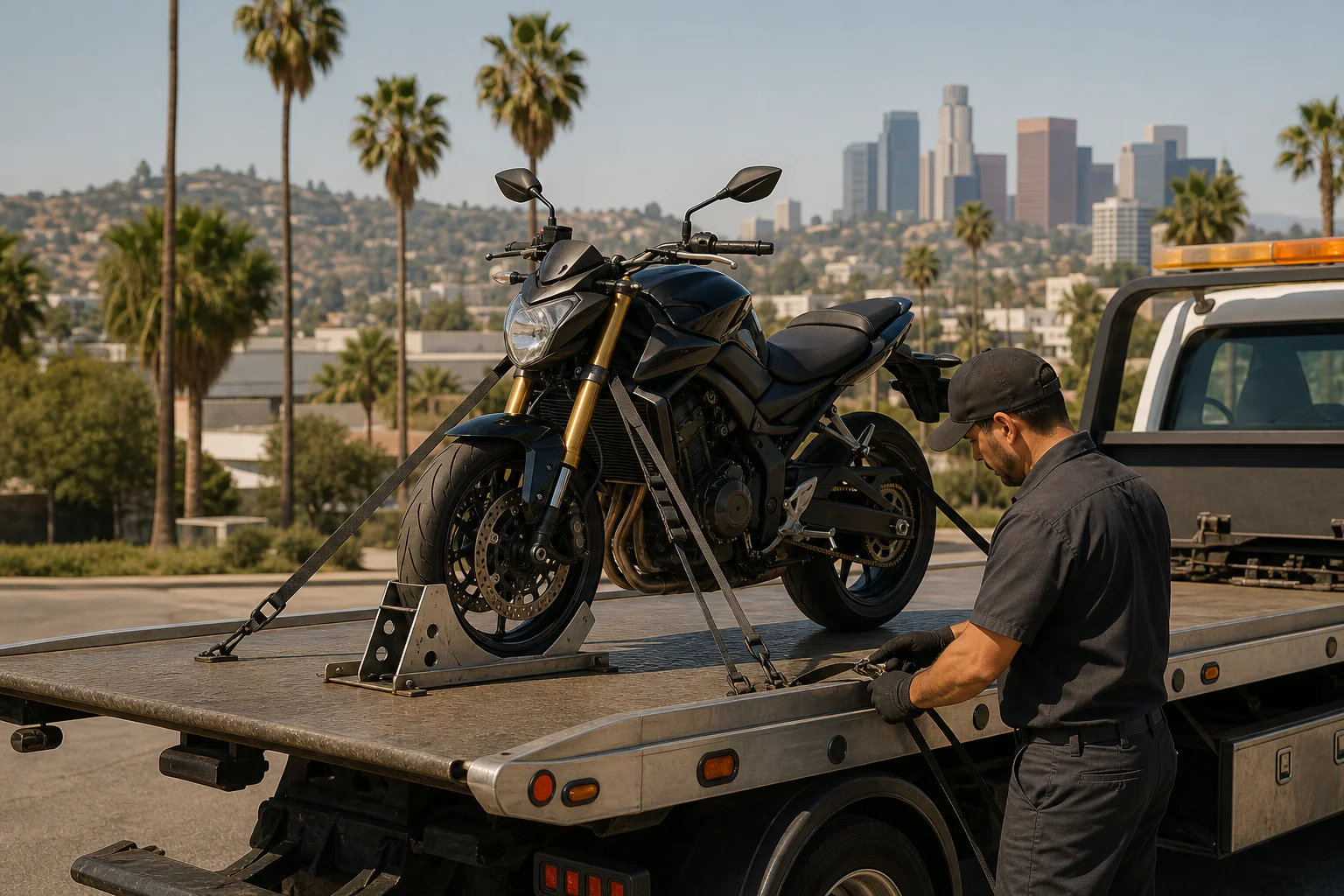
Once aboard, the front wheel is positioned in a chock or equivalent support. Soft straps protect finished surfaces, while multiple tie-downs control forward, rearward, and side-to-side movement. The goal is firm support without excessively compressing the suspension or loading fragile components.
Securement Is Checked Before Transport
The operator checks strap angles, tension, wheel position, and clearance around bodywork. Loose accessories or luggage may need to be removed or secured separately. The motorcycle should remain upright and stable as the truck accelerates, turns, and brakes.
Different motorcycles require different care. A heavy touring bike, low cruiser, sport bike, scooter, and custom build do not share identical lifting points or clearances. For unusual or high-value machines, specialty towing may provide the most suitable approach.
Accident-damaged motorcycles need extra assessment
After a collision, damage may prevent the handlebars from turning or a wheel from rotating. Fuel, oil, or coolant may also leak when the bike is moved from its resting position. Do not lift it alone or attempt to straighten visibly damaged parts. Tell dispatch which side is down, whether fluids are present, and whether law enforcement has released the motorcycle for removal.
The operator may use additional rigging or a winch to move the bike without relying on damaged controls. Loose body panels and broken accessories should be collected when it is safe, then transported separately so they do not fall from the truck.
Flatbed Transport Versus Other Methods
Keeping the entire motorcycle off the roadway avoids tire rotation and reduces exposure to pavement hazards during transport. It is especially useful when a wheel, tire, chain, belt, steering component, or suspension part may be damaged.
The broader differences between equipment types are covered in our guide to flatbed versus wheel-lift towing. For a motorcycle, the deciding factors are secure loading, stable tie-down points, adequate clearance, and an operator experienced with two-wheel vehicles.
Prepare the Bike for Pickup
If conditions are safe, remove valuables and tell the operator about alarms, steering locks, aftermarket accessories, or hidden damage. Have the key available when possible, but do not attempt to ride a motorcycle with a questionable tire, brake, wheel, or control system merely to make loading easier.
Confirm the delivery location and whether someone can receive the bike. A repair shop may have restricted hours or a designated drop area. Clear instructions prevent the motorcycle from being left somewhere unsuitable after transport.
At delivery, inspect the motorcycle with the operator and confirm where the key and any removed accessories are placed. If the bike is being left after hours, agree on a secure location and notify the receiving shop. A careful handoff is part of protecting the motorcycle, not merely an administrative detail.
Motorcycle Towing Across Los Angeles
Maps Towing provides 24/7 towing and roadside assistance throughout Greater Los Angeles, including Glendale and surrounding communities. If your motorcycle cannot be ridden safely, call (818) 797-1560. Share the bike details, condition, pickup access, and destination so our Van Nuys or Burbank dispatch team can coordinate suitable available equipment.
Share: