




All-wheel-drive and four-wheel-drive vehicles send power through more than one axle, which changes how they should be moved when disabled. Letting the wrong wheels rotate on the road can place stress on the transmission, transfer case, differentials, or electronic drive systems.
The safest first step is to tell dispatch the exact year, model, and drivetrain. Professional flatbed towing in Los Angeles is commonly used because it carries all four wheels off the pavement, but the owner’s manual and vehicle condition still control the final method.
AWD and 4WD Are Not the Same System
All-wheel drive often operates automatically and may distribute power continuously or as traction changes. Four-wheel drive may offer selectable two-wheel-drive, four-high, four-low, or neutral transfer-case settings. Designs vary widely, even between vehicles from the same manufacturer.
Do not assume that selecting Neutral at the transmission disconnects every driven component. Some vehicles require a transfer-case procedure, transport mode, or specific ignition sequence. Other models prohibit road towing with any wheel on the ground.
Check the Owner’s Manual
Look for the roadside emergency, recreational towing, or vehicle transport section. Use instructions for the exact model year and drivetrain. Guidance written for a front-wheel-drive version may not apply to the AWD version of the same vehicle.
Keep an offline copy of the manual on your phone when possible. If the vehicle has no electrical power, tell dispatch whether doors, shifter, steering, and parking brake can be operated. The operator may need model-specific access or positioning equipment.
Why Flatbeds Are Commonly Recommended
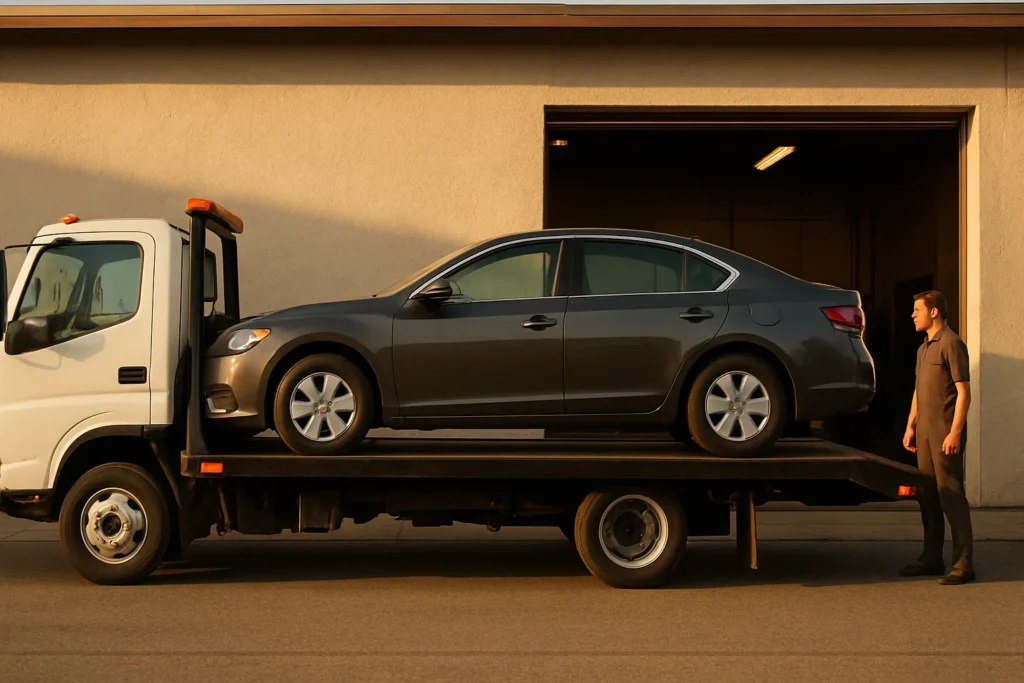
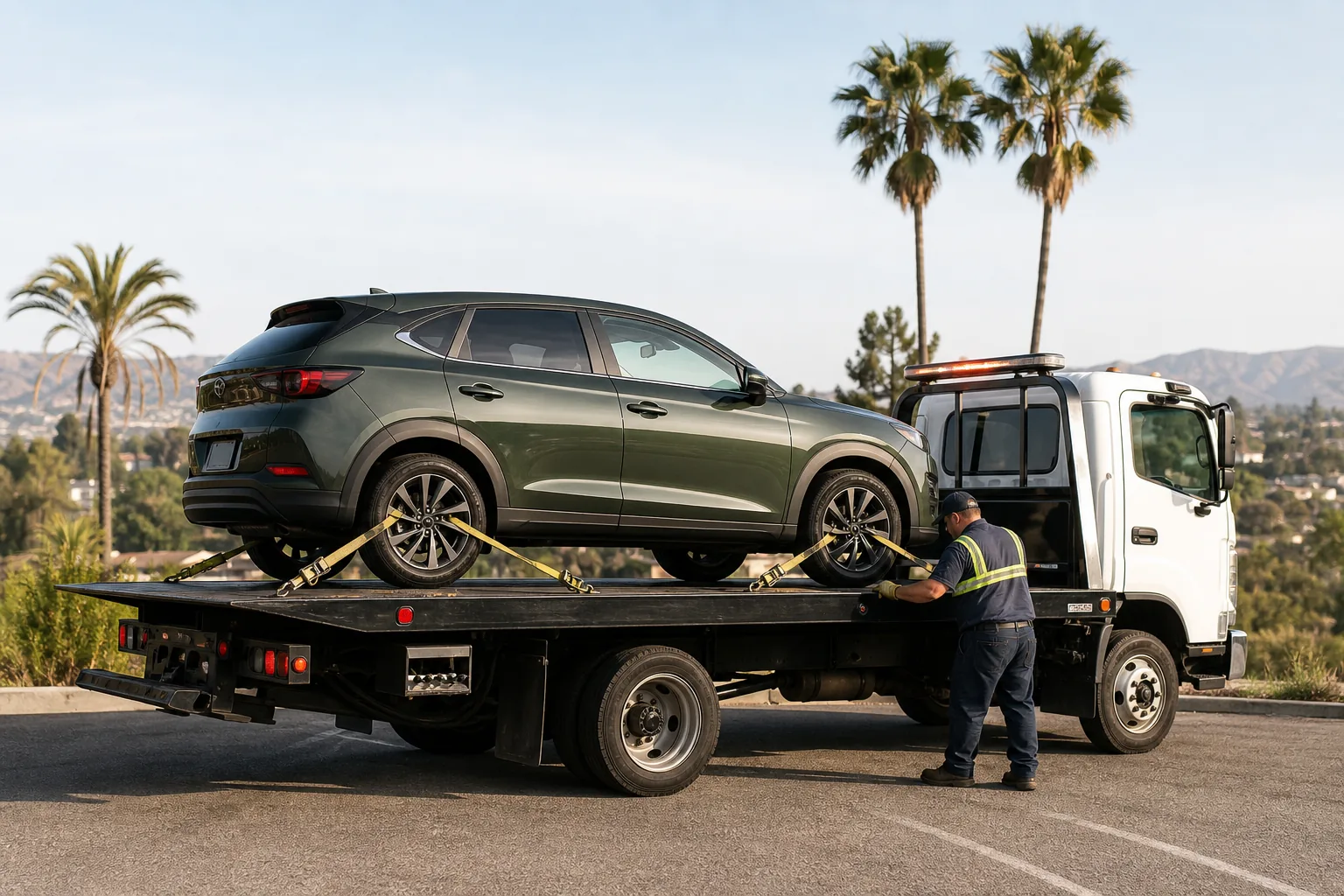
A flatbed keeps the tires and driveline from rotating during transport. It also provides a stable platform for vehicles with collision damage, low clearance, or uncertain mechanical condition. The operator can winch the vehicle onto the deck and secure the wheels at approved positions.
Flatbed loading still requires planning. A locked wheel, failed parking brake, steep driveway, low garage, or vehicle that cannot shift into neutral may require skates, dollies, extended ramps, or another controlled movement before the carrier can load it.
When Dollies or Specialized Equipment May Be Used
A wheel-lift truck with dollies can keep the second axle off the road when a flatbed cannot reach the vehicle initially. This may help in a tight garage, narrow parking area, or restricted approach. It is not permission to tow an AWD vehicle with the remaining drive wheels rolling.
Our guide to flatbed versus wheel-lift towing explains how drivetrain, access, vehicle condition, and distance affect equipment selection. The operator should match the setup to manufacturer instructions rather than using one method for every AWD or 4WD vehicle.
Tow Mode and Neutral Require Power
Modern vehicles may have an electronic parking brake, shift-by-wire transmission, or transport mode that requires a working 12-volt system. A dead battery can prevent the shifter or brake from releasing even when the main drivetrain is undamaged.
Tell dispatch if the dashboard is dark, the key is unavailable, or the vehicle will not recognize Park or Neutral. Do not force an electronic shifter or drag locked tires. Controlled loading tools can reposition the vehicle without relying on normal power.
Low Clearance and Modifications Matter
Some AWD crossovers, performance cars, and modified 4WD vehicles have unusual clearance, suspension height, tires, or bumpers. Mention air suspension, lift kits, roof equipment, oversized tires, low splitters, or damaged steering before the truck arrives.
Vehicles with custom or delicate components may benefit from specialty towing planning. Photos from a safe position can help the operator evaluate approach angle, wheel condition, and available space.
Secure the Vehicle at Approved Points
Wheel-based securement is often used to hold the vehicle without attaching to sensitive body or drivetrain components. Straps and attachment locations must suit the vehicle and carrier. Tow hooks are not interchangeable with tie-down points unless manufacturer guidance says they serve both purposes.
Remove loose exterior accessories and tell the operator about damaged wheels, suspension, or underbody panels. Keep the wheel-lock key, removable tow eye, key fob, and owner’s manual available.
Information to Give Dispatch
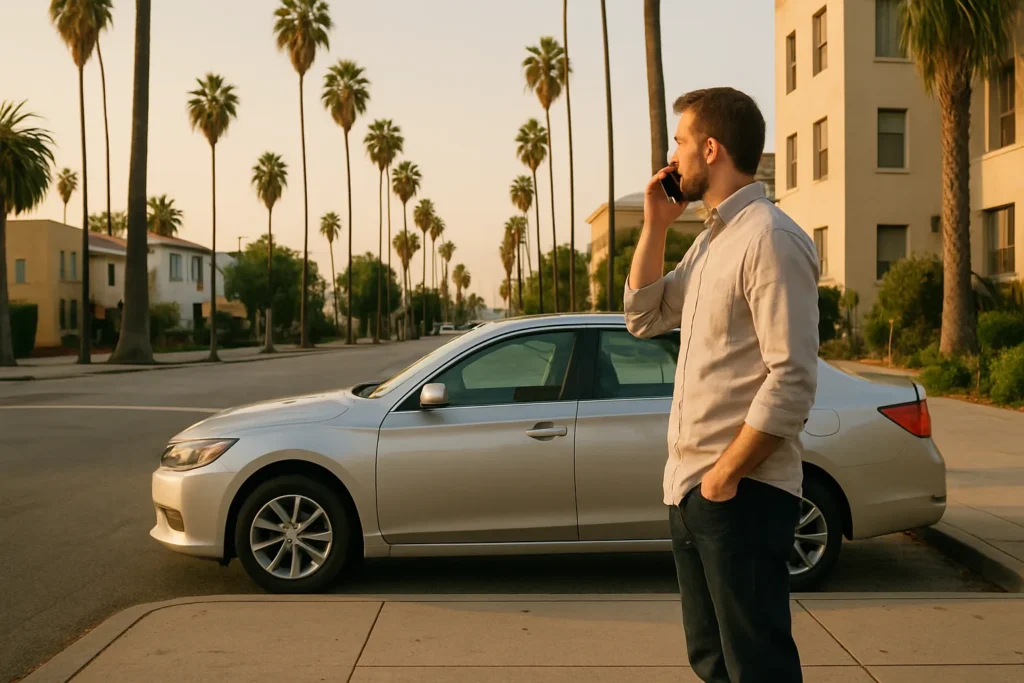
Provide the year, make, model, AWD or 4WD configuration, exact location, destination, and reason the vehicle cannot continue. State whether it powers on, shifts, rolls, steers, and releases the parking brake. Mention collision damage, warning messages, flat tires, locked wheels, low clearance, and garage height.
For drivers northeast of Los Angeles, our Pasadena towing service page provides local coverage information. Precise access details remain essential wherever the vehicle is located.
Confirm the Setup Before Transport
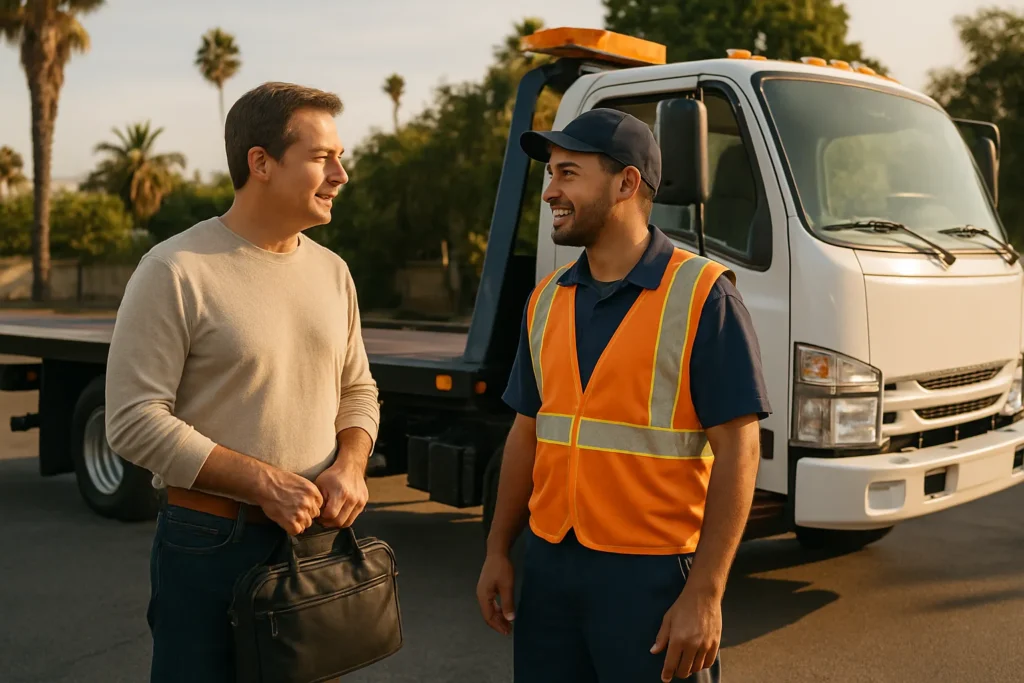
Before loading begins, repeat the drivetrain information and share any manual instructions you found. Ask where the operator plans to secure the vehicle and whether all four wheels will remain off the road. A quick confirmation helps uncover model details or access limitations before the vehicle is moved.
Arrange AWD or 4WD Towing
Maps Towing provides 24/7 towing and roadside assistance across Greater Los Angeles from Van Nuys and Burbank. Contact Maps Towing for non-urgent transport questions. For a disabled AWD or 4WD vehicle, Call (818) 797 – 1560 with the exact model, drivetrain, condition, access, and destination.
Share: