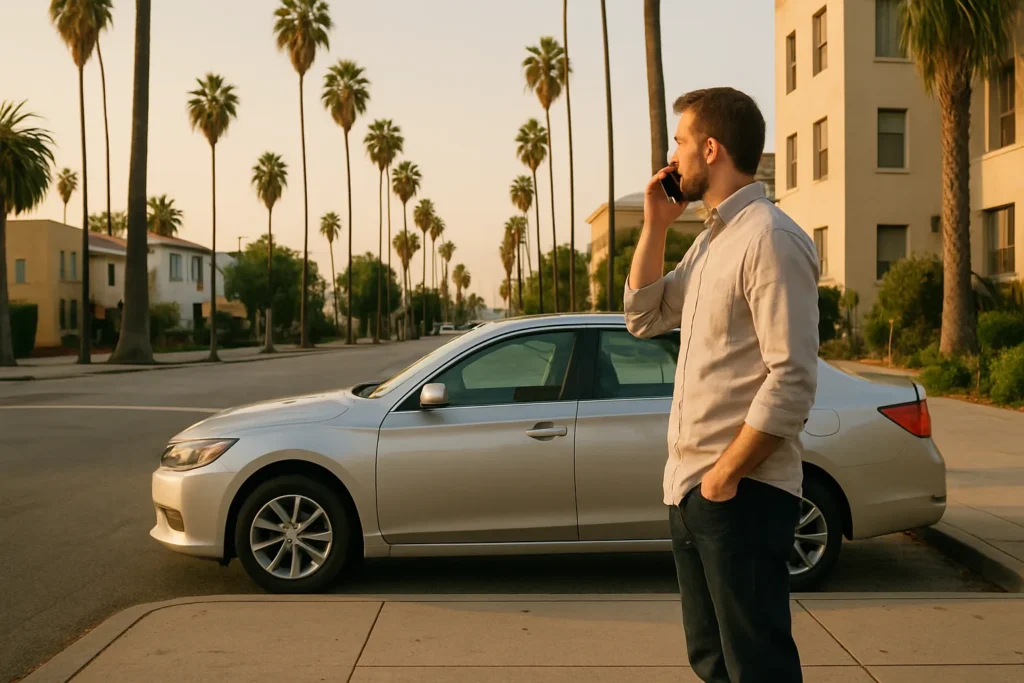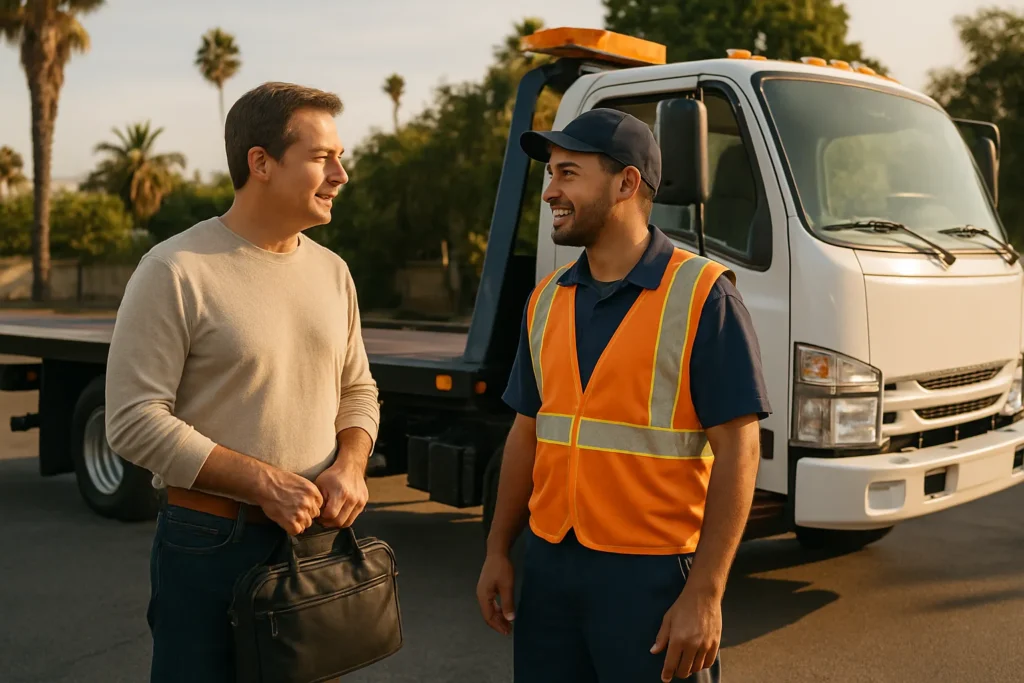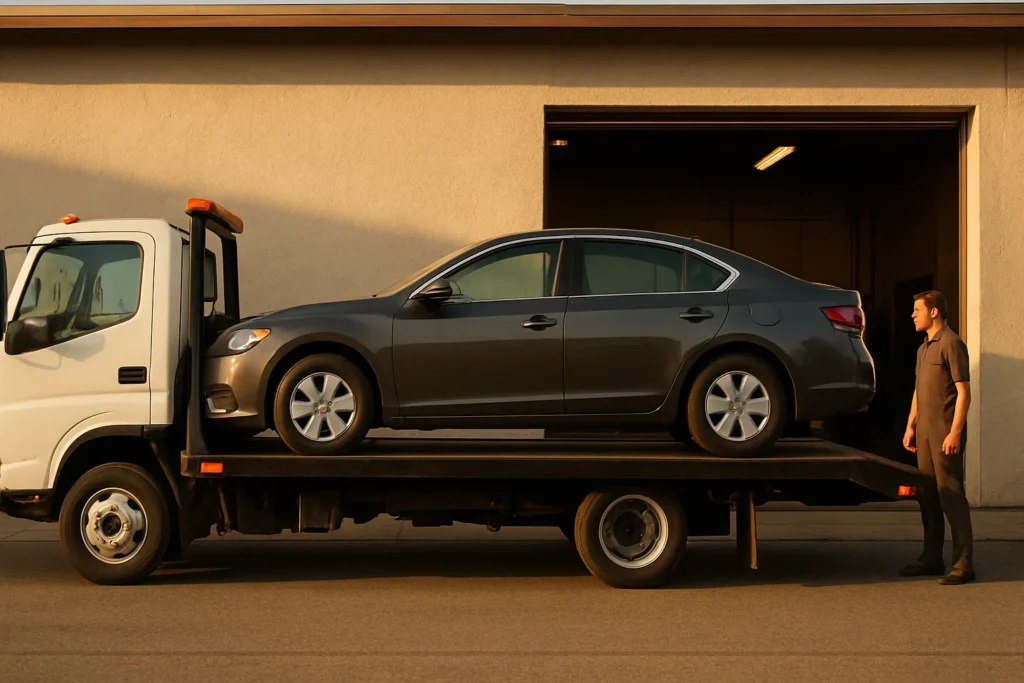

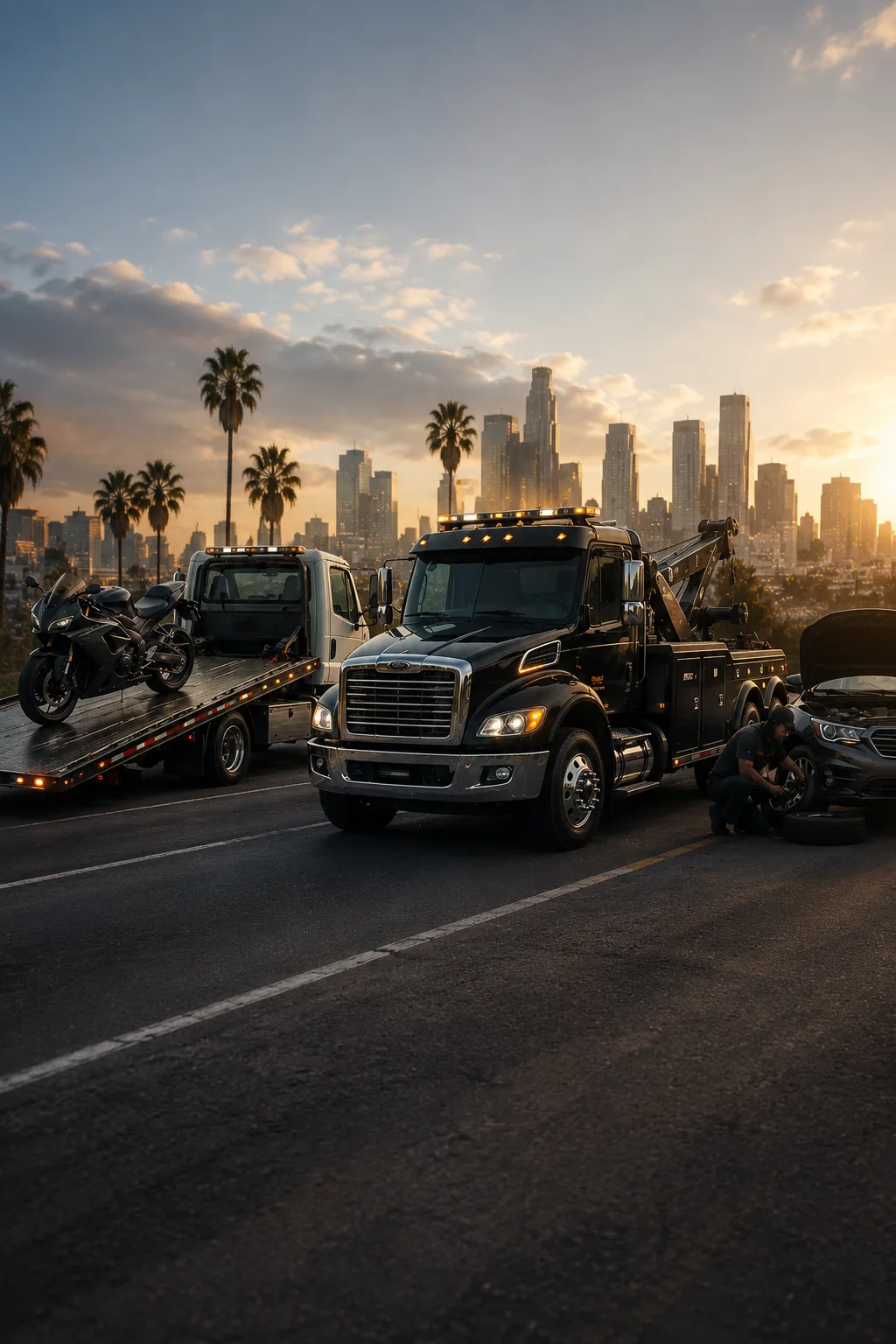




When a car stops working, the first question is often whether you need a quick roadside fix or a tow to a repair shop. The answer depends on three things: what the vehicle is doing, where it is stopped, and whether it can continue safely after basic assistance.
A call for roadside assistance in Los Angeles may resolve a straightforward battery, tire, lockout, or fuel problem. A tow truck service is usually the safer choice when the vehicle is damaged, cannot be made roadworthy, or is in a location where roadside work would expose people to traffic.
Start With the Location, Not the Symptom
A service that is simple in a parking lot may be unsafe on a narrow freeway shoulder, blind curve, bridge, steep hill, or traffic-facing side of a busy street. Turn on hazard lights, move as far from traffic as the vehicle can safely travel, and call 911 if it blocks a lane or creates an immediate danger.
Tell dispatch the freeway direction, nearest exit, cross street, parking level, gate, and correct side of a divided road. The operator may recommend moving the car to a safer place before diagnosing it. That does not mean roadside assistance failed; it means scene safety controls the order of work.
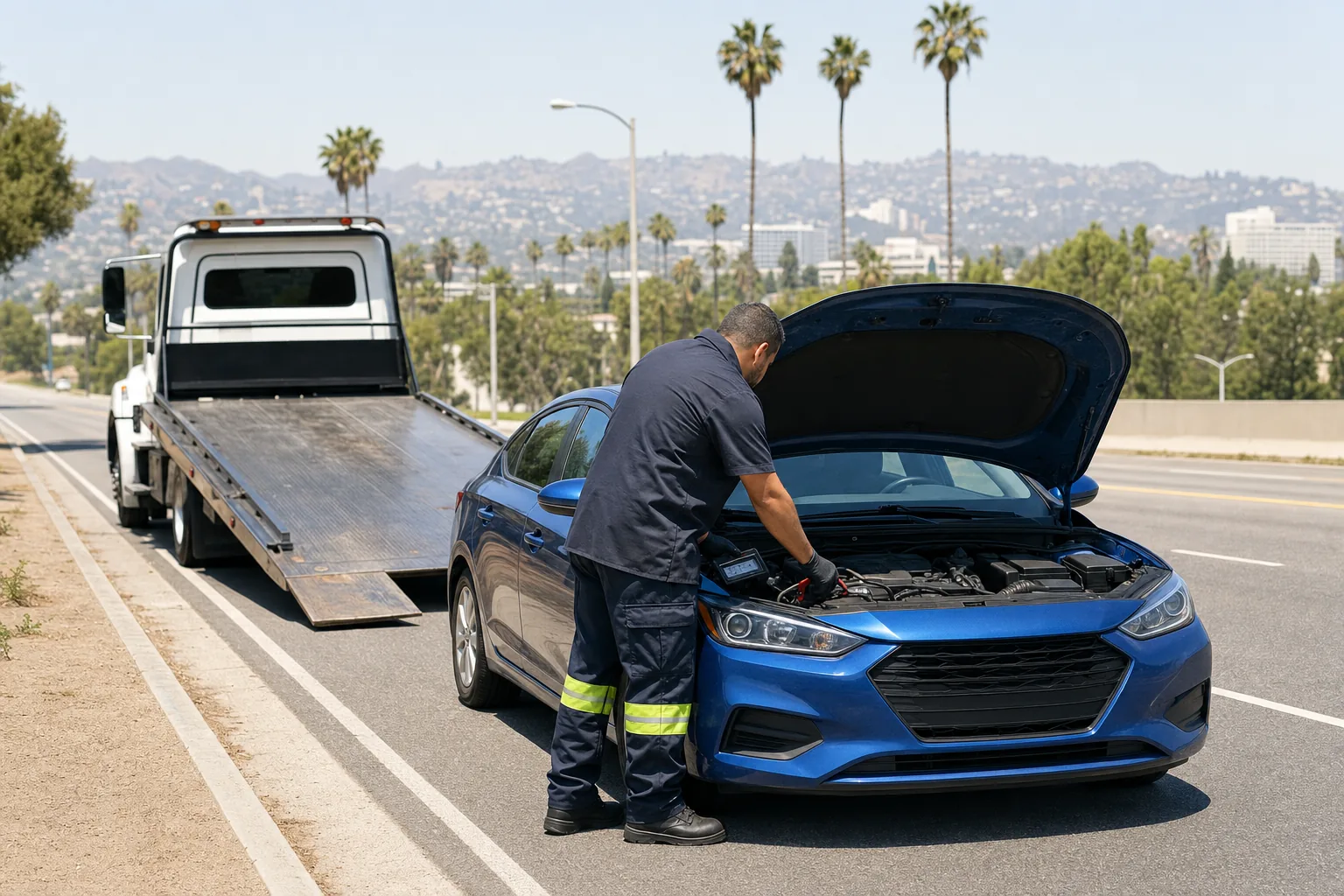
A Weak Battery May Need a Jump Start
Dim lights, rapid clicking, or no crank can point toward a weak battery or poor connection. A professional jump start service may restore enough power to start the engine when the battery and surrounding area are safe.
A successful jump does not prove the charging system is healthy. If the car dies again, shows a charging warning, smells unusual, or has a swollen or leaking battery, it should not be driven. Repeated jump starts can delay proper diagnosis and leave the driver stranded again.
A Flat Tire Can Become a Tow
A usable spare, stable surface, undamaged wheel, and safe working space may allow a roadside tire change. Tell dispatch whether the spare is present, the wheel-lock key is available, and more than one tire is damaged.
Towing is more appropriate when the wheel or suspension is bent, the spare is flat or missing, the vehicle has no safe jack point, or the traffic-side position is too dangerous. Driving on a severely damaged tire can destroy the wheel and reduce vehicle control.
A Lockout Usually Does Not Require Towing
When the key is locked inside and the vehicle is otherwise normal, professional car lockout service is generally the direct solution. Provide the year, make, model, location, and proof that you are authorized to access the car.
Call 911 for a child, vulnerable person, or pet locked inside, especially in warm weather. Do not wait for routine service when health or safety is at risk. Breaking a window can also cause injury and expensive damage, so follow emergency guidance.
Running Out of Fuel May Be Solved Roadside
If the vehicle simply ran out of the correct fuel and is safely parked, a small delivery may get it moving toward a station. A tow may be needed when the car is in a dangerous location, the fuel gauge was not the real problem, or the wrong fuel entered the tank.
Do not keep cranking if you smell fuel or see a leak. Move away from ignition sources and tell dispatch what you observed. Fuel-system damage is not a roadside refill problem.
Damage, Fluid Loss, and Steering Problems Usually Mean Tow
Arrange transport after a collision, severe overheating, oil-pressure warning, broken steering, locked wheel, major fluid leak, smoke, or a loud mechanical failure. A car can start and still be unsafe. Warning lights, rubbing tires, loose bodywork, and unusual braking should be taken seriously.
Electric and all-wheel-drive vehicles may have model-specific towing rules. Provide the exact year and model, whether the car powers on, and whether it can shift into neutral. The operator can use those details and the owner’s manual to select an appropriate loading method.
What Dispatch Needs to Decide
Describe the vehicle, symptoms, dashboard messages, sounds, visible damage, exact location, and destination. State whether the key is present, wheels roll, steering works, parking brake releases, and passengers need separate transportation. Photos can help when they can be taken safely.
The final decision may change after the operator inspects the vehicle. Roadside assistance is worthwhile only when the repair can be performed safely and the car appears roadworthy afterward. If the cause is uncertain or damage is possible, transporting the vehicle is the cautious choice.
Get the Right Help in Los Angeles
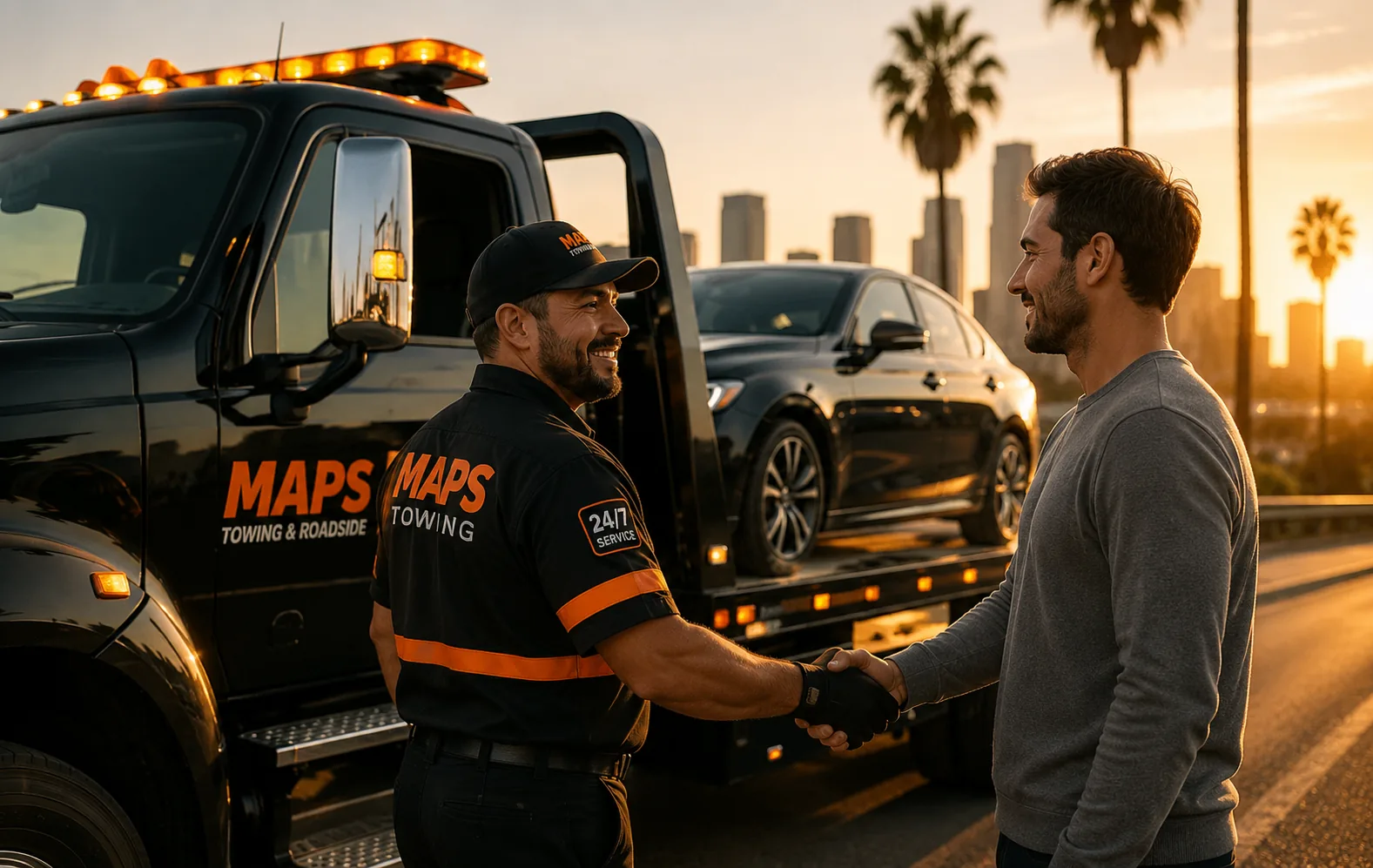
Maps Towing provides 24/7 towing and roadside assistance across Greater Los Angeles from Van Nuys and Burbank. Call (818) 797 – 1560 and describe what happened, where the vehicle is stopped, and what it does when you try to start or move it. Those details help coordinate the most appropriate available response.
Share: