




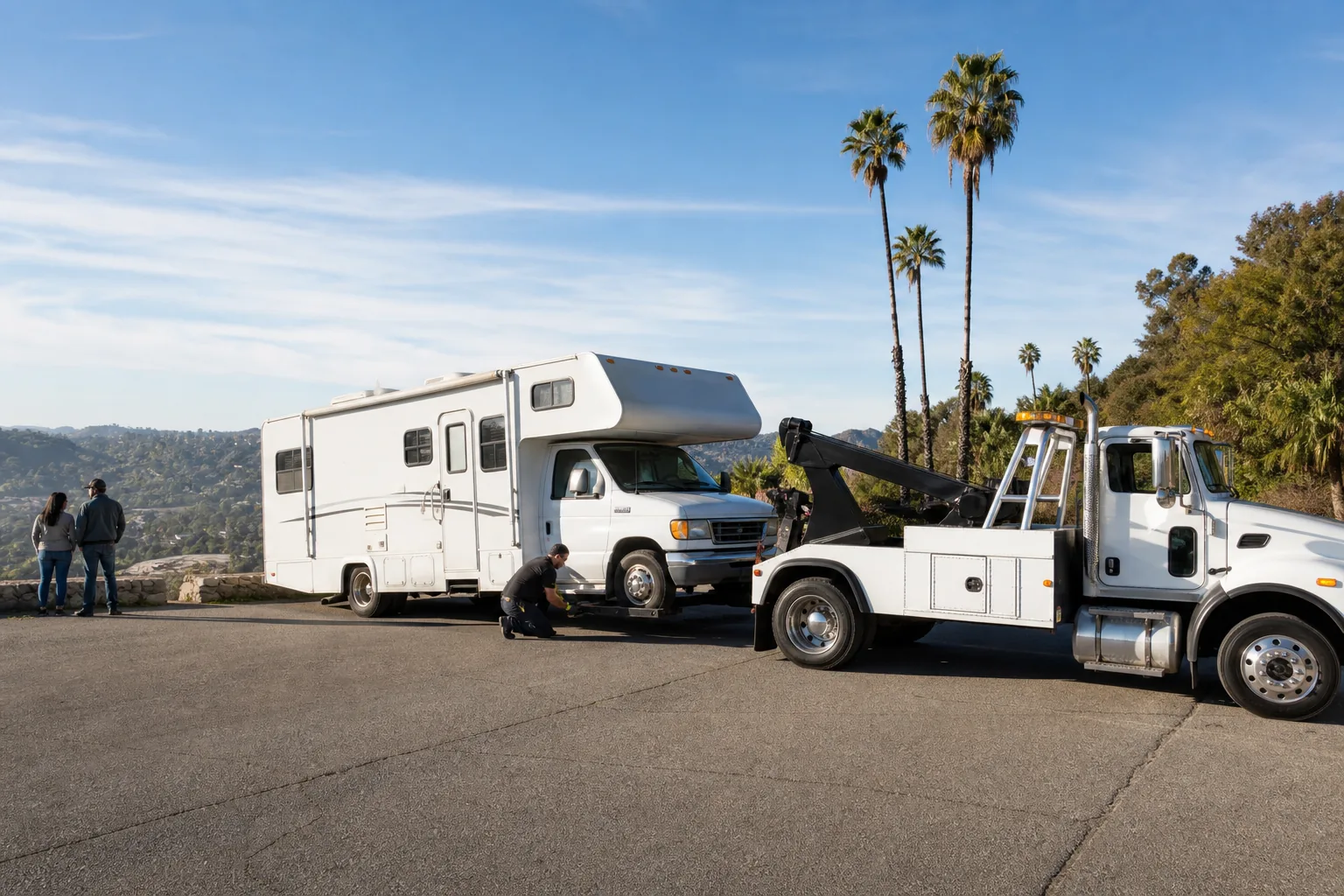
An RV breakdown can be stressful because the vehicle is larger than a passenger car and often carries people, pets, equipment, and travel supplies. A motorhome may also have a long rear overhang, low-mounted tanks, leveling hardware, or limited clearance that changes how it should be moved.
The safest response is to secure the scene, gather exact vehicle information, and request RV towing in Los Angeles from a provider that can evaluate the motorhome’s size and condition before dispatching equipment.
1. Move Out of Traffic When It Is Safe
At the first sign of power loss, overheating, steering trouble, or a tire problem, turn on the hazard lights and move toward a safe shoulder, turnout, or parking area while control remains. Avoid sudden steering or braking, particularly in a tall vehicle that may react differently when loaded.
If the RV stops in a live lane, is involved in a collision, leaks fuel, or creates an immediate hazard, call 911. Keep passengers belted when remaining inside is safer than stepping near moving traffic. If there is smoke, fire, or another urgent danger, follow emergency instructions and move everyone to a protected location.
2. Identify the RV and Its Chassis
Tell dispatch whether the vehicle is a Class A, B, or C motorhome, a camper van, travel trailer, or fifth wheel. Provide the year, manufacturer, model, overall length, height, approximate weight, and chassis information if available. A photo of the manufacturer label can help when it is safe to access.
Explain whether a trailer or small vehicle is attached. Describe slide-outs, awnings, leveling jacks, bike racks, generators, or rear storage that may affect clearance. The towing setup must account for the entire vehicle, not only the cab.
3. Describe the Mechanical Problem
Note warning lights, sounds, smoke, fluid loss, steering response, and whether the engine runs. Tell dispatch if the transmission shifts, parking brake releases, wheels roll, and air suspension remains at normal height. Do not restart an overheated engine or continue driving after an oil-pressure warning.
A tire problem on a heavy RV requires space, stable ground, and equipment suited to the wheel. A safe tire change service may solve the issue in an open parking area, but towing can be the better choice when a wheel is damaged or the roadside position is unsafe.
4. Check Fuel Without Taking Risks
Motorhome fuel gauges and auxiliary systems can be confusing, especially on a long trip. If the engine stopped because the tank is empty and the RV is safely parked, emergency fuel delivery may be an option. Tell dispatch the correct fuel type and vehicle size.
If you smell fuel, see a leak, or suspect the wrong fuel was added, do not attempt another start. Keep ignition sources away, move people to safety, and obtain professional guidance. Adding fuel is not appropriate when the fuel system may be damaged.
5. Prepare the RV for the Operator
Secure loose items inside, close cabinets, retract slide-outs and awnings when the systems operate normally, and stow exterior accessories. Do not force a jammed mechanism or crawl beneath the RV. Keep keys, registration, wheel-lock tools, and chassis information ready.
Separate passengers and pets from the work zone. A tow truck is not a passenger vehicle, so plan how everyone will reach the destination. Remove medication, identification, valuables, chargers, and anything needed during the trip before loading begins.
6. Confirm Access and Destination
RV height and turning radius can limit where towing equipment can approach. Mention a low garage, narrow campground lane, steep driveway, soft shoulder, or gate restriction. Share photos only from a safe position and include a wide view of the access route.
Choose a destination that can receive the RV and handle the expected repair. Confirm business hours, after-hours instructions, entrance height, gate width, and available parking. If your route brings you near the eastern San Fernando Valley, our Burbank towing service page provides local coverage details.
Build a Breakdown Kit Before the Trip
Keep a charged phone bank, flashlight, reflective vest, drinking water, basic first-aid supplies, registration, insurance information, and a printed list of vehicle specifications inside the RV. Store emergency items where they remain reachable when a slide-out is closed or an exterior compartment is blocked.
Before leaving, inspect tire condition and pressure, fluid levels, belts, visible hoses, lights, and the spare or tire service equipment provided for the chassis. Know the RV’s height and weight, and save an offline copy of the owner’s manual. Preparation cannot prevent every failure, but it gives passengers and dispatch better information when one occurs.
7. Let the Operator Choose the Loading Plan
The correct method depends on chassis design, weight, damage, and manufacturer instructions. The operator may need to protect the driveline, manage the brake system, support the proper axle, or use specialized transport. Avoid directing the setup based on a different RV model.
Get RV Towing Help in Los Angeles
Maps Towing provides 24/7 towing and roadside assistance across Greater Los Angeles from Van Nuys and Burbank. You can contact Maps Towing with non-urgent questions. For a disabled RV, Call (818) 797 – 1560 and share the RV class, size, chassis, problem, location, passengers, access conditions, and destination.
Share: