




A disabled box truck, bus, tractor, or other large commercial vehicle creates a different problem from a stalled passenger car. Its weight, height, braking system, load, and position all affect how it can be recovered. Sending a light-duty truck to the scene can delay the job and may not provide the capacity or equipment required.
Professional heavy-duty towing in Los Angeles begins with accurate information. The dispatcher and operator use those details to select a truck, plan the approach, and determine whether the vehicle needs a simple tow, a controlled recovery, or specialized handling.
What Makes a Tow “Heavy-Duty”?
Heavy-duty towing is defined by more than vehicle length. Gross vehicle weight, axle weight, load distribution, driveline design, air brakes, steering condition, and recovery angle all matter. A compact box truck carrying equipment can present a more demanding job than a larger empty vehicle.
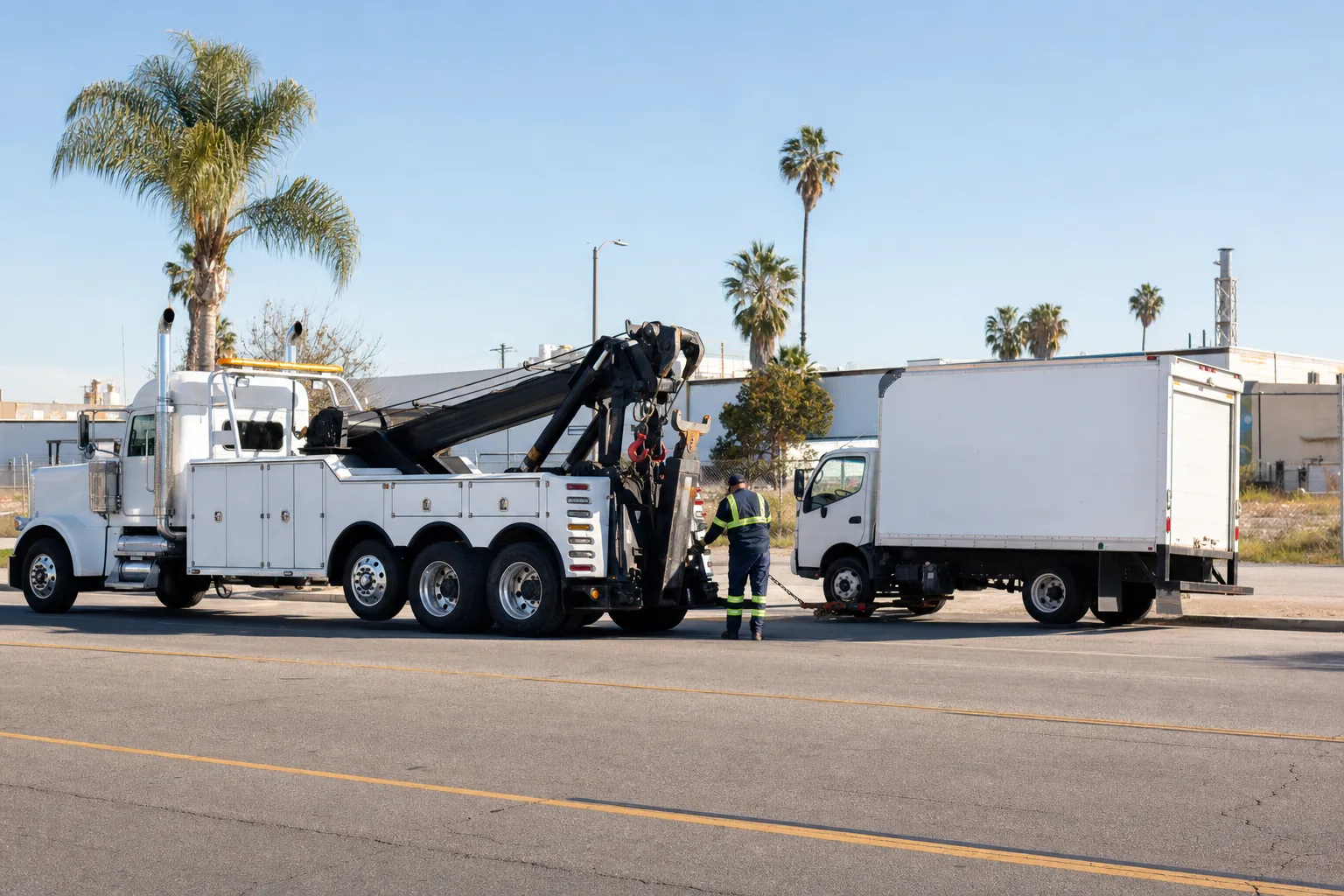
Heavy wreckers are built with higher-capacity booms, winches, underlifts, stabilizers, and air-system connections. Those features let a trained operator lift or support the appropriate axle, control the disabled vehicle, and maintain braking during transport when the setup requires it.
Vehicles That May Need Heavy-Duty Equipment
Common examples include delivery trucks, buses, large work vans, utility vehicles, tractor-trailers, refuse trucks, and construction equipment. A commercial vehicle does not always require the largest wrecker available, but dispatch should know its exact configuration before making that decision.
Businesses operating several vehicles may benefit from a planned commercial fleet towing relationship. Keeping vehicle specifications, approved repair destinations, and after-hours contacts in one place makes it easier to arrange suitable help when a driver is already under pressure.
Motorhomes also deserve special attention because their body length and overhang may be large compared with the chassis. Our RV towing service addresses the clearance, weight, and access questions that are specific to recreational vehicles.
Safety Comes Before Diagnosis
If a large vehicle stops in or near traffic, turn on the hazard lights and call 911 when it blocks a lane, carries hazardous material, is leaking fuel, or creates an immediate roadway danger. Drivers should follow law-enforcement instructions and avoid standing between the disabled vehicle and moving traffic.
Do not crawl beneath a commercial vehicle or attempt to disconnect a driveline at the roadside. Air suspension, brakes, and heavy components can move unexpectedly. Even placing warning devices should be done only when the driver can do so without entering an unsafe lane or blind area.
Information to Give the Dispatcher
Share the vehicle year, make, model, body type, estimated weight, axle count, and whether it is loaded. For a truck or trailer, describe the cargo and state whether the combination is connected. Tell dispatch about air brakes, lowered suspension, steering damage, locked wheels, fluid leaks, or a driveline that may be damaged.
Location details are equally important. Provide the freeway and direction, nearest exit, cross street, property entrance, height restriction, and available working space. Photos taken from a safe position can show the truck’s angle, shoulder width, clearance, and ground conditions without requiring anyone to step into traffic.
Recovery and Towing Are Different Tasks
A vehicle resting normally on pavement may be ready for transport after a basic inspection and setup. A truck that has left the roadway, settled into soft ground, jackknifed, or become unstable may need a recovery plan before it can be towed. Stabilization and controlled winching can require additional equipment or traffic control.
The operator also decides how to protect the steering, suspension, transmission, and driveline. Depending on the vehicle and manufacturer guidance, preparation may include securing steering, supplying air to the brake system, removing or isolating a driveline component, or using another transport method.
Choose the Destination Before Transport
Large vehicles cannot always be dropped at an ordinary automotive shop. Confirm that the destination can accept the vehicle’s size, weight, and repair needs. Ask about gate hours, after-hours access, turning room, and where the vehicle should be placed. A confirmed destination prevents a second move.
Maps Towing serves communities across Greater Los Angeles; review our towing service area when planning assistance for a vehicle or fleet route. Coverage alone does not answer every equipment question, so provide the vehicle details before dispatch.
Allow for Los Angeles Access and Traffic Conditions
A heavy wrecker needs more operating room than a light-duty tow truck. Dense commercial districts, freeway shoulders, loading docks, alleys, and gated yards can limit the approach. Tell dispatch about overhead wires, low structures, tight turns, soft ground, or a trailer positioned where the recovery truck cannot align normally.
Time of day and traffic can also affect scene control and the safest setup. The operator may need the driver, property manager, law enforcement, or another authorized party to keep a work area clear. Do not move cones, enter a closed area, or reposition the disabled truck unless the person managing the scene says it is safe.
Request Heavy-Duty Towing in Los Angeles
Maps Towing provides 24/7 towing and roadside assistance across Greater Los Angeles from Van Nuys and Burbank. For a large commercial vehicle, contact Maps Towing with the vehicle type, weight, load, location, condition, and destination. For immediate help, Call (818) 797 – 1560 so the job can be evaluated and suitable available equipment coordinated.
Share: