
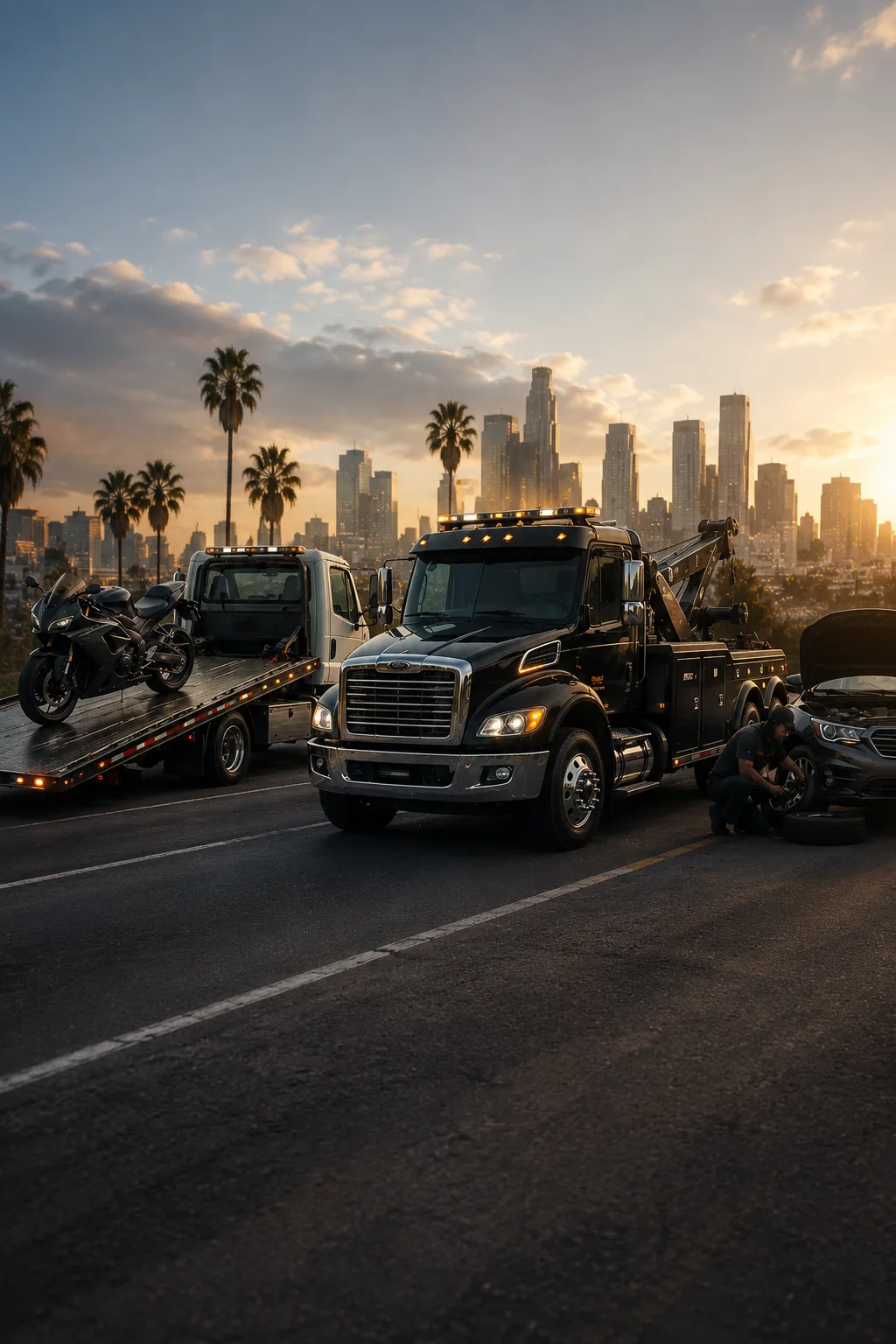




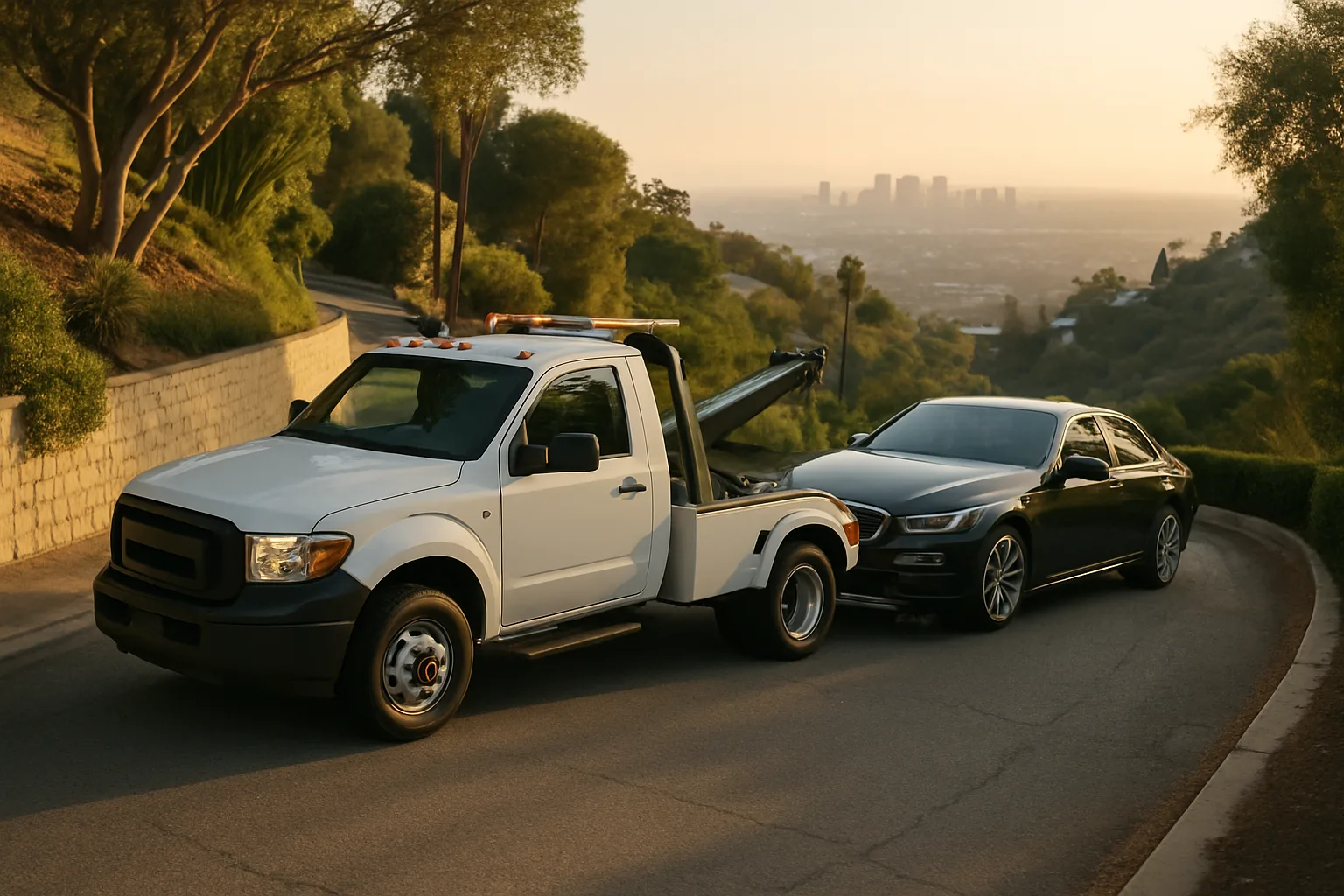
The Hollywood Hills and Bel Air contain steep grades, narrow residential streets, tight bends, private gates, and limited places for a tow truck to turn. A vehicle may be easy to locate on a map and still require careful equipment planning. Dispatch needs a clear picture of the road, driveway, and vehicle condition before sending a truck uphill.
Hillside towing is not about using the largest truck available. It is about matching the recovery method to the grade, access, drivetrain, damage, and safe working space.
Describe the Road Before Describing the Breakdown
Width, grade, and turning room
Tell dispatch whether the vehicle is on a public street, private driveway, garage ramp, or unpaved shoulder. Describe the slope and whether another vehicle can pass. Mention sharp switchbacks, low branches, retaining walls, gate pillars, or parked cars that narrow the approach.
A map pin should be paired with a street name and nearest cross street. In winding neighborhoods, a pin may show two roads close together even though they sit at different elevations. If the route has a gate, provide access instructions and make sure the property owner or security staff expects the truck.
Keep the vehicle stable
Set the parking brake and keep the transmission in Park unless an operator instructs otherwise. Do not release a brake or shift to neutral on a grade to see whether the car will roll. Chocking and controlled winching should be handled with appropriate equipment.
If the vehicle is partly in a lane or at risk of moving, keep people clear of the downhill path. Call 911 when traffic control or immediate scene protection is required.
Hollywood Hills Access
Roads around Mulholland Drive and the hillside neighborhoods above Hollywood vary from broad overlooks to narrow residential lanes. The Hollywood towing area confirms coverage, but the operator still needs the exact side of the hill and approach route.
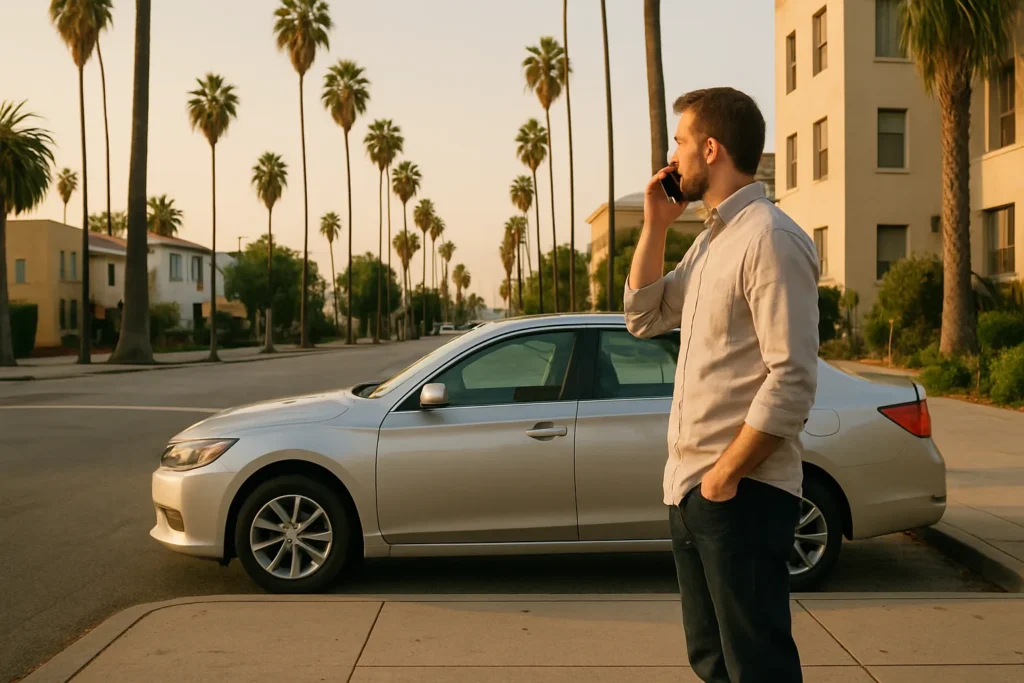
Describe whether the vehicle faces uphill or downhill, whether it can steer, and whether the wheels roll. A car stopped around a blind bend may require scene protection before loading. Do not direct traffic yourself from a position in the roadway.
Bel Air Access
Bel Air includes gated properties, curved residential streets, and steep private drives. Use the Bel Air towing area for local service information, then provide gate clearance, driveway width, surface material, and a safe place for the truck to stage.
Protect landscaping, walls, and parked vehicles by giving accurate dimensions and photos taken from safe positions. If a full-size truck cannot reach the car, a compact recovery vehicle may move it to a transfer point.
Choose Equipment for the Vehicle and the Hill
Flatbeds, wheel-lifts, and controlled recovery
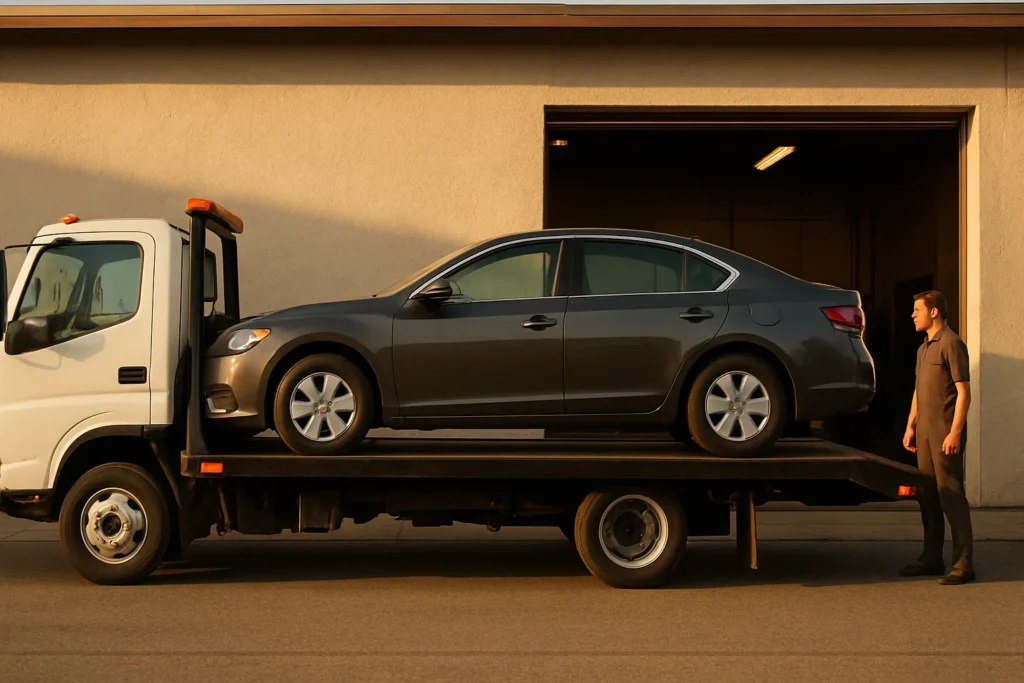
Flatbed towing keeps all four wheels off the road and is often appropriate for EVs, all-wheel-drive cars, low-clearance vehicles, and damaged cars. A flatbed also needs room to align and lower its deck. A compact wheel-lift may reach a confined location more easily, but drivetrain and manufacturer requirements still govern transport.
For unusual access, low-clearance cars, classics, or complex recoveries, specialty towing can account for loading angles, securement points, and vehicle-specific concerns. The recovery vehicle may first reposition the car to a safer place before the final transport method is used.
Roadside Service on a Grade
A jump start, tire change, or lockout can be straightforward when the car is on a level driveway with working room. It can be unsafe on a steep, narrow road. When requesting roadside assistance, describe the traffic exposure and surface. The operator will decide whether the service can be completed there or whether the vehicle should be relocated first.
Do not crawl under a car on a slope, stand downhill from it, or attempt to lift it with an ordinary jack on an unstable surface. Keep children and pets inside a secure building or vehicle away from the working area.
Prepare the Vehicle and Destination
Have the keys, registration information, and destination ready. Say whether the destination has another steep driveway or gate. Confirm repair-shop hours and after-hours drop instructions. Remove essentials before transport and photograph the vehicle’s condition without stepping into the road.
Give the Operator Control of the Loading Zone
When the truck arrives, remain uphill or otherwise outside the vehicle’s possible path until the operator identifies a safe place for you. Do not stand between the tow truck and a wall, gate, parked car, or disabled vehicle. Winch lines and securement equipment can move under substantial tension.
The operator may ask for a parked vehicle to be moved or for temporary access to a wider driveway. Coordinate with property owners rather than trying to squeeze equipment through. If traffic cannot pass safely during recovery, law enforcement or another authorized party may need to control the road. A deliberate setup protects the disabled car, nearby property, and everyone on the slope.
Need Hillside Towing Help?
Maps Towing serves Greater Los Angeles from our Van Nuys and Burbank offices. Call for your current ETA; arrival depends on location, traffic, truck availability, service type, weather, and access. For 24/7 help, Call (818) 797 – 1560.
Share: