




The period between calling for help and seeing the tow truck can be the most exposed part of a breakdown. Los Angeles freeways move quickly, surface streets stay busy, and even a parking lot can create risks when drivers are distracted. The safest waiting position depends on traffic, fire or smoke, road width, passengers, and whether the vehicle is fully outside the lane.
Use the following steps to protect people, make the vehicle easier to find, and give the operator room to work.
Choose the Safest Available Position
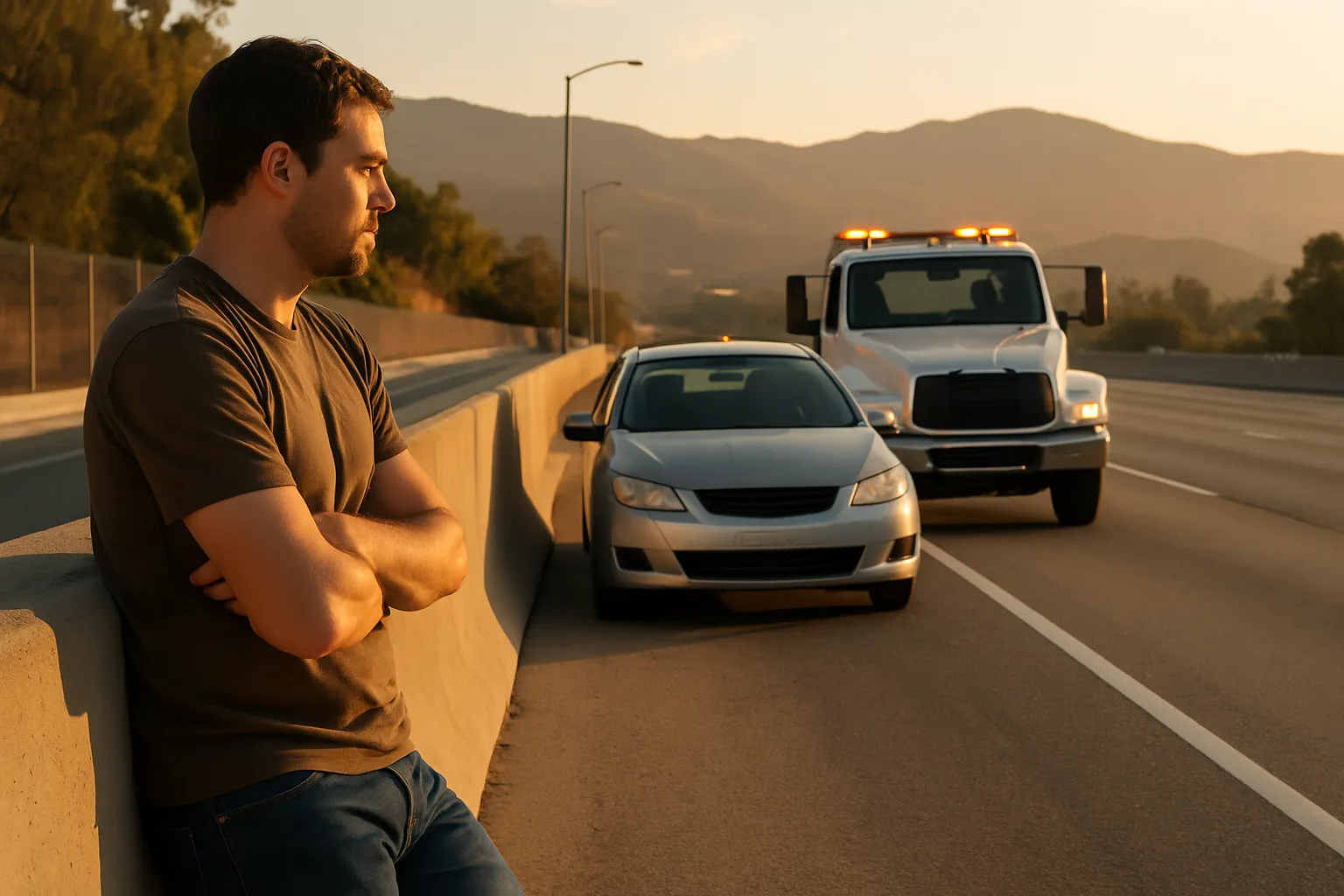
If the vehicle is fully off the road
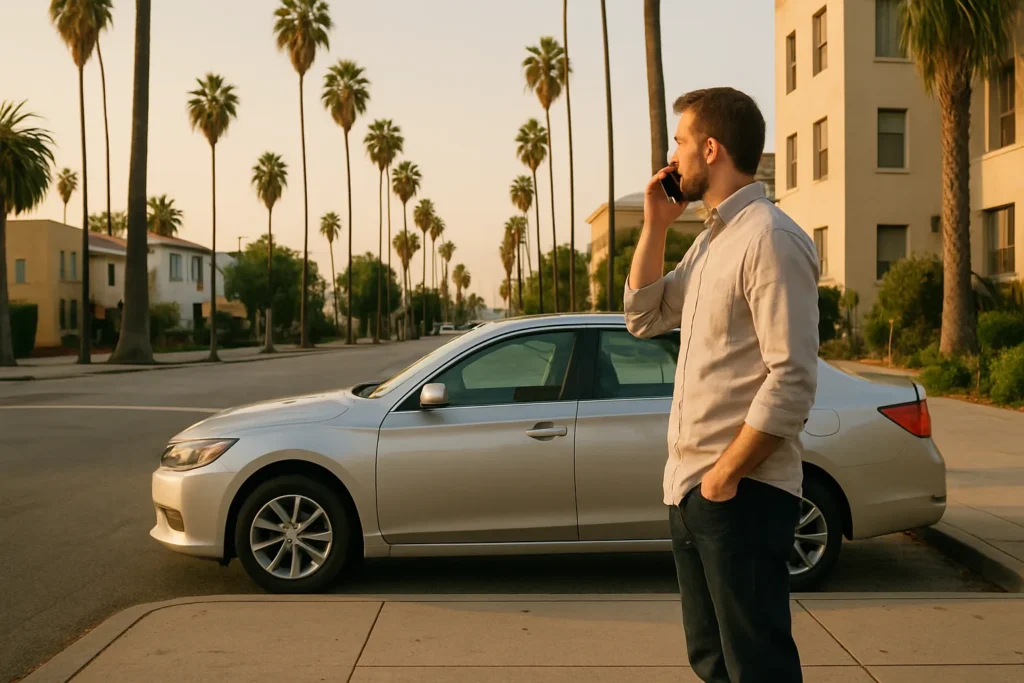
Turn on the hazard lights, set the parking brake, and leave space around the vehicle when possible. On a freeway shoulder, remaining inside with the seat belt fastened may be safer than standing beside traffic, provided there is no fire, smoke, fuel leak, or other immediate danger.
Do not wait directly in front of or behind the car. A passing vehicle can strike a disabled car and push it forward. If you can reach a substantial barrier without crossing a lane, stand well behind it and away from the vehicle.
If the vehicle blocks a lane
Keep the seat belt fastened, turn on the hazards, and call 911. State the road, direction, lane, and nearest cross street or exit. Do not try to push the car through moving traffic. Follow emergency instructions about whether to remain inside or exit.
For freeway-specific steps, review the Los Angeles freeway breakdown guide. For urgent removal, emergency towing can be coordinated once the scene is identified.
Make Yourself Visible Without Entering Traffic
Keep hazard lights on. At night, interior or parking lights can help responders identify an occupied vehicle, but preserve battery power when practical. Put on a reflective vest inside the vehicle if one is available.
Warning triangles are useful only when they can be placed without walking into a live lane. Do not step into traffic or around a blind curve to deploy them. Never use a flare near leaking fuel or dry vegetation.
Protect Passengers and Pets
Keep everyone together
Ask passengers to remain belted unless the vehicle presents an immediate hazard. Do not let children walk around the shoulder or parking area. Keep pets secured in carriers or on a short leash before any door opens. A frightened animal can run into traffic in seconds.
If the vehicle must be evacuated, move everyone to the same protected place. Count passengers, keep essential medication with you, and do not return to the car repeatedly for belongings.
Share a Location the Operator Can Reach
Send a map pin if dispatch accepts one, then verify that it shows the correct side of the road. Add the freeway direction, nearest exit, cross street, parking-lot entrance, garage level, or a visible public landmark. A pin on a divided road can send a truck to the opposite carriageway.
Keep the phone charged and audible. Answer unknown calls after requesting service because the operator may need a final location check. Tell dispatch if police, fire crews, road workers, or property security move the vehicle or change the access route.
Prepare for the Tow Truck
Gather vehicle and destination details
Have the year, make, model, drivetrain, keys, and destination ready. Say whether the car shifts to neutral, all wheels roll, and the parking brake releases. Mention low clearance, an EV battery warning, a flat tire, collision damage, or a locked wheel.
Roadside assistance may handle a battery, tire, fuel, or lockout problem in a protected place. On a narrow shoulder, the operator may decide that moving the vehicle is safer than working beside traffic.
Let the operator control the work area
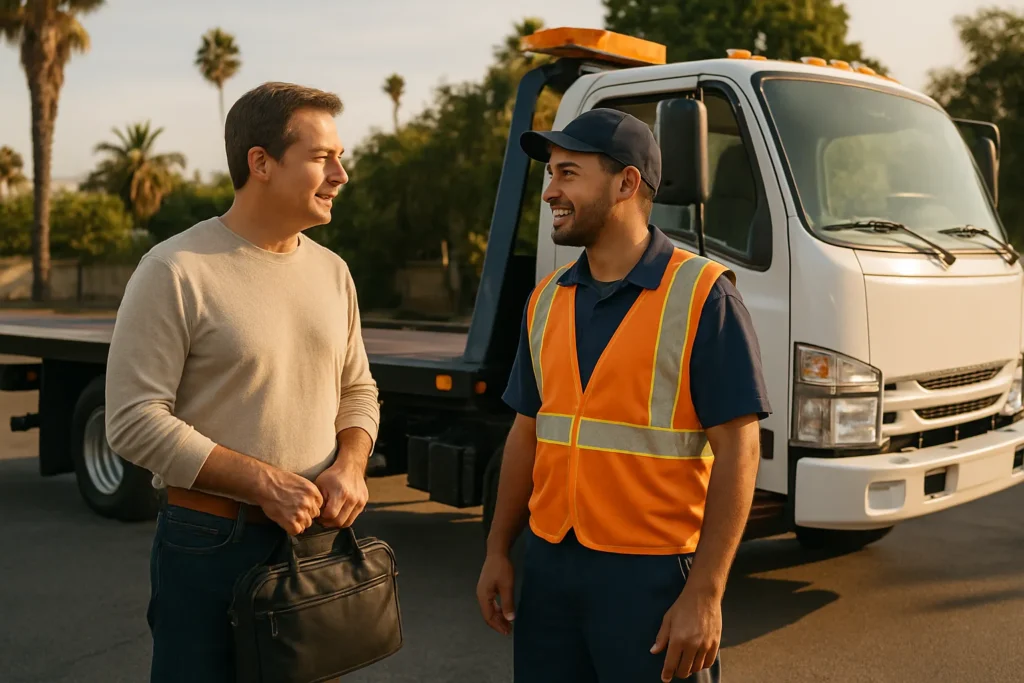
When the truck arrives, stay in the protected waiting position until the operator tells you where to stand. Do not walk between the truck and car, touch the cable, or guide the vehicle unless asked. Loading equipment can move suddenly under tension.
After a collision, follow the documentation and destination steps in the guide to what to do after a Los Angeles car accident.
Avoid Common Waiting Mistakes
- Do not sit on a guardrail beside moving traffic.
- Do not stand downhill from a disabled vehicle on a grade.
- Do not open a hot radiator cap or crawl under the car.
- Do not accept a ride from an unidentified person claiming to be the operator.
- Do not leave keys hidden unless dispatch and the destination have confirmed the arrangement.
If another driver stops to help, thank them from a protected position and continue communicating through the company’s confirmed dispatch number. Do not move into a stranger’s vehicle or hand over keys unless the operator identity has been verified.
Need a Tow Truck in Los Angeles?
Maps Towing serves Greater Los Angeles from our Van Nuys and Burbank offices. Call for your current ETA; arrival depends on location, traffic, truck availability, service type, weather, and access. For 24/7 help, Call (818) 797 – 1560.
Share: