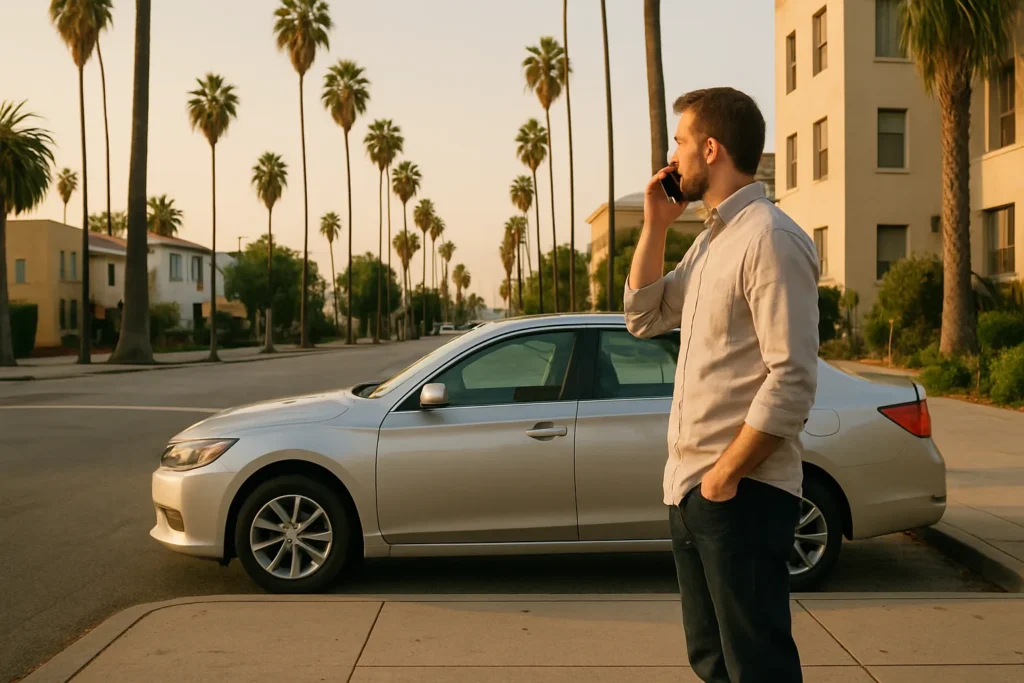





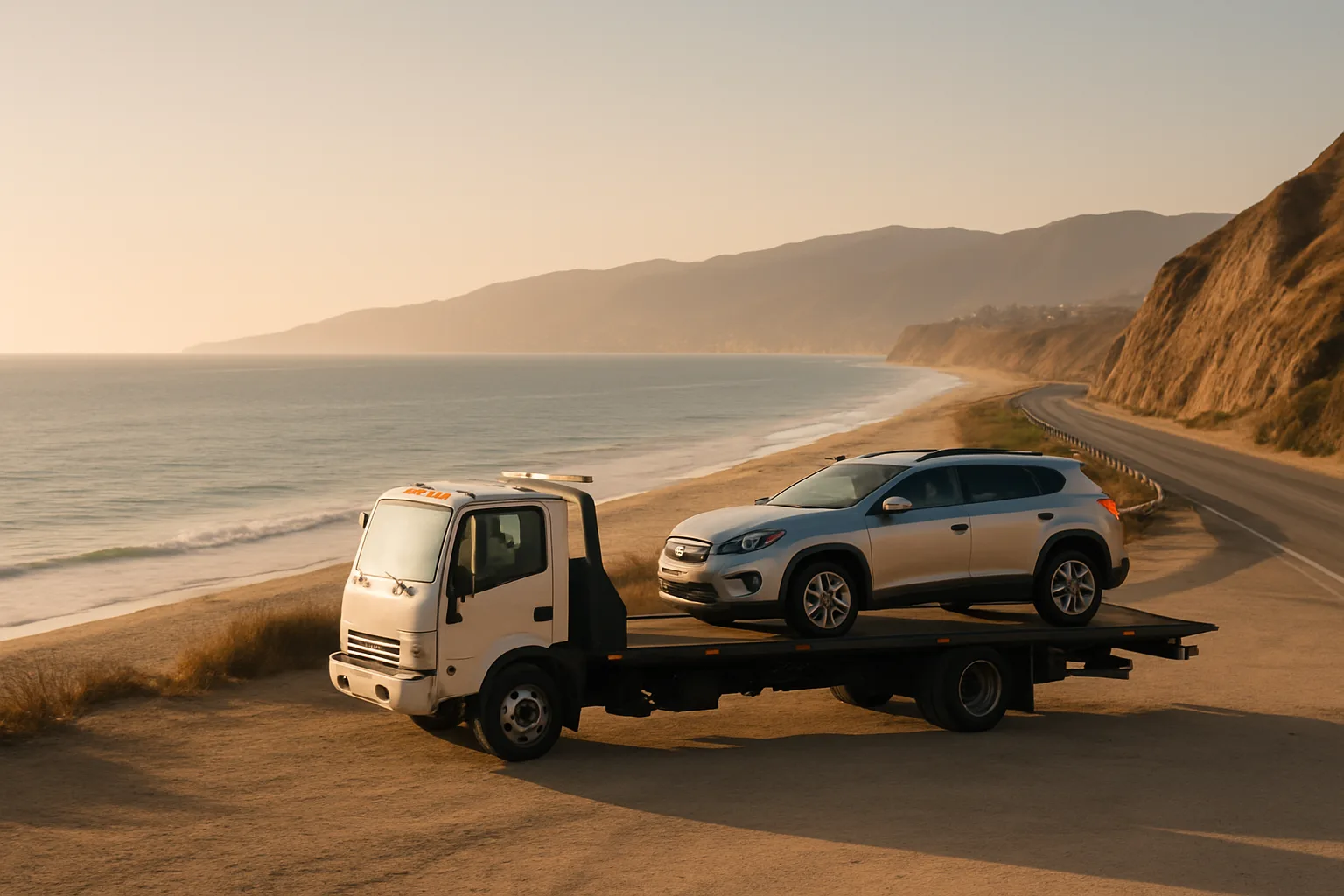
The coastal corridor between Santa Monica and Pacific Palisades combines busy city streets, bluff access, beach parking, and Pacific Coast Highway. A disabled vehicle may be only a short distance from a familiar landmark while still being difficult to reach from the correct direction. Accurate location details and a safe waiting position are the foundation of a successful tow.
Drivers should also expect conditions to change with congestion, events, weather, and local road controls. Follow posted restrictions and directions from police, fire, lifeguards, Caltrans, or other authorities when they are present.
Know Which Part of the Corridor You Are On
Santa Monica streets and beach access
Santa Monica includes city streets above the beach, parking structures, and approaches to Pacific Coast Highway. Tell dispatch whether you are on Ocean Avenue, a numbered street, an incline, a beach-lot access road, or PCH itself. A pin dropped from the bluff can land near the roadway below, so confirm the street name shown by the map.
The Santa Monica towing area provides local coverage information. For a garage or beach lot, add the level, entrance, posted clearance, and any gate instructions.
Pacific Palisades and PCH
Pacific Palisades sits above the coast with neighborhood streets connecting toward PCH. If you are on the highway, provide the direction of travel, nearest named intersection or landmark, and whether you are north or south of it. If you are above the highway, identify the actual street and nearest cross street rather than describing the car as simply “near the beach.”
Use the Pacific Palisades towing area for coverage context, and update dispatch if an official closure or detour changes the accessible route.
Choose the Safest Available Stopping Place
Turn on the hazards early and move completely outside the travel lane if the vehicle can do so safely. On PCH, avoid stopping just beyond a curve or where a bluff, parked cars, or vegetation blocks visibility. In a city area, a side street or parking lot may be safer than a busy curb lane.
If the vehicle blocks traffic, anyone is injured, or there is smoke, fire, leaking fuel, or collision debris, call 911. Do not stand between the car and moving traffic. Keep children and pets secured, and stay behind a substantial barrier when one is safely reachable.
Roadside Repair or Tow?
Working space decides what is safe
A battery jump or tire change may be appropriate in a protected lot and unsafe on a narrow highway shoulder. When there is not enough separation from traffic, roadside assistance may begin by moving the car to a safer location. Never work on the traffic-facing side of a vehicle in an exposed lane.
Salt air does not explain every coastal breakdown. Give dispatch the actual symptoms: warning lights, overheating, clicking, a flat tire, steering trouble, or collision damage. That information is more useful than guessing at the cause.
When a flatbed is the right transport
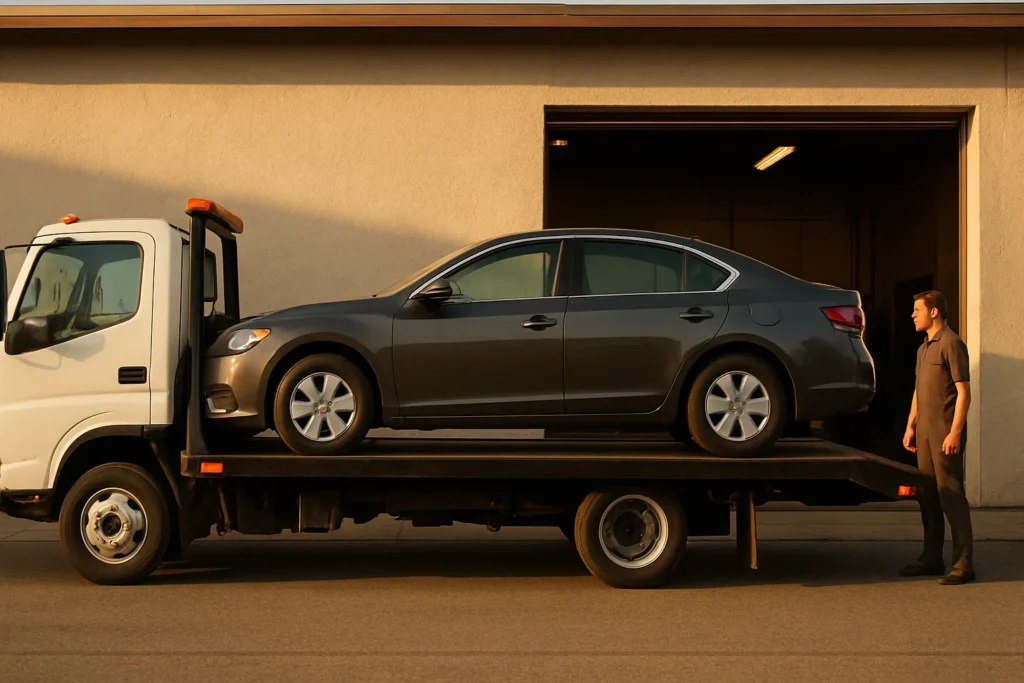
Many EVs, all-wheel-drive vehicles, low-clearance cars, and vehicles with wheel damage require flatbed towing or another manufacturer-approved method. Say whether the car shifts to neutral, all wheels roll, and the keys are present. Mention a locked wheel, damaged suspension, or depleted EV battery before the truck arrives.
After a Coastal Collision
Protect people first and follow emergency instructions. Photograph the vehicles, road position, damage, and wider scene only from a safe place. Exchange information without standing in a travel lane. The guide to what to do after a Los Angeles car accident explains documentation, destination planning, and signs that a car should not be driven.
Choose the destination before transport. Confirm whether a repair facility is open, where an after-hours vehicle can be left, and who will receive the keys. Remove medication, identification, electronics, and beach gear you will need.
Share a Precise Coastal Location
Send a location pin if dispatch accepts it, then verify that it shows the correct road and direction. Add a cross street, lot entrance, garage level, or visible noncommercial landmark. Keep your phone audible. Along the coast, two points that look close vertically on a map may be separated by a bluff and require different approaches.
Prepare for Coastal Driving Before a Problem
Keep a phone charger, reflective vest, flashlight, drinking water, and basic emergency information in the vehicle. Check tire pressure and the spare before a coastal trip, and know where the wheel-lock key is stored. Save a repair destination that can receive the vehicle after hours.
Marine air, heat, stop-and-go traffic, and road debris can affect different systems, so avoid diagnosing a future problem from the setting alone. Routine inspections of tires, battery, fluids, lights, and cooling components provide more useful prevention. When a warning appears, respond to the actual symptoms and move to the safest available place rather than trying to reach a scenic turnout farther ahead.
Need Towing Along the Beach Corridor?
Maps Towing serves Greater Los Angeles from our Van Nuys and Burbank offices. Call for your current ETA; arrival depends on location, traffic, truck availability, service type, weather, and access. For 24/7 help, Call (818) 797 – 1560.
Share: