




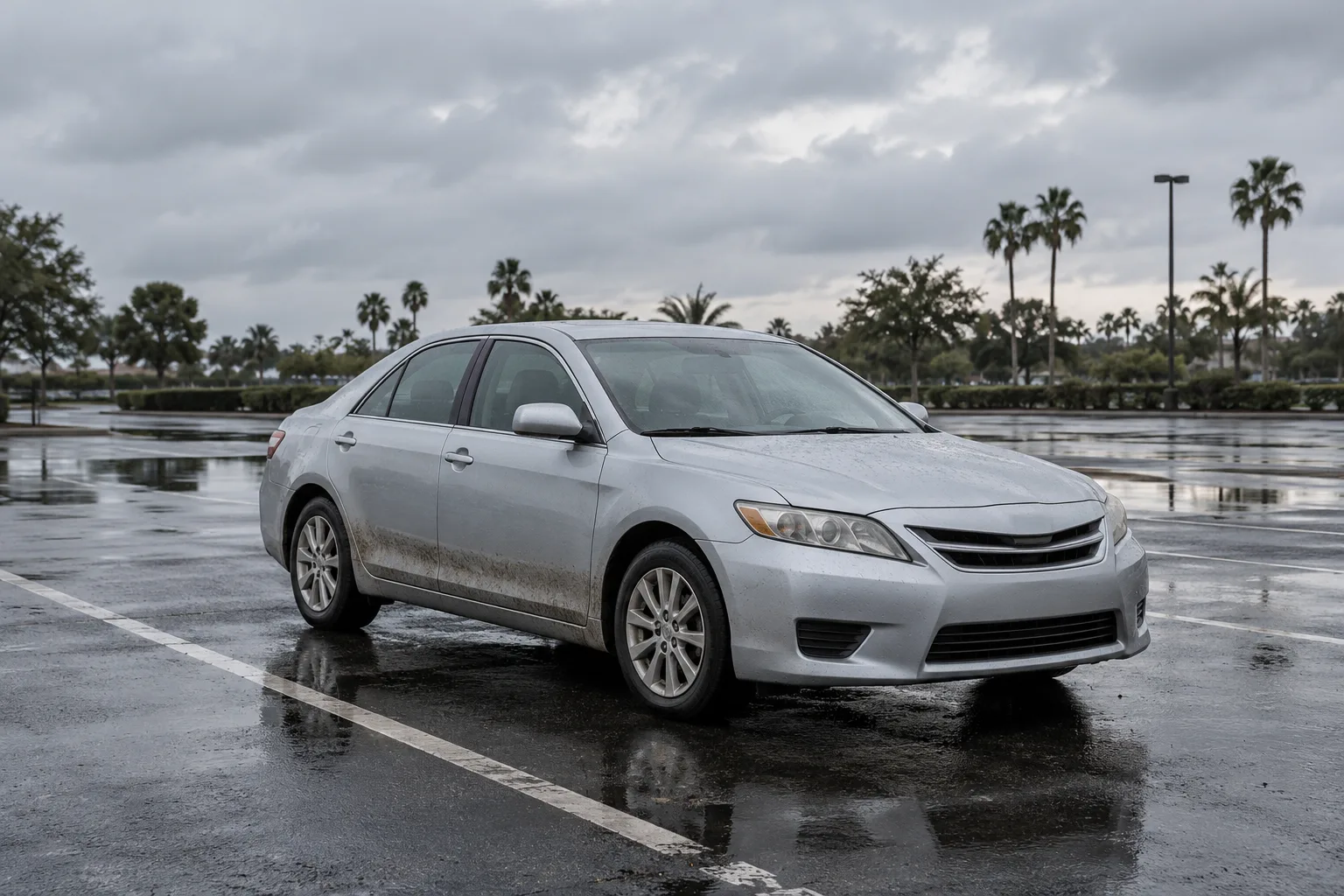
If your car has been exposed to floodwater, wait before trying to start it. A dry-looking parking space does not establish that the vehicle is safe to operate. The first priorities are people, access, and assessment—not testing whether the engine will run.
This guide concerns a vehicle after water has receded and the area can be approached safely. It is not a water-rescue guide. If you are trapped or in immediate danger, call 911. Do not enter floodwater to reach or retrieve a car.
Do not drive or walk through floodwater to inspect it
The National Weather Service’s flood-safety guidance advises avoiding flooded roads and not walking through floodwater. Water can conceal hazards and road damage. Follow closures and evacuation directions; a tow reservation is not permission to bypass a barricade.
If the car is in a garage or lot controlled by a property manager, ask whether access has been cleared before arranging a pickup. A tow truck arriving at the street does not mean the loading area is accessible. Describe any remaining water, debris, damaged gates, or restrictions from responders.
Why restarting should wait
NHTSA’s guidance on flood-damaged vehicles calls for a thorough assessment before startup because damage may not be visible. A car can look usable from outside without having been checked for flood-related damage.
Do not repeatedly press the start button, arrange a jump solely to “see if it works,” or assume drying time resolves the issue. Tell the assessing professional whether anyone has attempted a restart since the water exposure. That is useful information, not a reason to hide what happened.
Tell dispatch if the vehicle is electric or hybrid
Flood exposure creates additional concerns for electric and hybrid vehicles. NHTSA warns about shock and fire risks in flooded vehicles and directs owners with suspected battery damage to their dealer. It also advises keeping a damaged lithium-ion-battery vehicle out of garages and at least 50 feet from structures, other vehicles, and combustible materials.
Do not attempt to move an affected vehicle yourself to satisfy a storage distance. Tell emergency responders, the dealer, and the transport provider where it is and follow their instructions. Do not touch high-voltage components or attempt charging to test the vehicle.
Record observations without approaching hazards
Once access is safe, details you already have can help coordinate assessment and transport:
- Where the vehicle was parked and whether it was moved during the event.
- The approximate water level you observed and whether water entered the cabin.
- How long exposure may have lasted, if known—state uncertainty rather than guessing.
- Any attempted startup, charging, smoke, unusual heat, or warning messages.
- Vehicle year, make, model, drivetrain, and current location.
Photographs taken from a safe position may help document the condition. Do not step into water or an unstable area to obtain a better image. If you are seeking insurance guidance, contact your insurer; coverage and claim instructions depend on the policy and circumstances.
Choose a receiving facility before requesting pickup
Call a suitable repair facility or dealer and explain the water exposure, including any possible battery involvement. Confirm it can accept the vehicle, where it should be unloaded, and any restrictions the transport provider needs to know. Do not assume a routine night-drop area is suitable.
When contacting Maps Towing about emergency transport, disclose the flood exposure before discussing equipment or ETA. Service is subject to safe access and operator assessment. No active-water rescue, hazardous-battery handling, or flood-repair capability is promised here.
Our flatbed towing page explains the transport service, while our EV towing guide covers vehicle-specific planning. A flatbed request does not remove the need for a safety assessment.
Local pickup information
For a car in Sherman Oaks or Burbank, provide the actual entrance, parking level, and any current property-access restrictions. This article does not identify those places as current flood locations or claim that routes are open.
Common questions
Can I restart after the water has drained away?
Wait for assessment. Receded water does not confirm that hidden damage is absent.
Should I request a jump start first?
Report water exposure before requesting any startup assistance. A routine battery call is not a substitute for evaluating a flood-exposed vehicle.
Can Maps Towing retrieve a car from moving water?
This page makes no water-rescue promise. For immediate danger, contact emergency services. Ask dispatch about transport only when access can be assessed safely.
Fast Local Dispatch: call (818) 797-1560 once urgent hazards are addressed. Call for current ETA and explain the water exposure before booking.
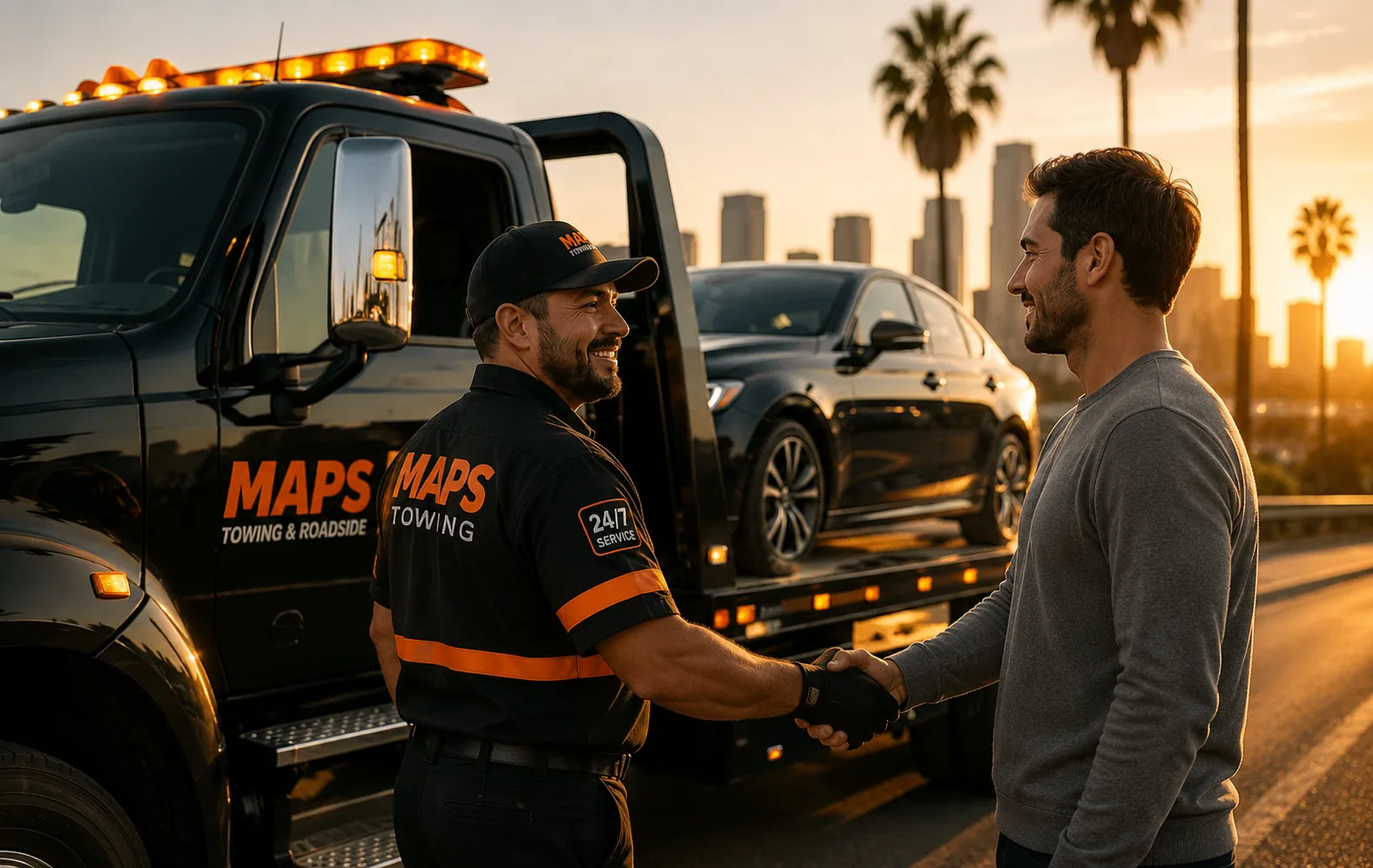
Featured image: AI-generated illustration, not a photograph of a Maps Towing customer job.
Share: