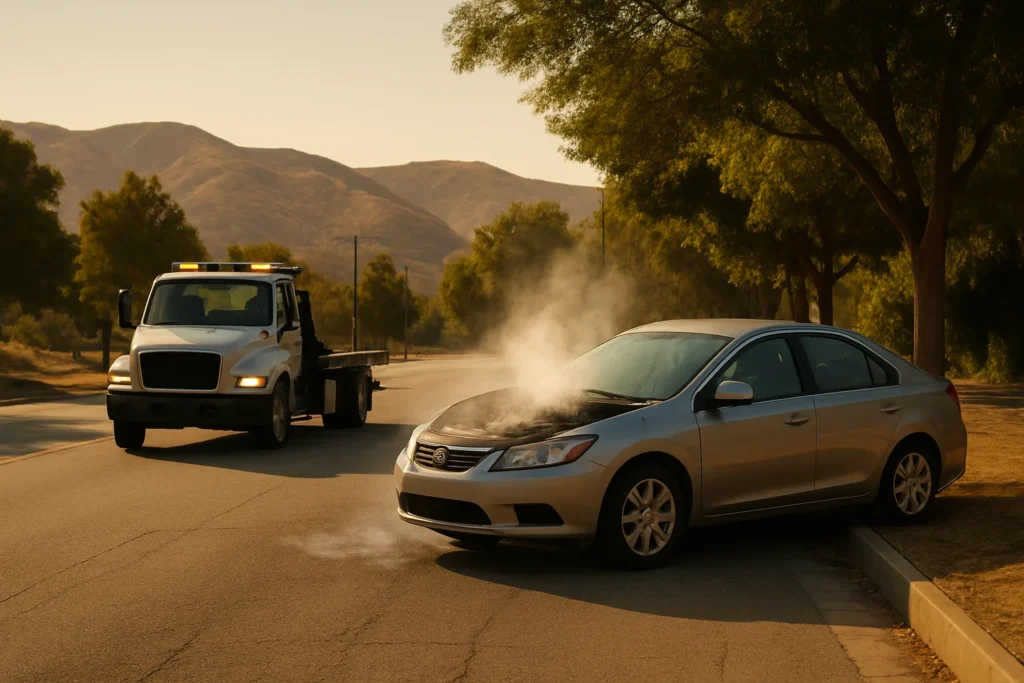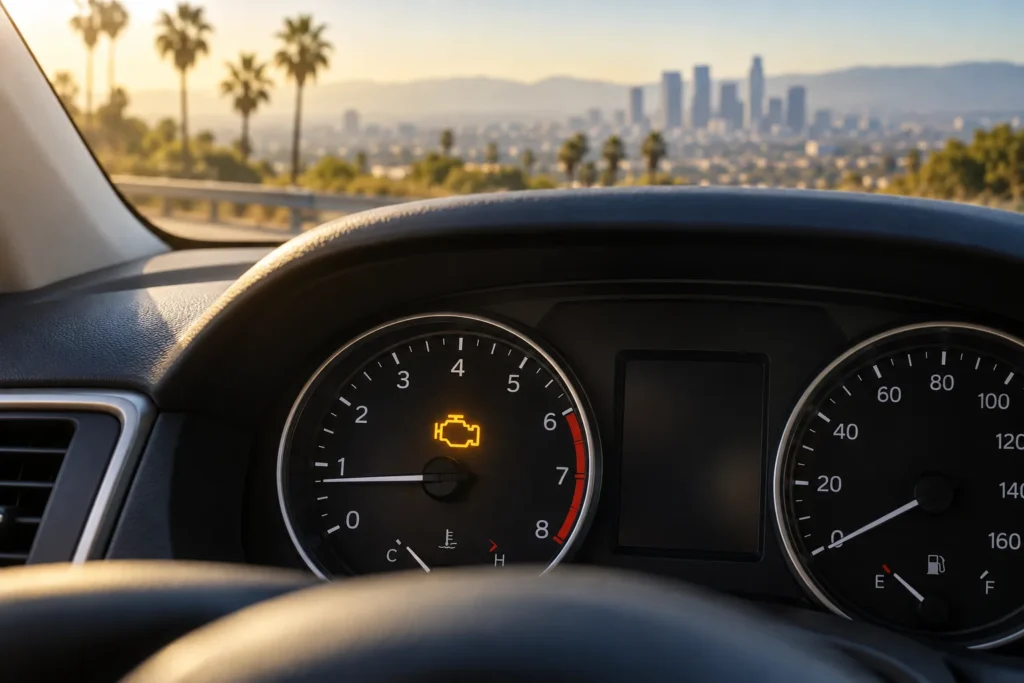







If the oil pressure warning appears while your engine is running, stop at the first safe place and switch the engine off. Do not keep driving toward a repair shop with the warning on. Low oil pressure can cause serious engine damage, even when the car still seems to run normally.
Once you are safely parked, check the exact warning in your owner’s manual. If the cause is unresolved or you cannot safely follow the manufacturer’s instructions, arrange a tow for inspection. Here is how to make that decision and prepare for a pickup in Los Angeles or the San Fernando Valley.
What to do when the oil pressure light comes on
- Reach a safe stopping place. Signal, slow down smoothly and move out of traffic when it is safe. Do not stop abruptly in a travel lane just to inspect the dashboard.
- Switch off the engine once stopped. Avoid leaving it idling while you make calls. AAA’s warning-light guidance recommends stopping safely, shutting off the engine and calling for assistance when the oil pressure warning stays on.
- Put personal safety first. A freeway shoulder is not a suitable place to work beside traffic. If you are in immediate danger, call 911 and follow the dispatcher’s instructions.
- Read the vehicle-specific instructions. Use the manual for your exact model and year before checking oil or considering a restart.
On a freeway, whether to remain inside depends on the surroundings. The California Driver’s Handbook generally advises staying belted in the vehicle, while recognizing situations where reaching a safe place away from the lanes is safer. Never cross moving traffic to look for help. Our guide to staying safe while waiting for a tow truck covers additional roadside precautions.
Oil pressure, oil level and an oil-change reminder mean different things
The exact symbol and wording vary by vehicle. Look up the message rather than relying on the light’s color alone.
- Oil pressure warning: Often an oil-can symbol or a low-pressure message. It concerns the pressure needed to circulate oil through the engine.
- Oil level warning: Concerns the amount of oil. Follow the manual’s checking and filling instructions; a correct level does not, by itself, establish that pressure is normal.
- Oil-life or service reminder: Indicates scheduled maintenance is due. It is not the same alert as a pressure warning.
AAA’s guide to dashboard warnings distinguishes the urgent oil pressure warning from an oil-service reminder. Tell the dispatcher the exact message you saw, especially if you are unsure which one it is.
When should you arrange a tow?
Choose professional assistance instead of a test drive when the warning remains unresolved. That includes situations where:
- The oil level appears normal but the pressure warning came on while the engine was running.
- The warning remains on or returns after you followed the owner’s manual.
- You see a substantial leak, hear unusual engine noise or find no oil on the dipstick.
- You cannot check the vehicle safely or are unsure what the manual requires.
AAA’s oil-pressure guidance recommends a tow when the oil level is not low despite the warning, when no oil registers on the dipstick, or when the driver is uncertain.
Can adding oil solve the problem?
It may address a low oil level, but it does not establish why the warning appeared. Checking methods, the required oil and any permitted restart procedure depend on the vehicle.
Do not apply another model’s procedure to your car. Follow your own manual, avoid overfilling and keep the engine off if the next step is unclear. Ask a qualified repair professional for guidance. Do not repeatedly restart or rev the engine to see whether the warning clears.
Could it be a faulty sensor?
That is one possible cause, but the dashboard alone cannot confirm it. A technician needs to establish whether oil pressure is actually low. Treating an unresolved warning as a sensor problem can put the engine at risk.
What to tell the towing dispatcher
You do not need to diagnose the fault before requesting emergency towing in Los Angeles. A clear description helps the operator assess the pickup:
- Location: Street and nearest cross street, or freeway, direction of travel and nearest exit.
- Vehicle: Year, make and model; mention AWD, 4WD, a hybrid drivetrain or low ground clearance if applicable.
- Warning: Exact wording, whether it stayed on or flickered, and whether the engine was running when it appeared.
- Current condition: Whether the engine is now off, whether it stalled, and any noise or visible leak you noticed from a safe position.
- Access and destination: Parking space, garage restrictions or other obstacles, plus the repair facility’s name and address.
For a pickup near a freeway interchange or a large parking lot, our guide to sharing your location with a tow truck explains which details are most useful.
Prepare for pickup without restarting the engine
Tell the operator about the oil pressure warning before loading begins. Do not restart the car simply to reposition it for the truck; let the operator assess how it can be moved.
Before arranging a tow to a repair shop, confirm it can receive the vehicle, especially after hours. Ask where the vehicle should be left and how keys should be handed over. Keep your key and the relevant owner’s-manual instructions available. Retrieve personal items only if you can do so safely.
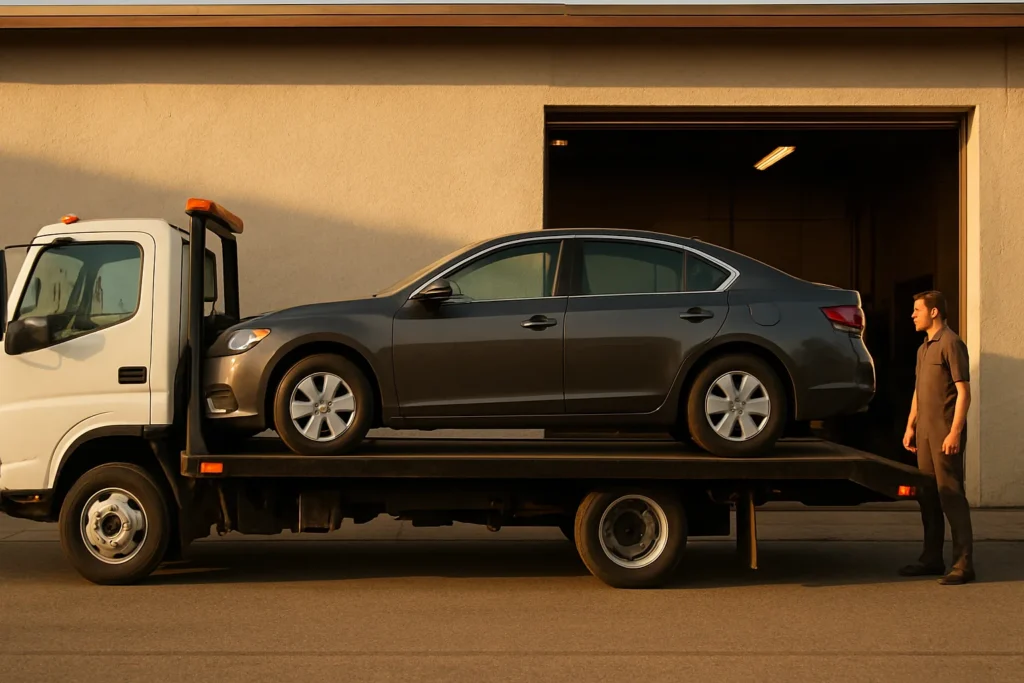
The appropriate towing method depends on the vehicle and its condition. Discuss whether flatbed towing is appropriate rather than assuming that one method fits every car. Before dispatch, confirm the destination, quoted charges and current arrival estimate.
Frequently asked questions
Can I drive one more mile with the oil pressure light on?
Do not plan to continue driving with an active oil pressure warning. Get to the first safe stopping place, switch off the engine and follow your manual. Arrange help if the problem is unresolved.
What if the light only flickers?
A brief or intermittent warning still deserves attention. Note when it happened and tell the repair professional. Do not assume it is harmless because it disappeared.
Does the light mean I just need an oil change?
An oil pressure warning and an oil-change reminder serve different purposes. Check the exact symbol or message in your owner’s manual before deciding what action is needed.
What if the oil light is on before I start the engine?
On many vehicles, warning lamps illuminate during the startup check. This article addresses a pressure warning that appears or remains on with the engine running. Your manual explains the normal sequence for your car.
Need help arranging a tow in the San Fernando Valley?
Once you are safely stopped, call Maps Towing at (818) 797-1560. Share your location, vehicle details and the oil pressure warning so the team can assess the request and confirm the towing arrangements.
See our local information for towing in Van Nuys and towing in Burbank. Ask about availability for your exact pickup point and destination.
Share: