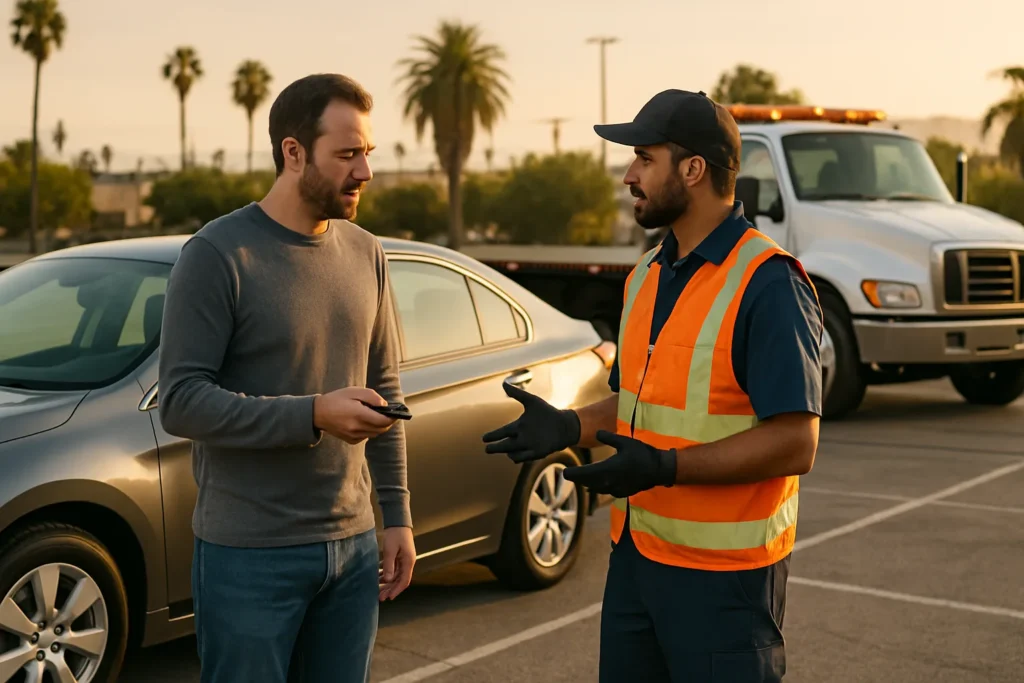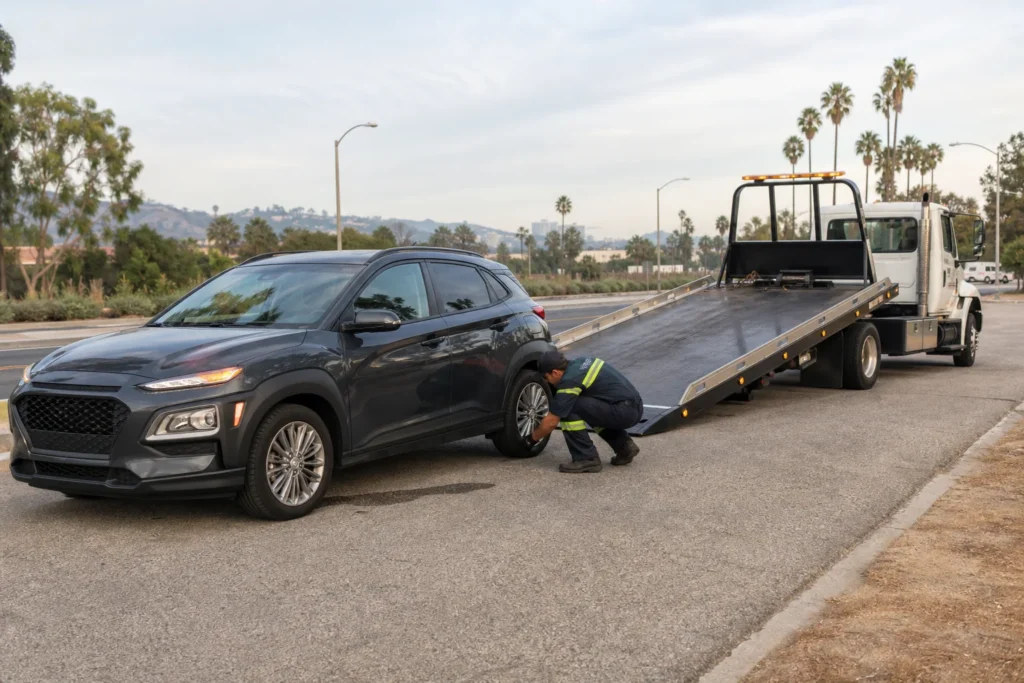







A car that will not shift into Neutral can often still be transported, but the operator needs to assess how it can be moved and loaded. Tell dispatch about the shifting problem during the first call. The vehicle’s model, wheel movement, parking brake, and pickup access all affect the equipment and approach needed.
You do not need to make the car roll before asking for help. Leave it secure and describe what you can observe. If it is stopped in a live traffic lane or another dangerous position, contact emergency services and follow their instructions before trying to arrange an ordinary pickup.
Describe what happens when you try to select Neutral
Explain whether the gear selector will not move, the dashboard continues to show Park, or a warning message appears. Tell dispatch if the vehicle has no dashboard power or does not recognize its key. These observations are more useful than guessing that the transmission has failed.
Have the year, make, model, and drivetrain ready. Electronic selectors and transport settings vary between vehicles, including different model years. If you have already tried the normal controls, explain what happened without repeatedly forcing the selector or trying unfamiliar release procedures.
A shifting problem alone does not establish the repair needed. Our transmission-failure towing guide discusses symptoms to report and why the car may need transport. Mechanical diagnosis belongs with a qualified repair professional.
Separate the gear position from other movement restrictions
Dispatch also needs to know whether the parking brake is applied, the steering is locked, or a wheel is visibly damaged. These are separate details. Selecting Neutral does not automatically release a parking brake, straighten damaged suspension, or remove an obstacle against a tire.
If the parking brake will not release, say so even if the dashboard shows Neutral. Our guide to towing with the parking brake on explains that part of the loading problem. Do not push the vehicle or release a brake on a slope to test whether it will roll.
If a working key is unavailable, include that in the request as well. The separate guide to towing a car without keys covers access and handoff questions. Opening a locked door does not necessarily restore normal shifting.
Use the instructions for the exact vehicle
Power and transport settings
Some vehicles need low-voltage power or a recognized key to activate a transport setting. If the dashboard is dark or a required setting is unavailable, tell the operator. Do not assume that restoring power will resolve every reason the car cannot move.
For a Tesla Model 3, check the manufacturer’s transport instructions. The operator should confirm the required settings and equipment for your vehicle before loading.
Loading and road transport are different steps
A setting that allows a car to move a short distance does not establish how it should travel to the destination. The operator should check the manufacturer’s instructions for loading and transport. Keep the owner’s manual available if you have it, and identify the exact vehicle rather than relying on a procedure for a similar-looking model.
Discuss how the vehicle can be loaded
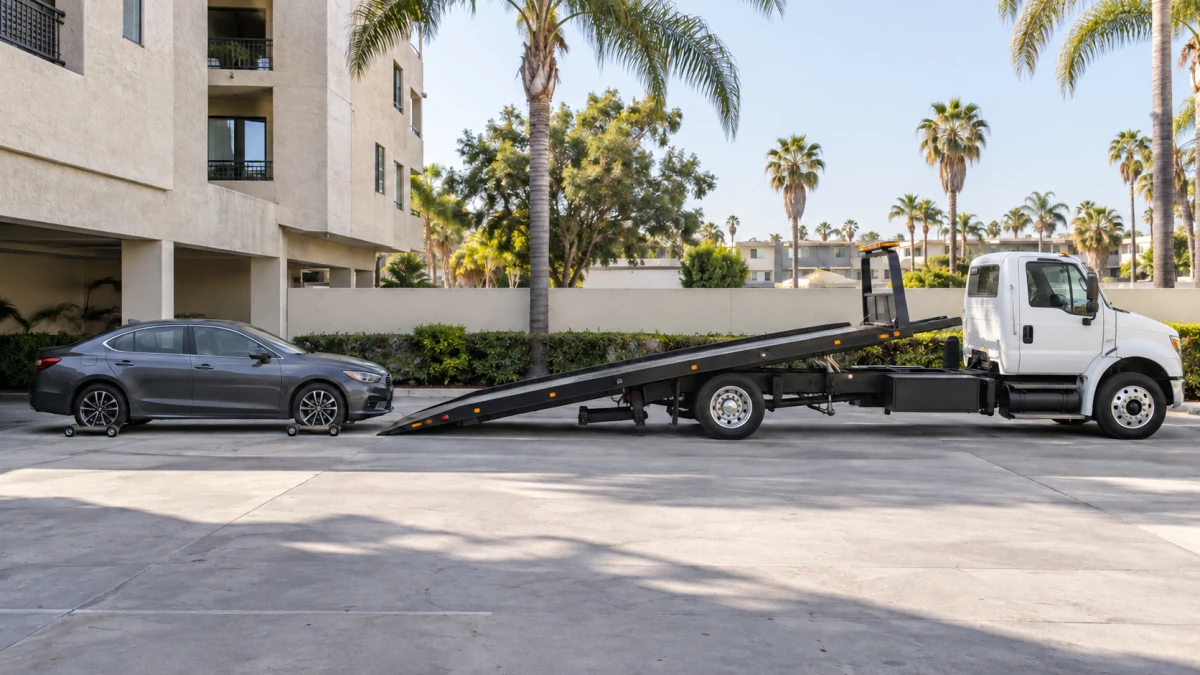
Flatbed towing carries the car with its wheels off the road, but the operator still needs a suitable way to get it onto the deck. Explain that it cannot enter Neutral before a truck is selected. Arriving with a flatbed does not, by itself, resolve locked wheels or restricted access.
Depending on the vehicle and manufacturer’s instructions, wheel skates, self-loading dollies, or other equipment may be needed for controlled movement. Dispatch must confirm what is suitable and available. Do not attach a rope or chain and try to pull the car into position for the truck.
The loading assessment also needs to account for low bumpers, wheel damage, or a vehicle sitting close to a wall. Describe anything that could interfere with approaching or moving it.
Explain the space around the car
Say whether the car is at the curb, on a sloping driveway, inside a garage, or in a marked parking space. Identify gates, posted height restrictions, tight turns, and nearby vehicles. Share photographs only from a safe place and through a method dispatch confirms.
At an apartment or retail property, provide the vehicle entrance and parking level rather than just the building’s address. A car stuck in Park inside a structure needs an access assessment as well as a loading plan. Our parking-garage towing guide explains the details that help with these pickups.
Do not move nearby vehicles without permission or attempt to push the disabled car down a ramp. Arrange access with the property contact and let the operator assess the available space.
Tell the destination about the shifting problem
Confirm that the receiving shop can accept a vehicle that may not roll or shift normally. Ask which entrance to use and who will receive it. Unloading into a busy lot without an agreed place can leave the same movement problem waiting at the other end of the trip.
Pass along any instructions from the repair shop before pickup. If the car begins shifting normally while you are waiting, update dispatch and describe the change. Do not assume that an intermittent problem has been repaired or that the transport plan no longer needs review.
Call with the condition and access details
Maps Towing has offices in Van Nuys and Burbank. Have your vehicle details, observed shifting behavior, pickup location, and destination ready. Call (818) 797-1560 to discuss the loading requirements, current availability, quote, and pickup ETA.
Share: