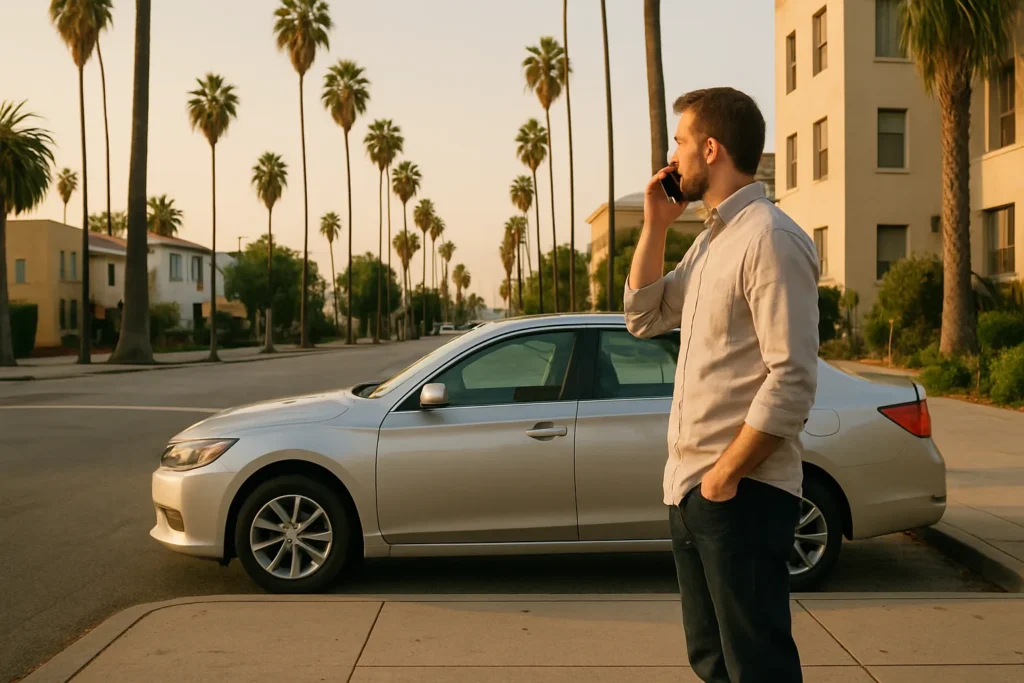






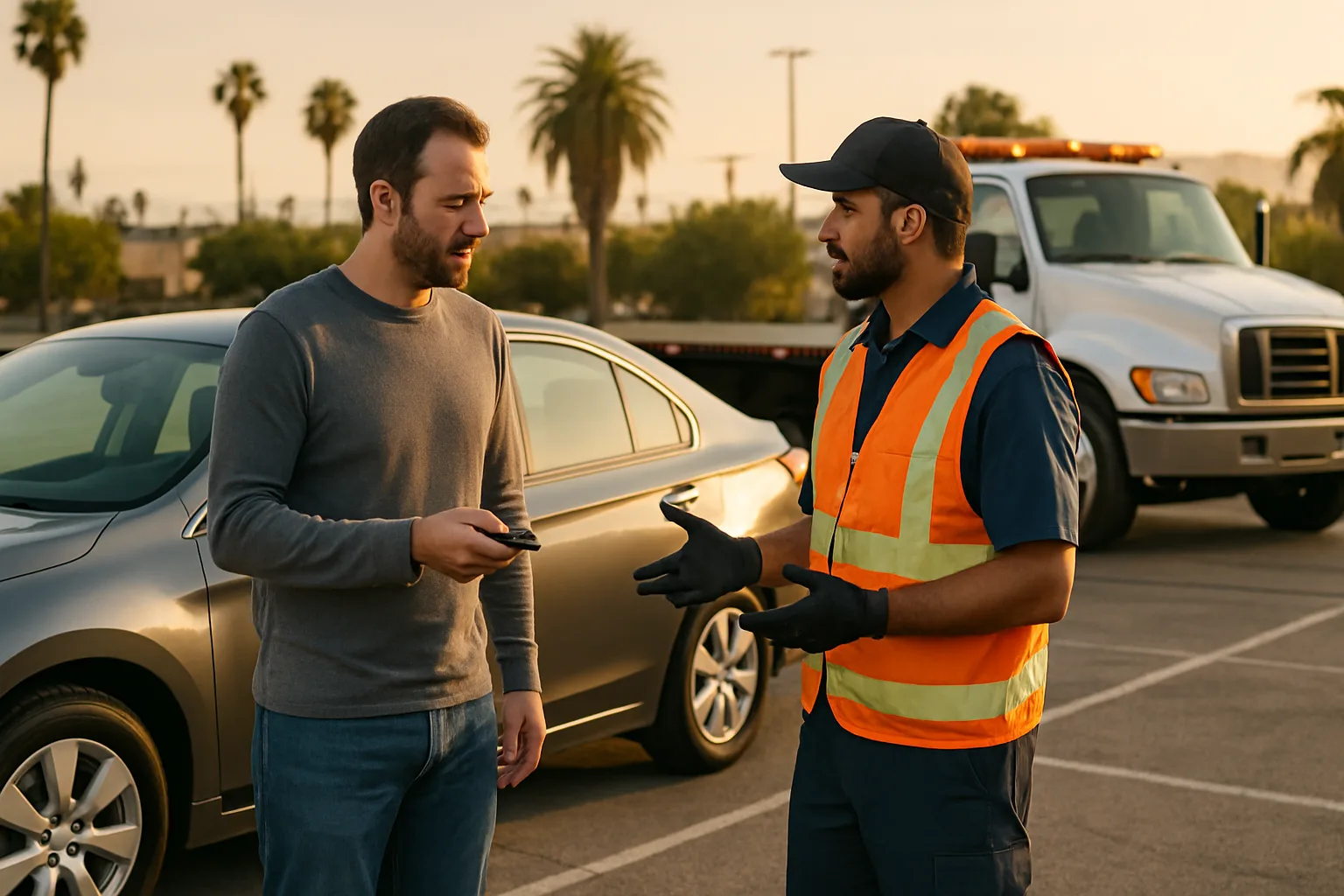
A car can sometimes be towed without its keys, but the missing key changes how the operator approaches the job. Dispatch needs to know whether the doors are locked, the steering is locked, the transmission is in Park, and the wheels can move. The right answer depends on the vehicle and its surroundings—not simply whether a tow truck can reach the address.
If you need customer-requested vehicle towing in Los Angeles, explain the missing-key situation before a truck is assigned. Do not describe the car as ready to roll unless you know that it is. A clear description helps dispatch assess the job and discuss the appropriate next step.
First, distinguish missing keys from keys locked inside
These are different requests. If a working key is visible inside a locked car, vehicle-entry assistance may be the first thing to discuss. If the key is lost, damaged, or somewhere else, opening the door may not solve the problem. The car may still be unable to start, release its steering lock, or enter the manufacturer’s required transport setting.
Describe which situation applies when asking about car lockout assistance. Vehicle entry is not the same as making a replacement key or programming a key fob. Do not assume a towing visit includes either of those services. If another provider is arranging a key, tell dispatch whether that person will arrive before the vehicle moves.
What the missing key can prevent
Steering and transmission access
Depending on the model, a missing key can prevent normal steering movement or shifting out of Park. A dark dashboard can also mean the vehicle has no usable low-voltage power. Tell the operator what you can observe, but avoid guessing which component has failed. “The doors are locked and the dashboard is dark” is more useful than an unsupported diagnosis.
Electronic parking brakes and transport settings
Some vehicles need power or a recognized key to activate a transport setting. For example, Tesla’s Model 3 transporter instructions specify key detection and low-voltage power for Tow Mode. That is a model-specific example, not a universal procedure. The operator should use the instructions for your exact vehicle.
Do not force a shifter, defeat a steering lock, or release a parking brake on a slope to make the car “easier to tow.” Leave vehicle preparation to someone who understands the manufacturer’s procedure and can control movement safely.
A flatbed does not remove every loading problem
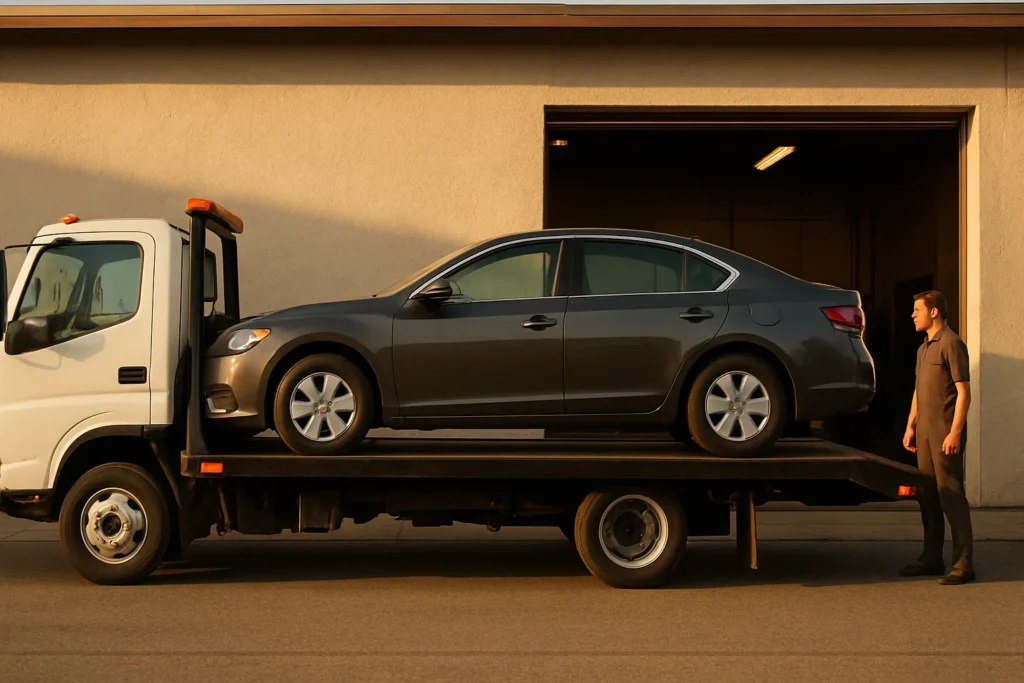
Flatbed towing keeps the vehicle supported on the truck during transport. Getting it onto that platform is a separate step. A car with wheels that cannot roll may require a different loading approach from a car that can move freely. Dispatch must confirm the available equipment and whether the site allows its use.
A locked parking brake is one example of a loading restriction, but not the only one. Our guide to towing with the parking brake on explains why that detail matters. Tell dispatch about damaged tires, a wheel against a curb, or a vehicle parked tightly between other cars as well.
Give dispatch a usable description of the pickup
Have the make, model, approximate model year, and pickup address ready. Explain whether the vehicle is on a street, driveway, open parking lot, or inside a structure. If the car is behind a gate, identify who can provide access. Share photographs only from a safe place and through a method the dispatcher confirms.
Access can matter as much as the missing key. At an apartment property in North Hollywood, for example, a street address may lead to the front lobby while the vehicle is behind the building. Explain the actual vehicle entrance, whether another car blocks it, and any posted clearance restriction. Do not enter traffic to take measurements.
Arrange permission and someone to meet the operator
Be ready to explain your connection to the vehicle and ask what identification or authorization is needed for the pickup. If you are arranging the tow for a family member, have that person available to confirm details. Access to a driveway or parking space does not by itself explain who has authorized moving the car.
This guidance concerns towing requested by the vehicle owner or an authorized customer. It is not a guide to removing someone else’s parked vehicle. Maps Towing does not locate or release police/OPG impounded vehicles.
Make sure the destination expects a car without keys
Call the receiving repair shop or dealership before arranging transport. Explain that the vehicle will arrive without a working key and may not roll or steer normally. Ask which entrance to use, who will receive it, and where it can be unloaded. A business address alone does not confirm that someone can accept the vehicle.
If keys become available before pickup, update dispatch. That information can change the loading assessment. Keep your phone available while the pickup is being arranged, and call again if the vehicle’s location or access changes.
Call with the vehicle details
Maps Towing has offices in Van Nuys and Burbank. For a car without keys, call to discuss the vehicle, access, destination, and current availability before making assumptions about the towing setup. Call (818) 797 – 1560 for a pickup assessment and current ETA.
Share: