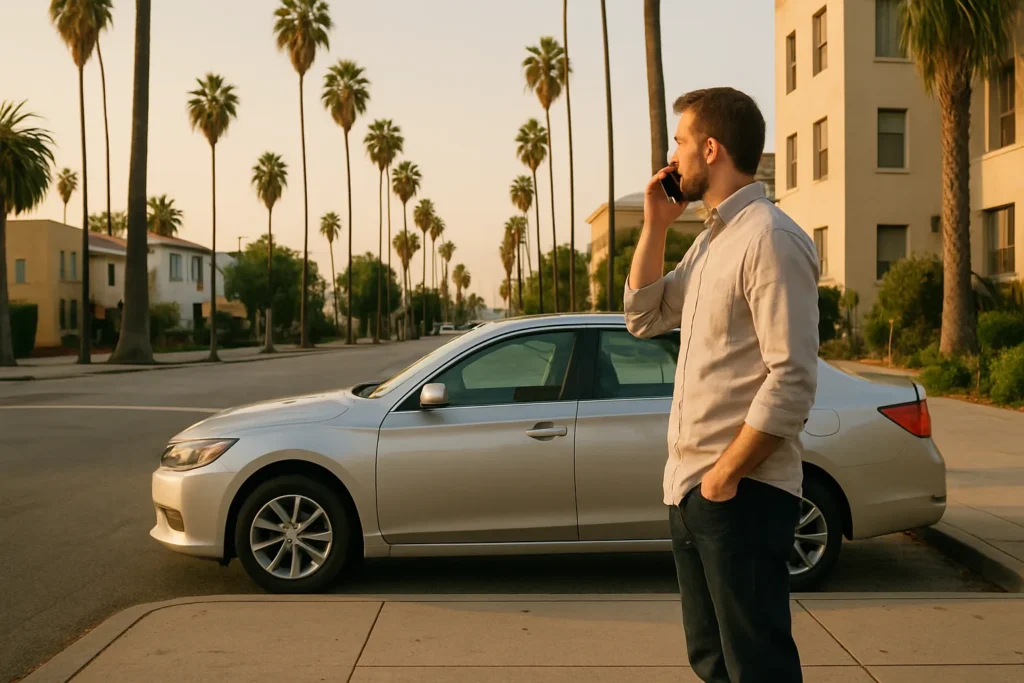

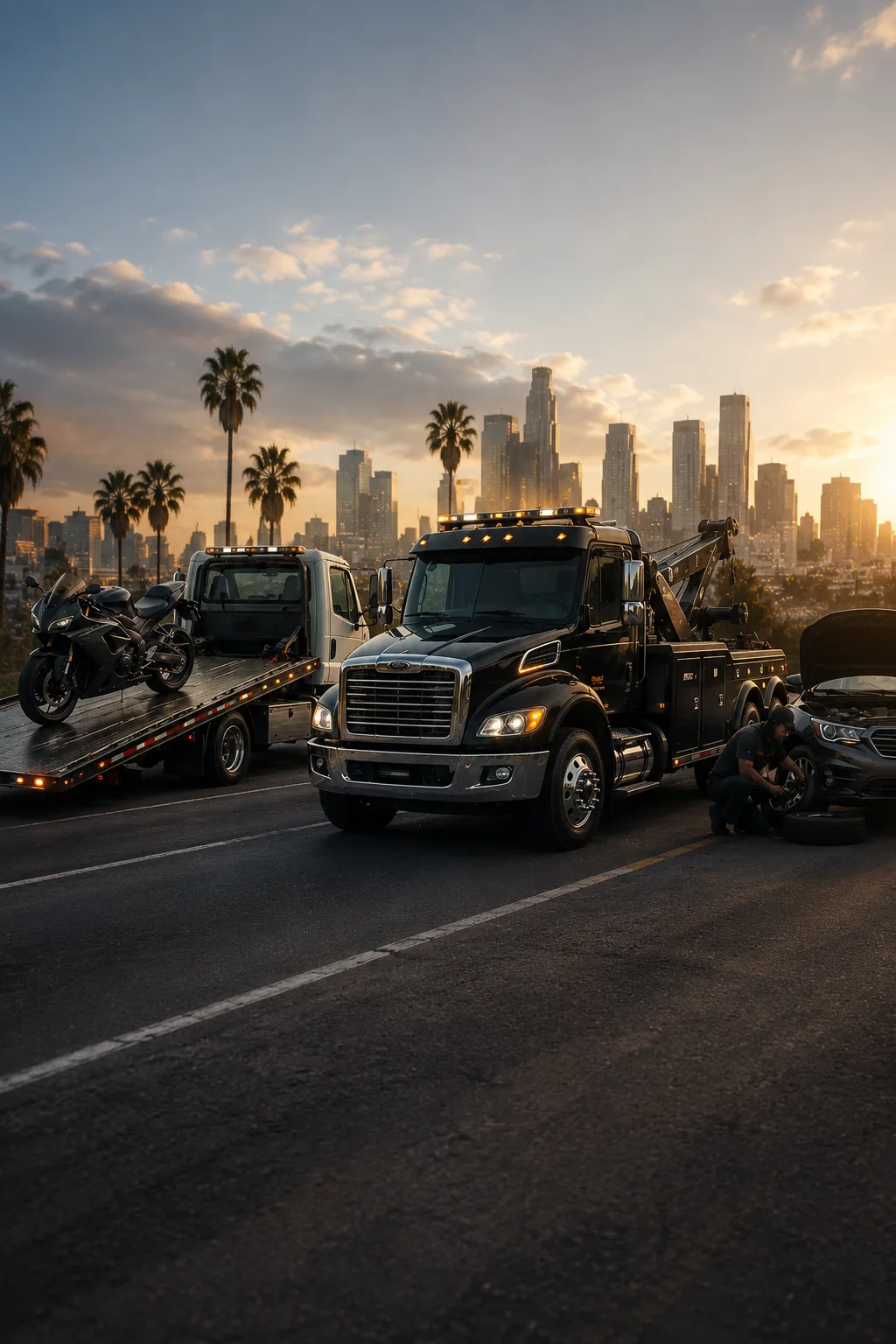




When your car stops on a Los Angeles road, the first practical question is usually how soon help can reach you. The honest answer depends on where you are, what happened, which truck your vehicle needs, and what traffic is doing between the operator and your location.
Maps Towing provides a current ETA when you call, based on location, traffic, truck availability, and service type. There is no universal arrival time. A clear dispatch call gives the team the best chance to send the right equipment without losing time to missing details or an incorrect pickup point.
What Affects Tow Truck Arrival in Los Angeles?
Distance matters, but it is only one part of a Los Angeles response. A truck may be geographically close and still face a freeway bottleneck, a difficult interchange, a canyon route, a gated property, or an approach that requires entering from the opposite direction.
Your exact location and access
A freeway shoulder, underground garage, steep driveway, narrow alley, and open parking lot require different approaches. Dispatch needs the freeway name, direction of travel, nearest exit, cross street, level of a garage, gate instructions, and any landmark that can be seen safely. Dropped map pins are useful, but a spoken description helps confirm that the pin is on the correct side of the road.
On the 405 through the Sepulveda Pass, for example, northbound and southbound locations are not interchangeable. The same is true around the 101 and 134 interchange, Downtown Los Angeles ramps, and divided Valley boulevards. Precise details can prevent a long loop back to the vehicle.
Traffic and road conditions
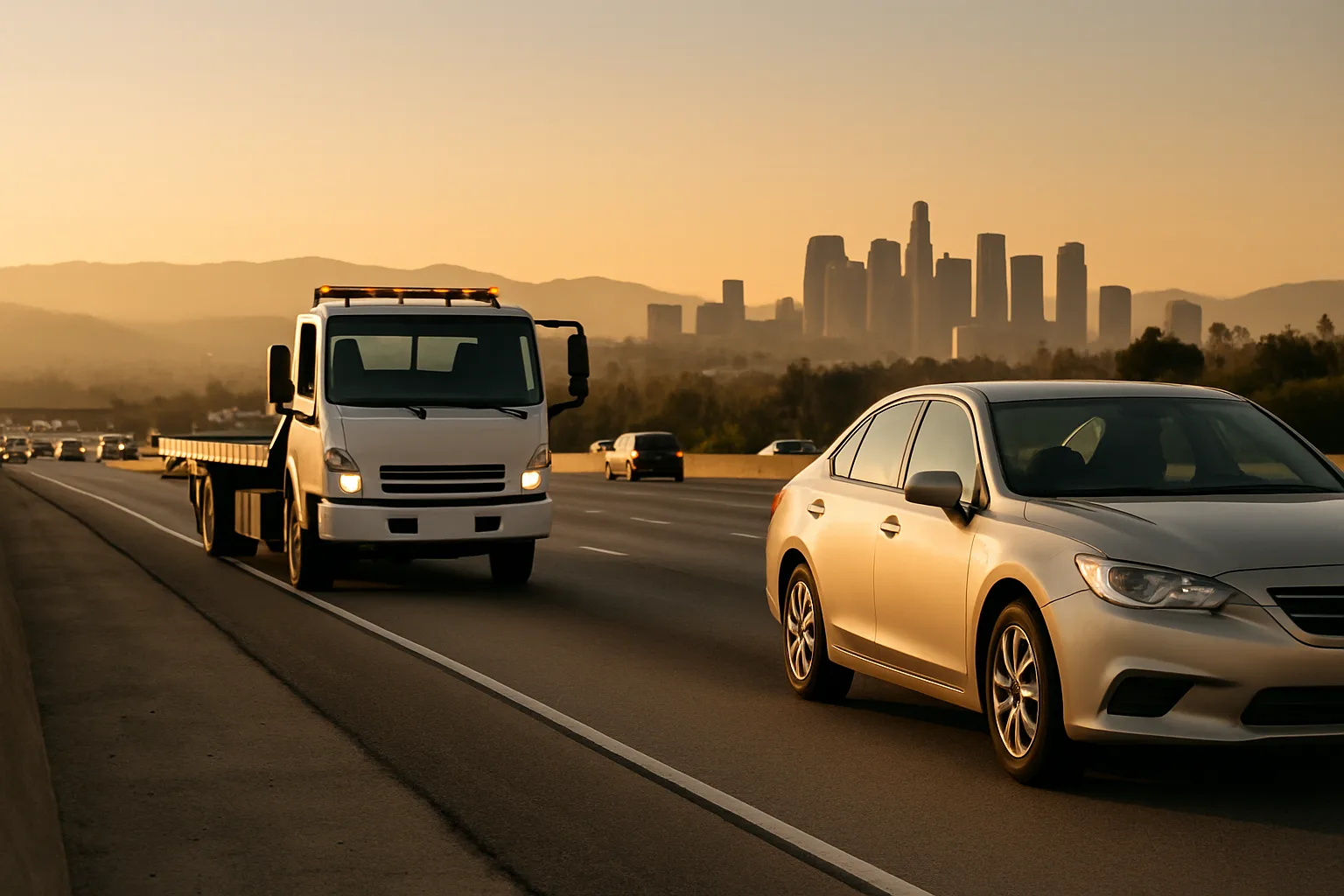
Los Angeles traffic changes block by block. Congestion on the 5, 10, 101, 110, or 405 can slow every vehicle, including a tow truck. Collisions, construction, event traffic, lane closures, rain, and canyon-road restrictions can also change the best route after dispatch begins.
That is why a responsible dispatcher gives current information instead of guaranteeing an arrival time. If conditions change, stay reachable so the dispatcher or operator can update you or ask for a better access detail.
The truck and equipment your vehicle needs
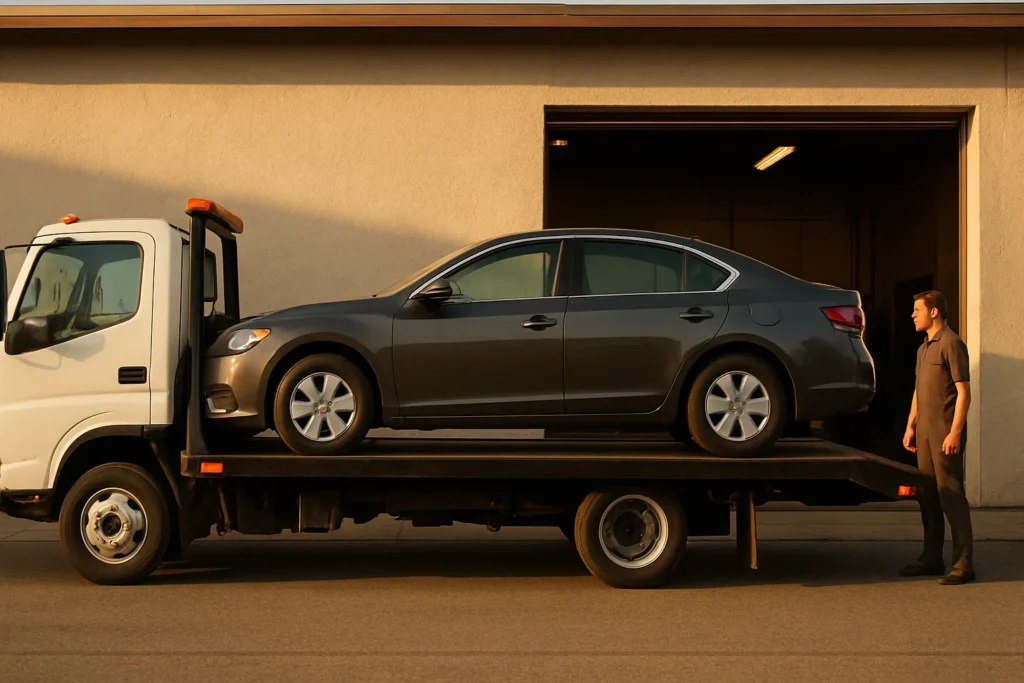
A standard disabled sedan in an open area is different from an AWD vehicle, a low-clearance car, a vehicle with locked wheels, or a car inside a low garage. The nearest truck is not always the correct truck. Sending suitable equipment first is better than arriving with a setup that cannot load the vehicle safely.
If the situation is urgent or the car cannot be driven, review what emergency towing in Los Angeles covers. Tell dispatch about drivetrain, damage, clearance, wheel position, parking brake, and whether the vehicle can shift into Neutral.
Current calls and safe routing
Demand can rise during commute congestion, severe weather, major events, and widespread road incidents. Operators also cannot leave an active loading operation halfway through. Dispatch balances proximity, equipment, access, and the safe completion of current calls when assigning the next job.
What Dispatch Needs From You
Start with your callback number and exact location. Then give the year, make, model, color, drivetrain if known, and the reason the vehicle will not continue. Say whether it starts, rolls, steers, brakes, and has accessible keys. Mention passengers, pets, traffic exposure, collision damage, and any leaking fluid without touching or approaching the fluid.
Provide the destination if you already know it. If you are unsure, say so rather than naming a location that may change. Our guide to choosing a Los Angeles towing company explains the basic information worth confirming before transport.
Why LA Geography Changes the Response
Los Angeles is not one uniform street grid. Van Nuys and Burbank have broad corridors and busy freeway connections, while Hollywood Hills and canyon neighborhoods may have tight turns, limited shoulders, and restricted staging space. Coastal traffic can move differently from San Fernando Valley traffic, and a stadium or convention event can reshape nearby routes.
Coverage also matters. Check the Maps Towing service area for the communities served across Greater Los Angeles. An accurate neighborhood, not just “Los Angeles,” helps dispatch identify the practical route and truck.
What to Do While the Truck Is En Route
Move away from active traffic when you can do so safely. Remain behind a barrier if one is available, keep children and pets controlled, and do not stand between vehicles. Avoid attempting repairs beside fast-moving lanes. Follow instructions from law enforcement, freeway service personnel, or emergency responders at the scene.
Keep your phone charged and audible. If you move to a safer place, update dispatch immediately. For more detail, read how to stay safe while waiting for a tow truck. Drivers calling at night can also review what to expect from after-hours towing.
What Happens When the Operator Arrives?
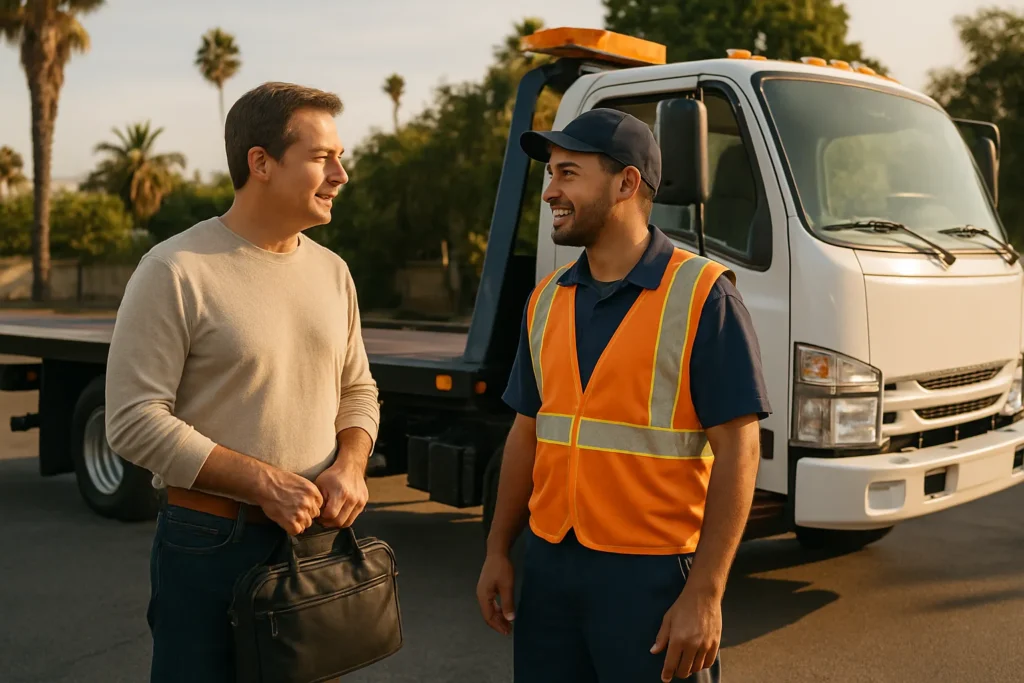
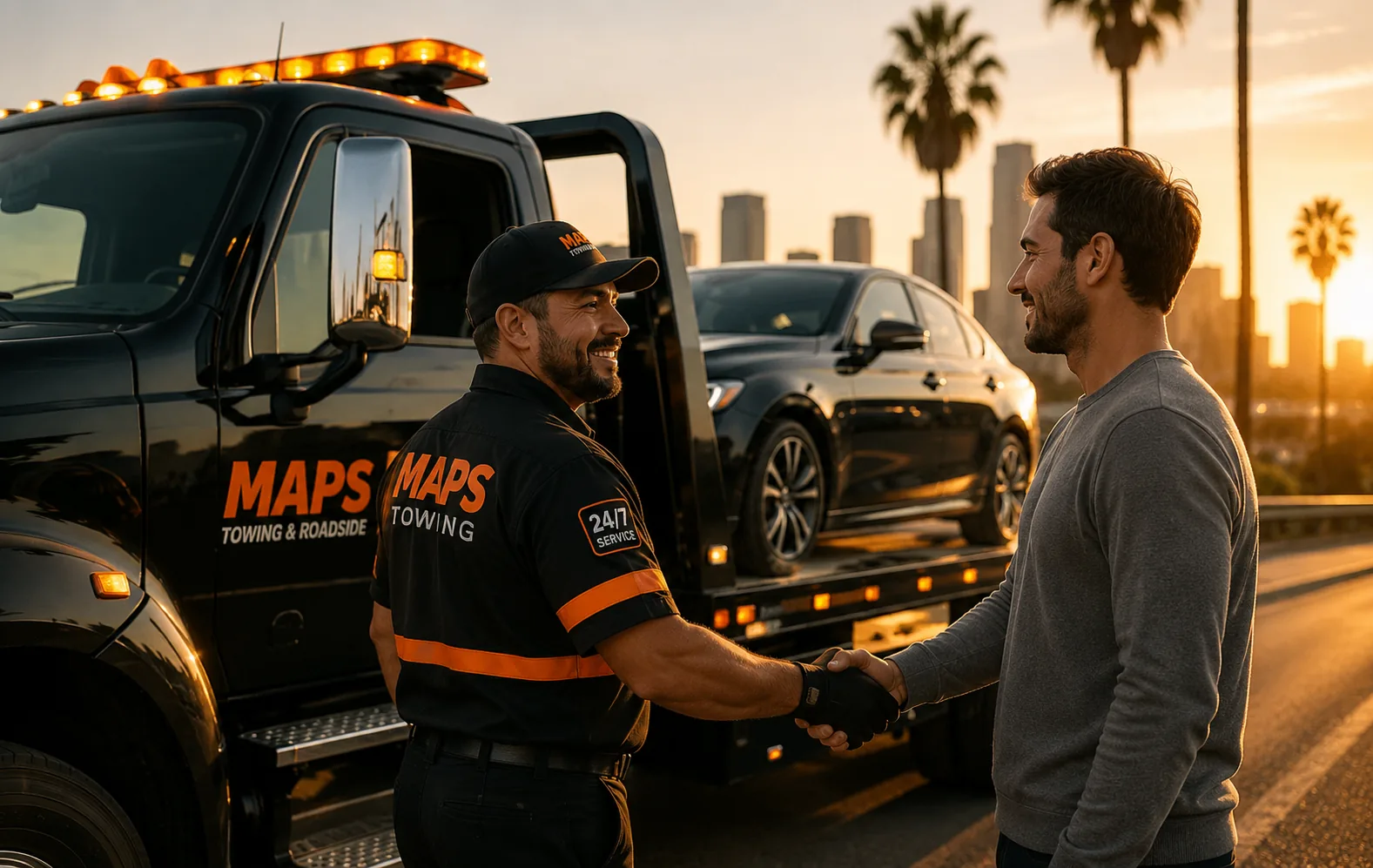
The operator first confirms the vehicle, destination, condition, and loading plan. They may inspect tire position, suspension damage, clearance, drivetrain, steering, and the safest direction for loading. A quick scene assessment is part of protecting the car, the operator, and nearby traffic.
Clear information before arrival makes this handoff smoother. Keep keys and any wheel-lock key available, remove important belongings when safe, and point out mechanical or body damage that may not be obvious.
Call for a Tow in Los Angeles
Maps Towing serves Greater Los Angeles with offices in Van Nuys and Burbank. When you call, share your exact location, vehicle details, access conditions, and destination so dispatch can select the right response. For towing help and your current ETA, Call (818) 797-1560.
Share: