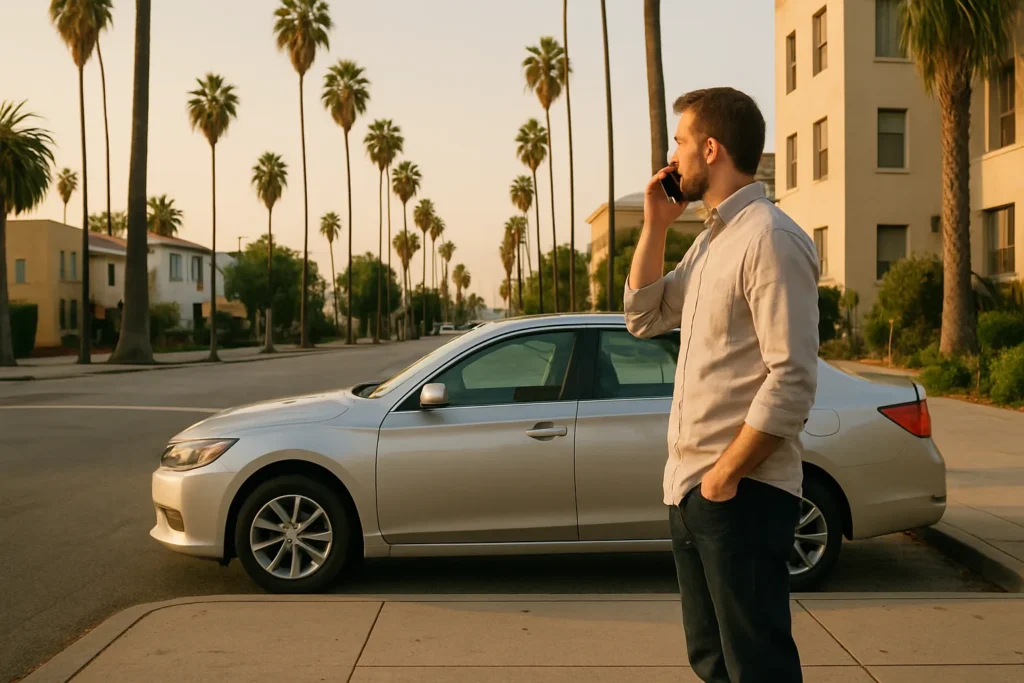







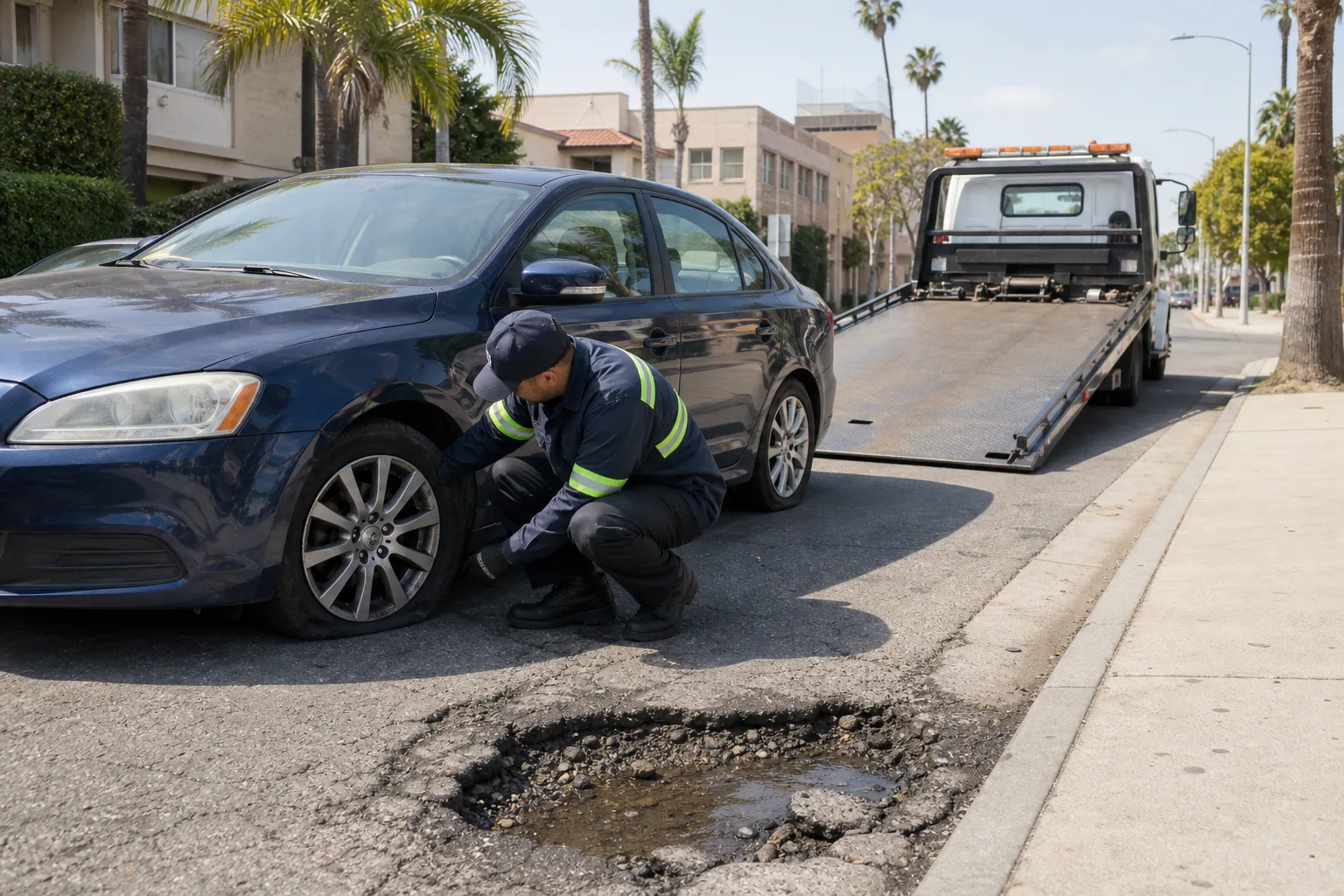
A hard pothole impact can damage more than a tire. The wheel, steering, suspension, alignment, underbody, and even fluid-carrying components may be affected. The car might continue moving, but that does not automatically mean it is safe to drive across Los Angeles.
After the impact, move out of traffic carefully if the vehicle remains controllable. A simple roadside tire change may help when only one tire is damaged and a usable spare is available. Visible wheel, steering, or suspension damage usually calls for a more cautious plan.
Pull Over and Check the Vehicle’s Behavior
Reduce speed smoothly and avoid hard braking or abrupt steering. Turn on the hazard lights and reach a parking lot, wide shoulder, or safe curb when possible. If the car pulls sharply, vibrates heavily, makes a grinding sound, or feels unstable, stop as soon as you are clear of traffic.
Call 911 if the vehicle blocks a lane, debris creates a hazard, anyone is hurt, or a fluid leak or loss of control creates immediate danger. Do not stand in a traffic-facing lane to inspect the tire.
Inspect the Tire Without Crawling Underneath
From a safe position, look for a flat tire, sidewall bubble, cut, exposed cord, or rubber separating from the wheel. A tire can lose internal strength without going completely flat. A new vibration or rhythmic thump after an impact deserves attention even when pressure appears normal.
Do not drive on a sidewall bubble or exposed structural material. These conditions can lead to sudden failure. Our guide on what to do after a flat tire in Los Angeles explains how location, spare condition, and wheel damage affect the next step.
Look Closely at the Wheel
A bent rim may cause air loss, vibration, or an imperfect seal. Cracks, missing pieces, a wheel sitting at an unusual angle, or contact between the tire and bodywork are reasons not to continue. Cosmetic scraping alone is different from a structural bend, but roadside observation cannot always show the full damage.
Check whether the wheel rotates freely only if moving the car a very short distance is necessary for safety. Do not test it at road speed. A wheel that rubs, wobbles, or appears displaced may indicate suspension or hub damage.
Pay Attention to Steering and Suspension Clues
A pothole can bend a control arm, damage a strut, disturb alignment, or affect a steering component. Warning signs include a crooked steering wheel, strong pulling, clunking, uneven ride height, or a tire shifted within the wheel opening.
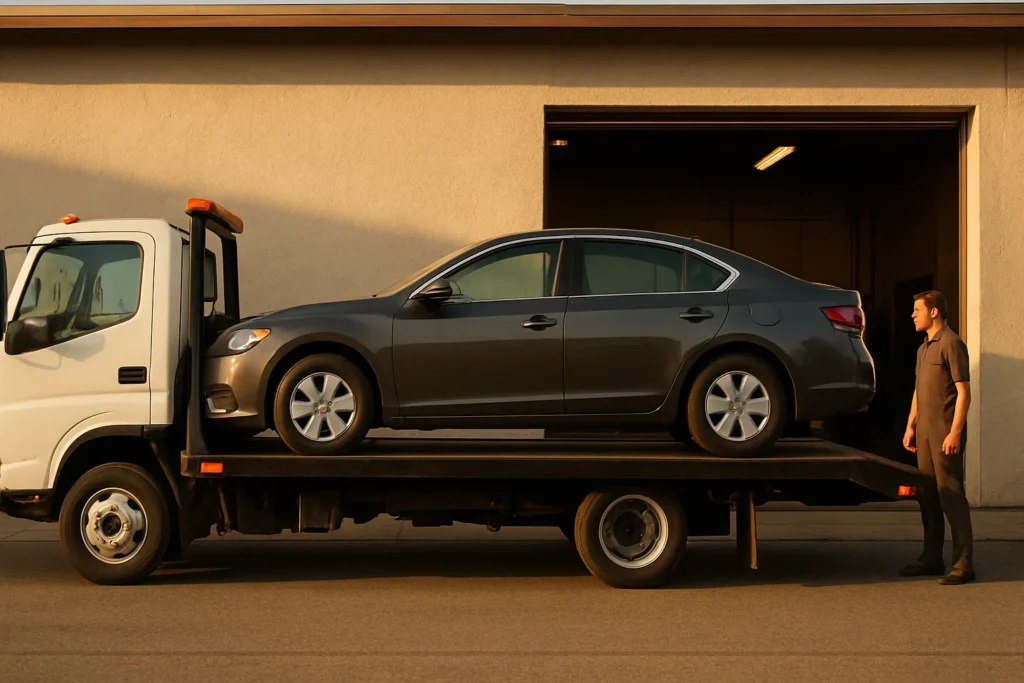
Driving with compromised steering or suspension can make the vehicle difficult to control and may turn repairable damage into a larger problem. When these symptoms appear, arrange flatbed towing rather than experimenting on busy streets.
Check for Fluid Leaks and Underbody Contact
Look at the pavement without reaching beneath the vehicle. Fresh oil, coolant, transmission fluid, or another leak after a severe impact may indicate underbody damage. A hanging panel, damaged exhaust, scraping sound, or warning light also deserves professional inspection.
Do not touch unknown fluid or hot components. If you smell fuel, see smoke, or notice a fast leak, move people away and call emergency services. Restarting the engine or continuing to drive can increase damage.
When a Short Drive May Be Reasonable
If the impact was mild, the tire holds pressure, the wheel appears straight, no warning lights or leaks are present, and steering and braking feel completely normal, you may choose to move slowly to a nearby inspection location. Avoid freeways and stop immediately if any symptom develops.
A professional alignment and tire inspection can reveal problems that are not visible at the curb. Record the pothole location and photograph the road and vehicle only from a safe place. Drivers near central Los Angeles can review our Hollywood towing service coverage for local assistance.
Information to Give the Tow Dispatcher
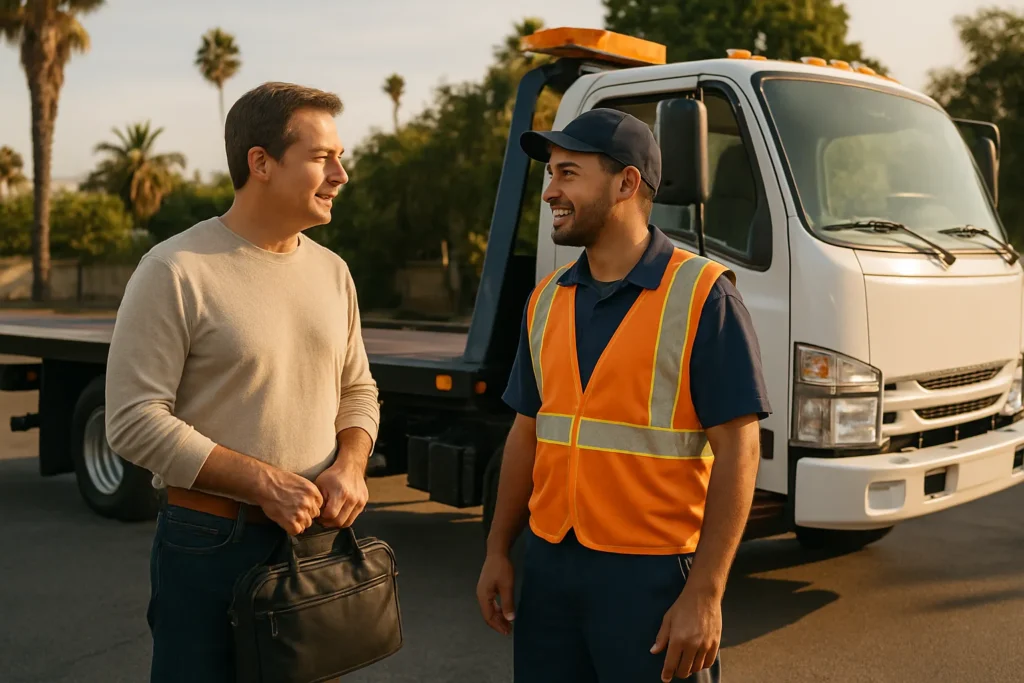
Share the vehicle year, make, model, exact location, affected wheel, visible damage, warning lights, leaks, and whether the car can steer, roll, and shift into neutral. Mention all-wheel drive, low clearance, or a second damaged tire so suitable equipment can be considered.
Also explain where the vehicle is parked and which side offers the safest approach. A precise curb color, parking-lot entrance, level of a garage, or nearby address is more useful than a broad neighborhood name. If the damaged wheel is turned against a curb or the car sits on a steep grade, mention that before equipment is dispatched.
Document the Damage Safely
Once everyone is away from traffic, take clear photos of the affected tire, wheel, surrounding bodywork, warning messages, and the road surface. Note the time and exact location while the details are fresh. These records can help a repair shop understand the event and may support an insurance or road-damage report, but documentation should never require standing in a live lane.
Get Help After Pothole Damage
Maps Towing provides 24/7 towing and roadside assistance across Greater Los Angeles from Van Nuys and Burbank. Contact Maps Towing with non-urgent questions. If the car is unsafe to drive, Call (818) 797 – 1560 and describe the impact, tire, wheel, steering, leaks, location, and destination.
Share: