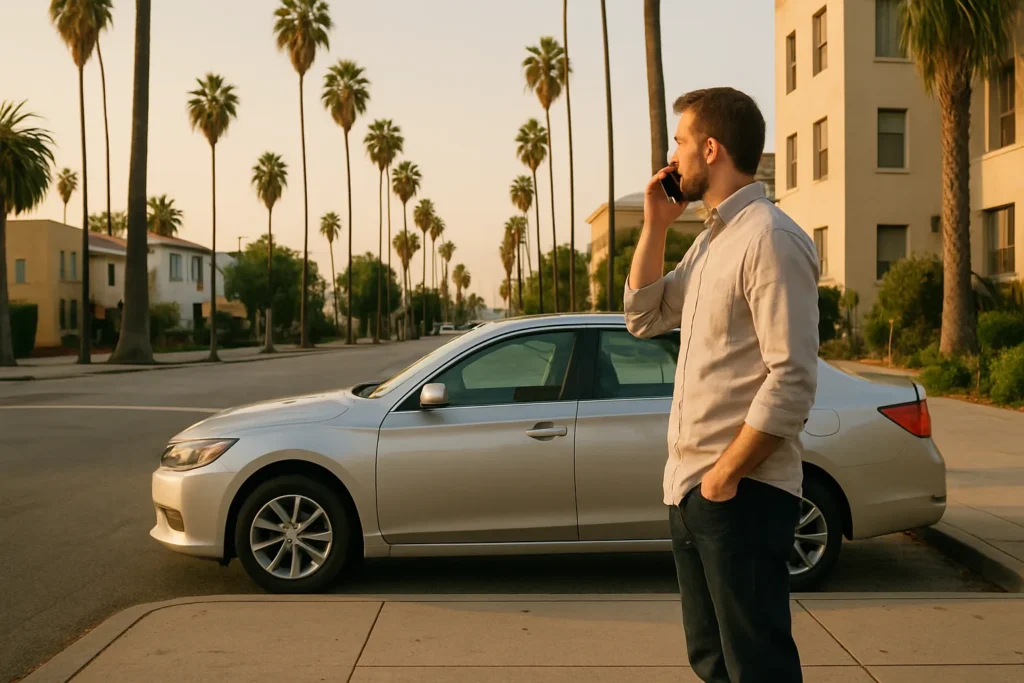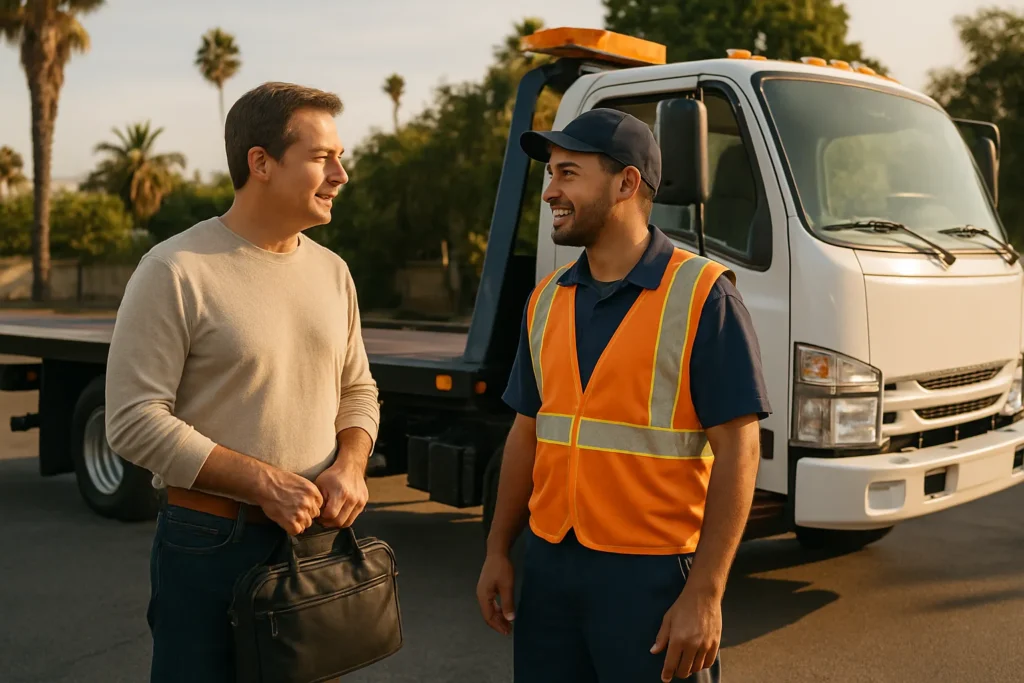







A dead car battery in Los Angeles often appears at the least convenient time: after a long workday, inside a parking structure, or before an early drive. Sometimes a jump start is enough. Other times, the no-start condition points to a failed battery, charging-system problem, starter issue, or another fault that requires a tow.
Understanding the symptoms helps you request the right service. A professional jump start in Los Angeles can get many vehicles running, but restarting the engine is only the first part of deciding whether it is safe to continue driving.
Common Signs of a Weak or Dead Battery
A rapid clicking sound, dim interior lights, slow engine cranking, or complete electrical silence can indicate low battery power. If the dashboard lights are bright but the engine does not crank, the problem could instead involve the starter, gear selector, ignition system, or another component.
Notice what happens when you turn the key or press the start button. Tell dispatch whether the lights work, whether the engine cranks, and whether any warning message appears. Our guide to the top reasons a car will not start explains several problems that can resemble a dead battery.
Check Simple Causes Without Taking Risks
Make sure the transmission is fully in Park, or try Neutral if the owner’s manual allows it. Confirm that headlights, interior lights, and accessories were not left on. Look for obvious battery damage, a strong unusual odor, smoke, or leaking fluid without touching the battery.
Do not attempt a jump if the battery is cracked, swollen, frozen, leaking, or extremely hot. Keep metal tools away from the terminals. Hybrid and electric vehicles have specialized systems, so consult the owner’s manual and request a technician familiar with the vehicle rather than guessing where connections should be made.
What Happens During a Professional Jump Start?
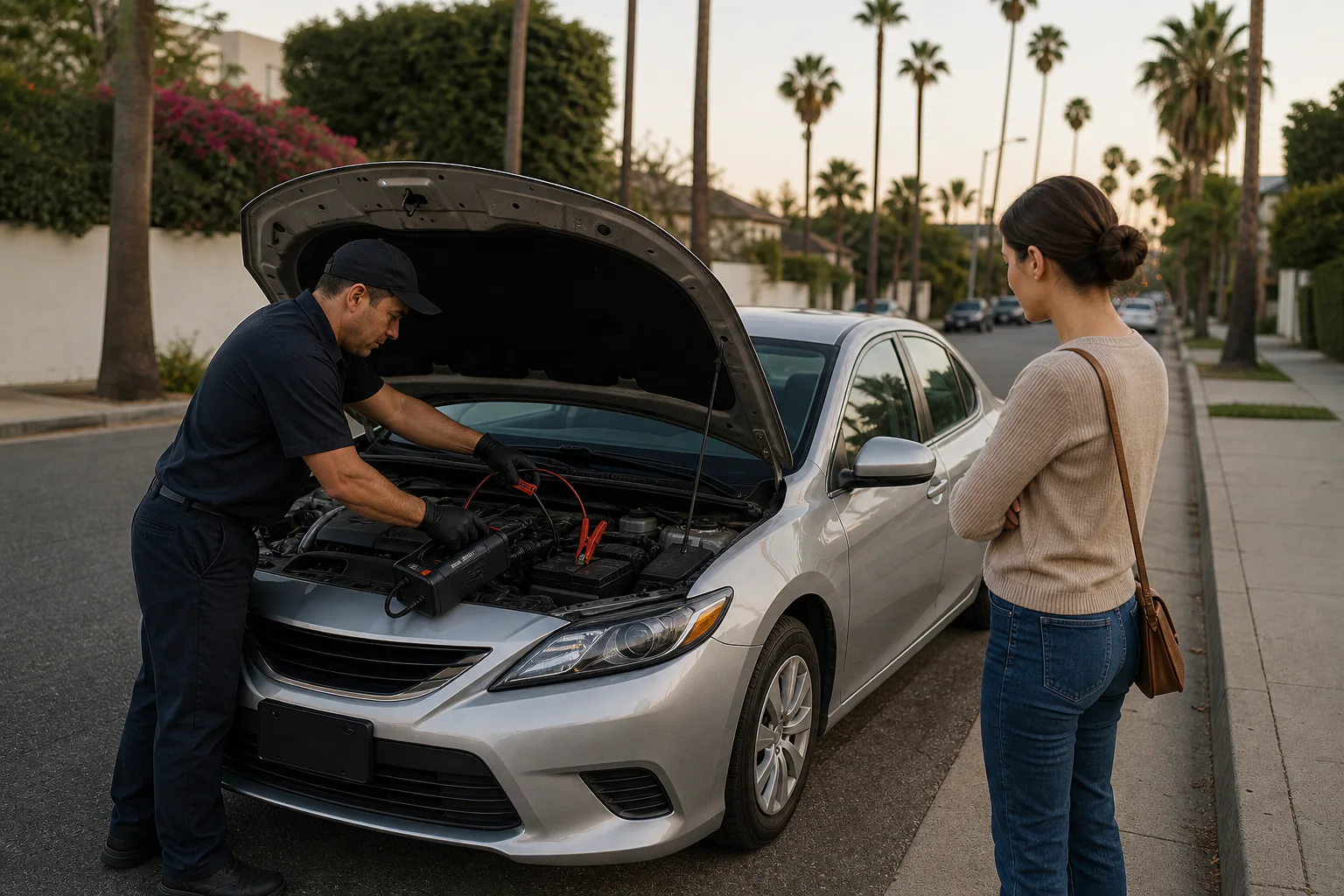
The technician confirms the vehicle and accesses the designated jump points. A professional jump pack or service vehicle supplies controlled power while the technician follows the connection sequence appropriate for the car. Once the engine starts, the cables are removed safely and the charging system’s behavior can be observed.
Keep the engine running unless the technician advises otherwise. Turning it off immediately may leave you stranded again. Ask whether the vehicle should be driven directly to a repair shop or battery retailer for testing. A successful jump does not prove that the battery and alternator are healthy.
Pay attention after the engine starts
Turn off unnecessary accessories and watch for a battery or charging warning light. Flickering lights, unstable idle, or another stall may indicate that the alternator is not supporting the electrical system. Do not assume a long drive will repair a failing battery. Arrange a proper battery and charging-system test as soon as practical.
If the vehicle starts inside a garage, confirm the exit route before moving and never leave the engine running in an enclosed space. Keep the key accessible and avoid shutting the engine off until the car reaches a safe place for testing, unless warning signs make continued operation unsafe.
When a Jump Start Is the Right Choice
A jump is often reasonable when the battery was drained by lights or accessories, the vehicle otherwise operated normally, and there are no signs of physical battery damage. It can also help identify whether low voltage is the main reason the engine will not crank.
Access matters. Tell dispatch if the car is nose-first in a tight garage, behind a locked gate, or parked where another vehicle cannot reach the battery area. A compact jump pack may be more practical than traditional cables in restricted spaces. Professional roadside assistance can bring suitable equipment to the location.
When the Vehicle May Need a Tow
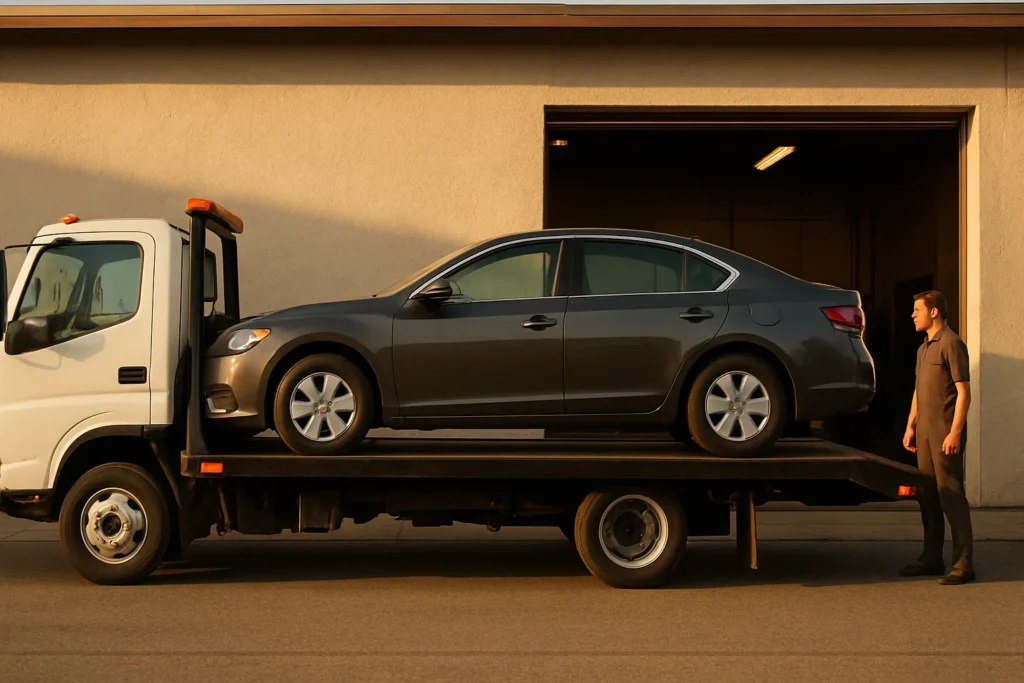
A tow may be appropriate when the engine still will not start, the battery will not accept power, the alternator warning remains on, or the engine stalls again after the jump. Burning smells, smoke, unusual noises, or damaged wiring are also reasons to stop attempting restarts.
Repeatedly jump-starting a vehicle with an unresolved charging problem can leave it disabled in a more dangerous location. If reliable operation is uncertain, towing the vehicle to a qualified repair facility is often the safer plan.
Help Prevent Future Battery Problems
Have the battery and charging system tested when cranking becomes slow or electrical behavior changes. Keep terminals clean, make sure the battery is secured, and replace damaged cables. Heat can accelerate battery wear, making routine checks especially useful in Southern California.
Vehicles driven only for short trips may not have enough time to replenish the energy used during starting. Follow the manufacturer’s maintenance guidance, and include battery condition in a broader breakdown-prevention inspection.
Get Jump-Start Help in Los Angeles
Maps Towing provides 24/7 towing and roadside assistance across Greater Los Angeles from Van Nuys and Burbank. Call (818) 797-1560 and describe the vehicle, location, and symptoms. We will coordinate an appropriate available response, whether that means a professional jump start or towing when the car cannot be driven reliably.
Share: