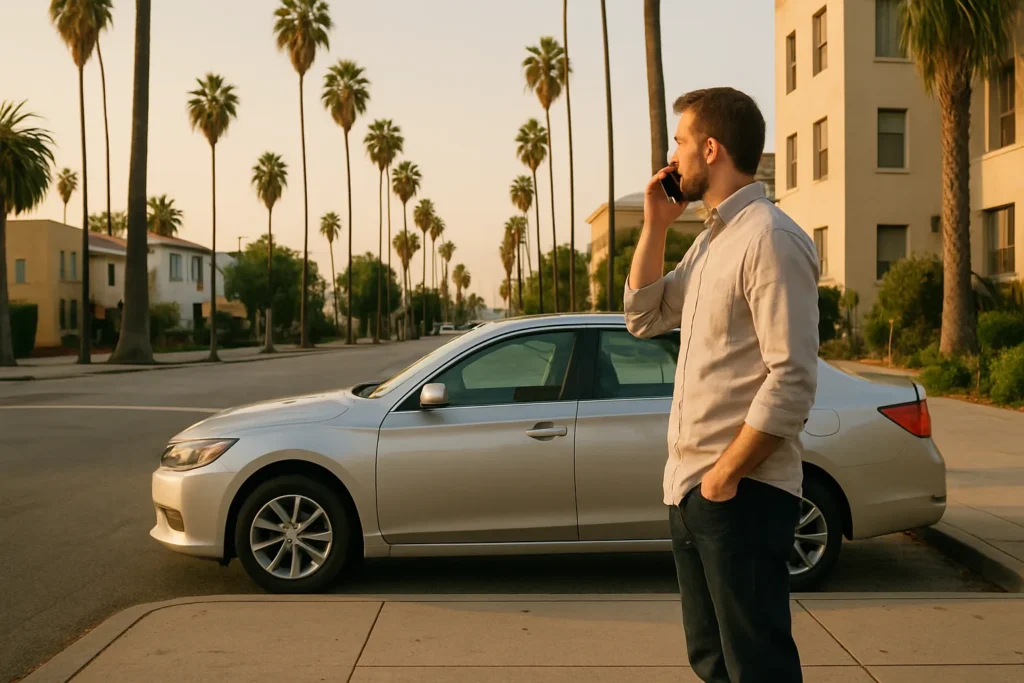

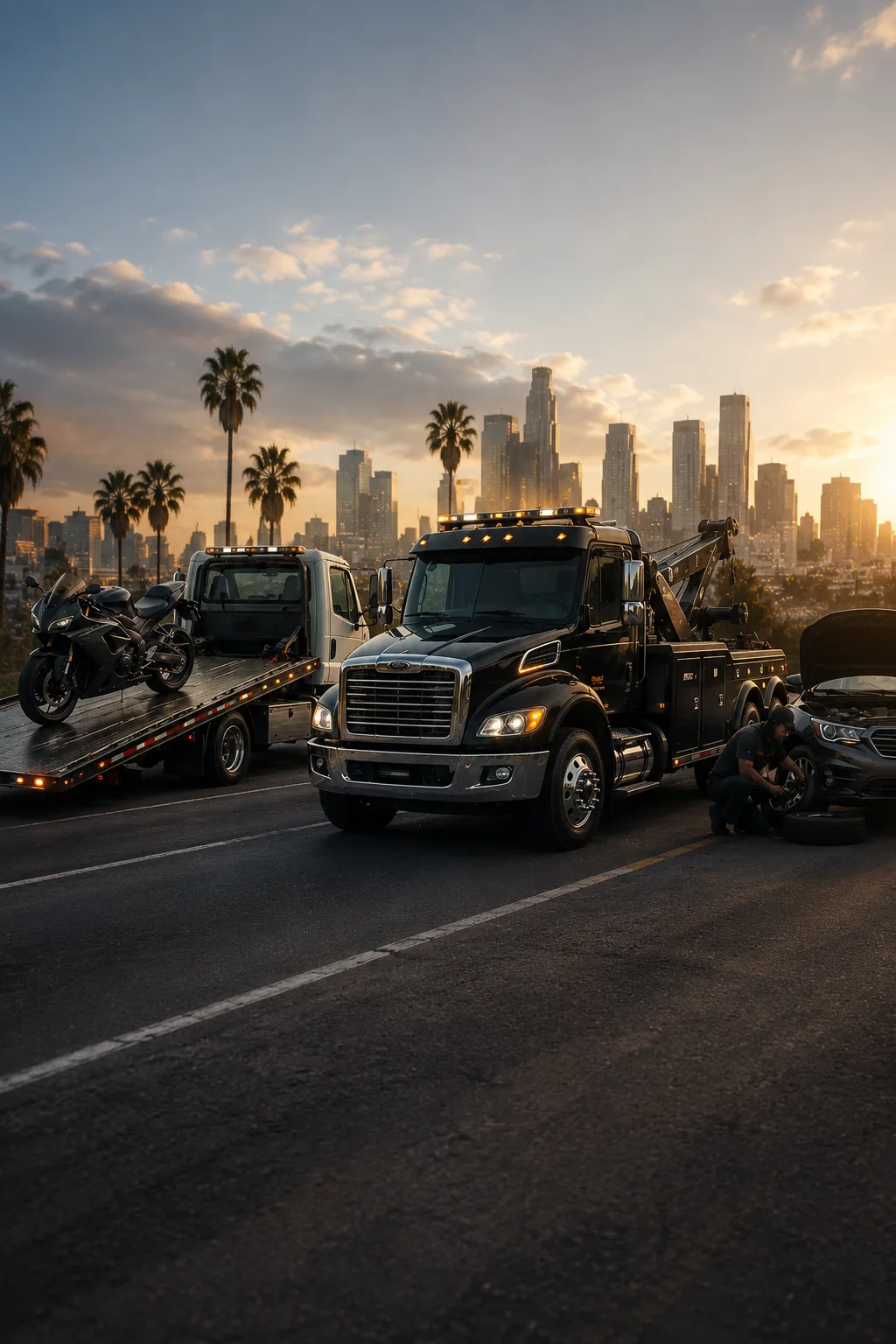




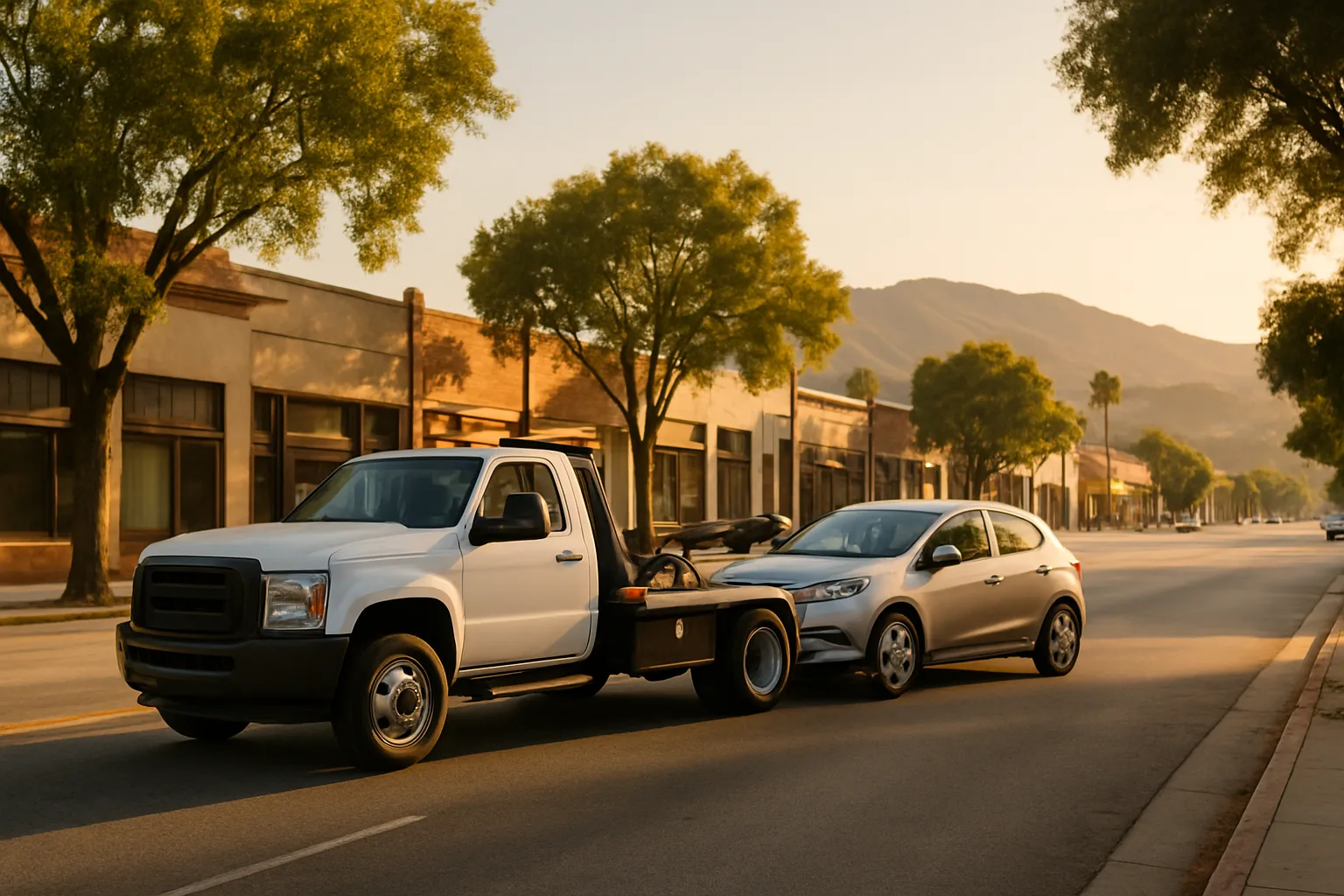
Pasadena, Highland Park, and Eagle Rock form a connected corridor of freeways, older commercial streets, residential hills, and busy neighborhood routes. A breakdown may happen on the 134, the Arroyo Seco Parkway, Colorado Boulevard, or a narrow local street. Each location calls for different access information and sometimes different towing equipment.
This guide focuses on the practical details that help dispatch reach the correct side of the road, protect the vehicle, and choose a safe loading plan.
Start With an Exact Location
Freeway direction and nearest exit
On the 134, state eastbound or westbound, the nearest exit, and whether you are before or after it. On the 110 Arroyo Seco Parkway, provide northbound or southbound direction and describe whether you are on the main roadway, an on-ramp, or an off-ramp. Short ramps and limited shoulders make it important to call 911 if the vehicle blocks traffic.
A location pin helps, but check that it appears on the correct carriageway. If the pin is between roads, add a bridge, cross street, or visible public landmark.
Neighborhood streets and hills
On surface streets, give the nearest cross street and say whether the vehicle is at the curb, in a lot, in a driveway, or in a lane. Eagle Rock and Highland Park include sloped residential streets where road width and vehicle orientation affect recovery. Describe gates, low branches, tight turns, or steep driveways before dispatch.
Towing in Pasadena
Pasadena includes the 134 and 210 corridors, major streets, parking structures, and foothill neighborhoods. The Pasadena towing area confirms local coverage. For a freeway stop, add direction and exit. For a garage, add the entrance street, clearance, parking level, and stall.
Event traffic and temporary controls can change access around civic, college, and entertainment areas. Follow directions from authorities and tell dispatch about barricades or closed approaches rather than directing a truck through them.
Towing in Highland Park
Highland Park sits along the Arroyo Seco corridor with busy streets, older parking areas, and residential slopes. Use the Highland Park towing area for service details. If you are near the 110, do not describe the location only by neighborhood; the route direction and ramp name are essential.
On a narrow street, keep passengers away from the traffic-facing side. If the vehicle can safely move to a wider curb or lot before losing power, that can provide a better working area. Do not continue driving with a damaged tire, severe overheating, loss of steering, or visible fluid loss.
Towing in Eagle Rock
Eagle Rock connects toward Glendale and Pasadena through surface streets and the 134. The Eagle Rock towing area provides coverage context. Tell dispatch whether the car is on a commercial corridor, a freeway approach, or a hillside residential road.
For sloped access, state whether the vehicle faces uphill or downhill and whether the brakes, steering, and wheels operate. Never release a parking brake on a grade to test whether a disabled car will roll.
Roadside Assistance or Full Towing?
Safe working room comes first
A dead battery, flat tire, or lockout may be suitable for roadside assistance in a protected location. A short freeway shoulder, exposed ramp, or narrow hillside lane can make the same service unsafe. The operator may move the vehicle before attempting the repair.
Share the symptoms instead of diagnosing the car. Clicking, dim lights, overheating, a tire failure, impact damage, or a locked wheel helps dispatch choose equipment. Provide the year, make, model, drivetrain, and whether the keys are available.
When transport is necessary
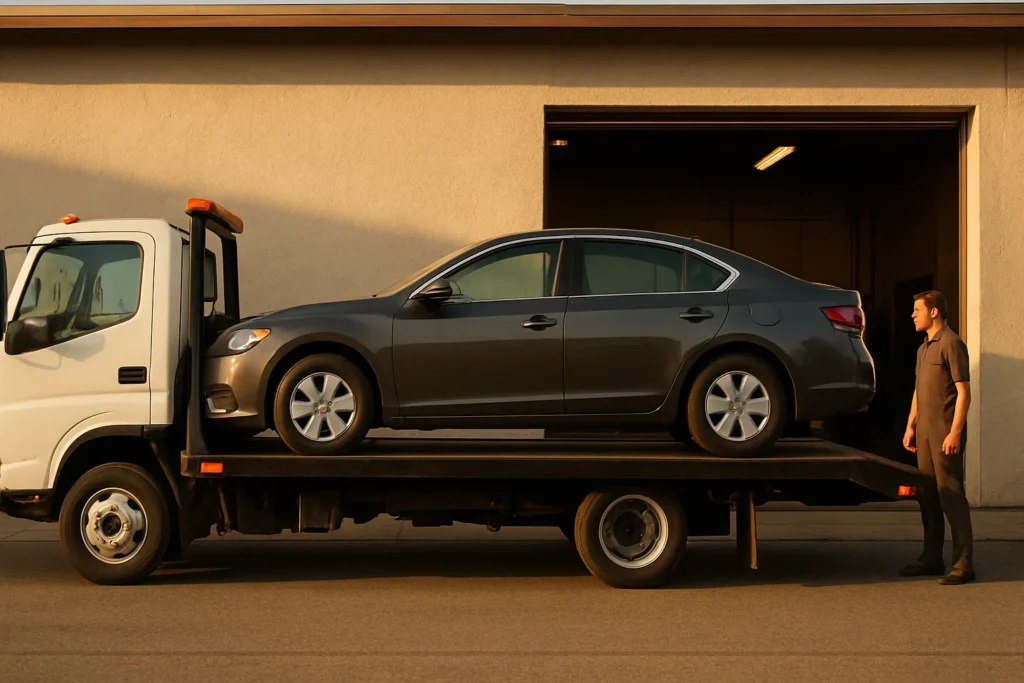
Use emergency towing when a disabled or damaged vehicle needs to be removed from an unsafe location. EVs, all-wheel-drive cars, low-clearance vehicles, and cars with suspension damage may require a flatbed or another specific loading method.
Plan the Drop-Off
Choose the destination before the truck arrives. Confirm repair-shop hours, gate access, and after-hours key instructions. If the destination is a residence, make sure there is a safe unloading space. Remove identification, medication, electronics, and other essentials before transport.
Prepare for the Operator’s Arrival
Keep your phone available and watch for a call rather than walking into traffic to flag down the truck. In a parking structure or large complex, have one person meet the operator at the correct vehicle entrance while another remains safely near the car. Share gate codes only through the authorized dispatch channel.
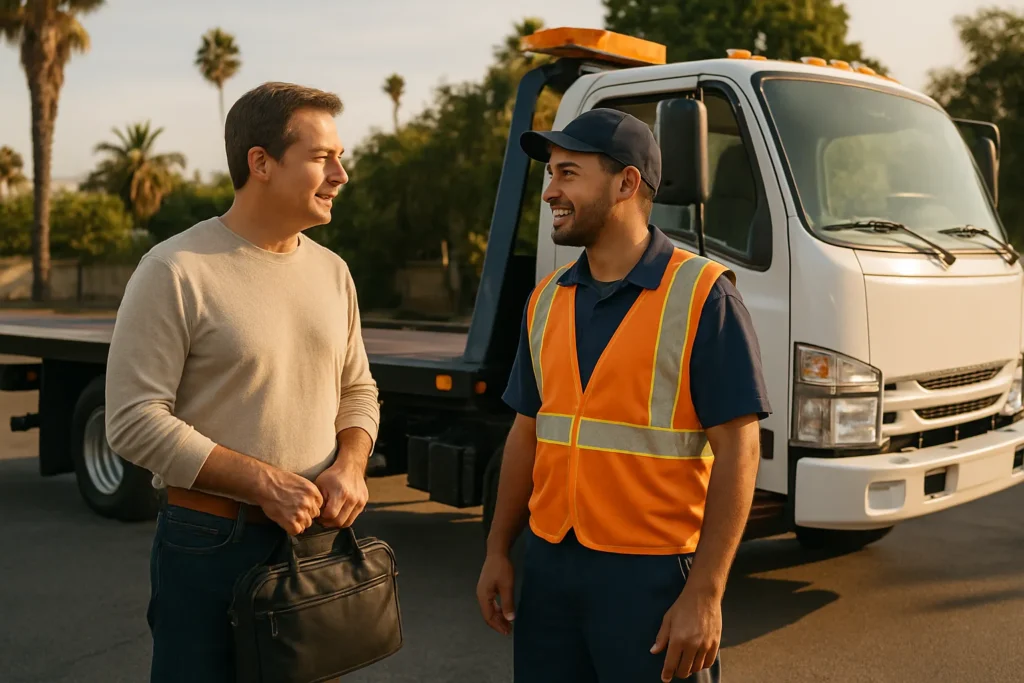
When the truck arrives, let the operator choose the loading position. Stay clear of the space between the vehicles and do not touch cables, chains, dollies, or wheel skates. If a narrow road needs temporary traffic control, call the appropriate authority rather than asking a passenger to stand in a lane.
Before leaving, confirm the destination, key handoff, and a callback number. Photograph the vehicle’s condition from a safe position and make sure passengers have transportation away from the scene.
Need Towing in Pasadena, Highland Park, or Eagle Rock?
Maps Towing serves Greater Los Angeles from our Van Nuys and Burbank offices. Call for your current ETA; arrival depends on location, traffic, truck availability, service type, weather, and access. For 24/7 help, Call (818) 797 – 1560.
Share: