






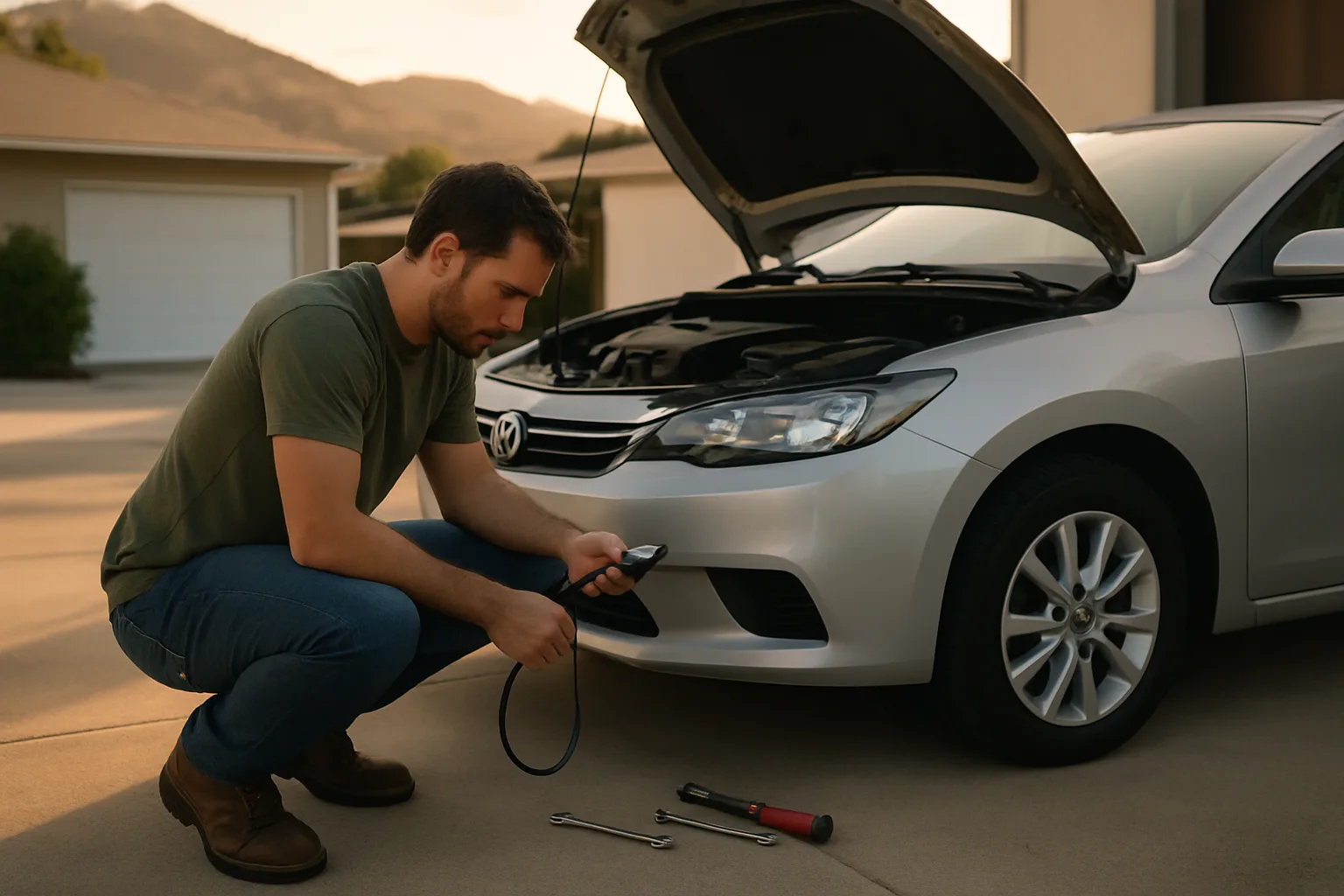
Preventive maintenance cannot eliminate every breakdown, but it can catch many common problems before they leave a driver in traffic. Los Angeles vehicles face heat, long idle periods, freeway speeds, short trips, steep grades, and heavy stop-and-go use. A simple inspection routine helps you notice changes in tires, battery performance, fluid levels, cooling, and visibility.
Use the owner’s manual for the correct specifications and service intervals. The checklist below is meant to help you observe the vehicle, not replace professional diagnosis.
Check Tires Before They Become a Roadside Problem
Pressure and tread
Check tire pressure when the tires are cold and use the specification on the vehicle placard, not the maximum printed on the tire sidewall. Inspect tread across the full width. Uneven wear can point to alignment, suspension, or inflation problems.
Look for cuts, cracks, bulges, embedded objects, and exposed cords. A bulge or visible structural damage is a reason not to drive. If a tire fails in a safe location, tire-change service may install a usable spare. On a narrow freeway shoulder, moving the car may be safer than working beside traffic.
Spare tire and wheel-lock key
Confirm that the spare is inflated, the jack and tools are present, and the wheel-lock key is where you expect it. Some vehicles use a repair kit instead of a spare; check its condition and instructions before an emergency.
Watch Battery and Starting Behavior
Slow cranking, dim lights, clicking, electrical resets, and corrosion around battery terminals deserve attention. A battery can weaken gradually, while an alternator or cable problem can produce similar symptoms. The guide to common reasons a car will not start explains the clues.
Keep terminals clean and secure according to the owner’s manual, and have the battery and charging system tested when starting behavior changes. If the battery is discharged in a protected location, jump-start service can help determine whether the car starts and continues operating normally.
Inspect Fluids and Look for Leaks
Use the correct checking procedure
Engine oil, coolant, brake fluid, transmission fluid, and washer fluid have different checking methods. Some vehicles do not provide a user-serviceable transmission dipstick, and coolant should never be opened while hot. Follow the manual and use the specified fluid.
Look under the parked vehicle for new stains and note the color, location, and odor without touching unknown fluid. A recurring leak, falling level, brake warning, or oil-pressure warning should be evaluated promptly. Do not keep adding fluid without finding the cause.
Protect the Cooling System
Inspect visible hoses when the engine is cold, watch the temperature gauge, and pay attention to sweet odors, coolant stains, or a fan that behaves abnormally. Los Angeles heat and grades can expose a weak hose, fan, belt, thermostat, or radiator.
If the temperature rises, turn on the hazards and move to a safe stopping place. Shut the engine down and do not remove a hot cap. Roadside assistance can evaluate whether the vehicle should be checked in place or transported.
Check Belts, Hoses, Lights, and Wipers
Look and listen for changes
With the engine off, look for visible cracking, fraying, swelling, or fluid contamination on accessible belts and hoses. Squealing, grinding, or rhythmic noises should be inspected. Keep hands, clothing, and tools away from moving components and electric fans.
Test headlights, brake lights, turn signals, hazard lights, and license-plate lights. Replace worn wiper blades and keep the windshield clean. Visibility problems become safety problems during night driving, coastal mist, rain, dust, or bright low-angle sun.
Keep a Small Roadside Kit
Carry a phone charger, flashlight, reflective vest, drinking water, basic first-aid supplies, and the vehicle’s insurance and roadside information. Add items appropriate for passengers, children, pets, medication, and the season. Store everything so it does not become loose cargo.
Save the pickup information a dispatcher will request: vehicle year and model, drivetrain, and preferred repair destination. Know how to share a map pin and confirm the correct side of a divided road.
Use a Repeatable Schedule
Choose a recurring date to check tires, lights, visible fluids, and emergency supplies. Review the maintenance schedule before long trips and after unusually demanding use. Keep records so a gradual change is easier to identify.
Maintenance reduces risk, but a new component can still fail and road debris can damage a healthy tire. When a vehicle becomes unsafe to drive, stop in the safest available place rather than trying to protect the schedule.
After any roadside event, review what happened and replace used supplies. A dead flashlight battery, missing wheel-lock key, or empty water container is easiest to correct while the experience is still fresh.
Need Roadside or Towing Help?
Maps Towing serves Greater Los Angeles from our Van Nuys and Burbank offices. Call for your current ETA; arrival depends on location, traffic, truck availability, service type, weather, and access. For 24/7 help, Call (818) 797 – 1560.
Share: