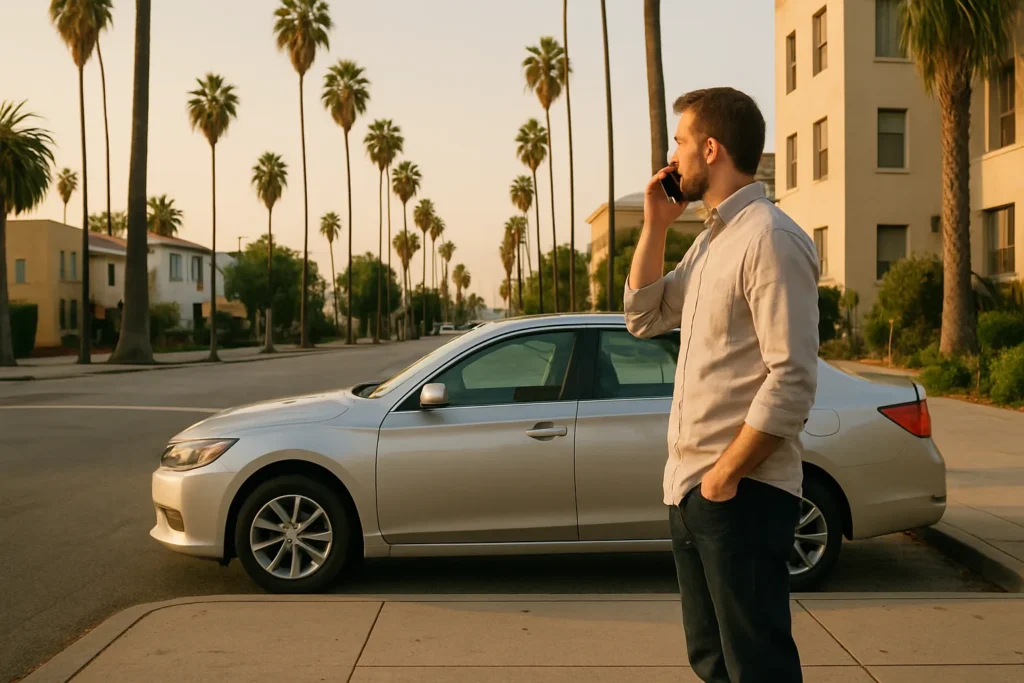





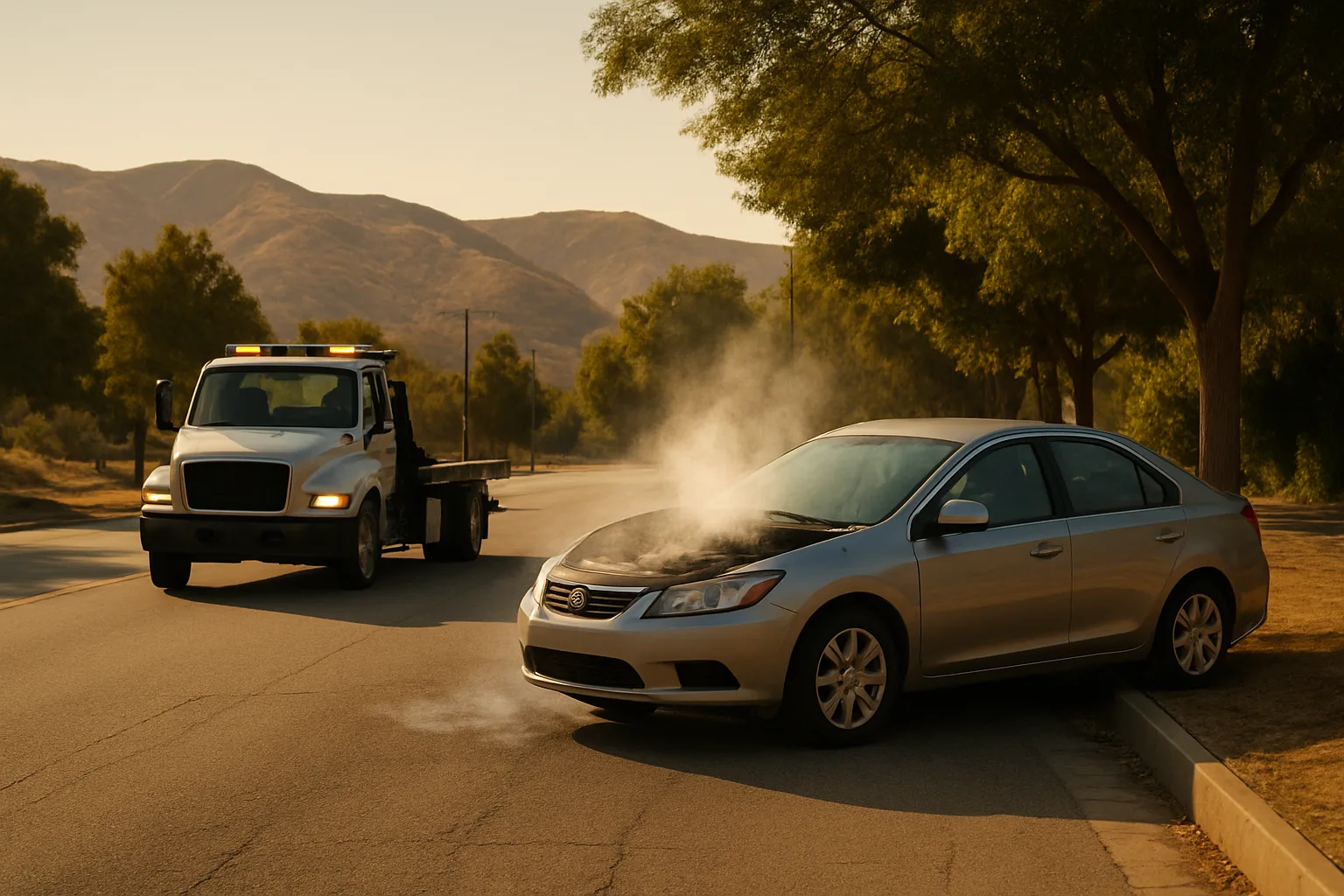
An overheating warning in Los Angeles traffic should be treated as a reason to reduce engine load and find a safe place to stop. Continuing to drive can turn a cooling-system problem into severe engine damage, while stopping abruptly in a live lane creates a different danger. The goal is to leave traffic safely, shut the engine down, and avoid contact with hot coolant or steam.
Valley heat, long grades, slow traffic, and air-conditioning load can expose a weak cooling system, but hot weather is not a diagnosis. A leak, failed fan, worn belt, thermostat problem, damaged hose, or other fault may be responsible.
Recognize the Warning Signs Early
Dashboard and driving clues
Watch for a rising temperature gauge, temperature warning light, reduced engine power, a sweet odor, steam, or coolant under the vehicle. The air conditioner may begin blowing warm air, but that alone does not prove the engine is overheating.
If the gauge rises above its normal range, turn off unnecessary electrical and climate loads, switch on the hazards, and look for a safe exit, shoulder, side street, or parking area. Do not make sudden lane changes or stop on a blind curve simply to shut the engine off sooner.
Know when to stop immediately
Pull over and shut down as soon as safely possible if a warning light appears, steam is visible, power drops sharply, or coolant is spraying. If the vehicle stops in a traffic lane, remain belted and call 911. Do not open the hood while heavy steam is escaping around it.
Never Open a Hot Cooling System
Pressurized coolant can cause serious burns. Do not remove a radiator cap or coolant-reservoir cap while the engine is hot. Do not pour cold water onto a hot engine. Allow the vehicle to cool naturally and keep people away from leaking fluid.
Opening the hood after steam has stopped may release heat, but only do so from a safe position and without touching caps, hoses, or fans. Electric cooling fans can start unexpectedly even when the engine is off.
Decide Whether the Car Can Be Checked Roadside
Location comes before diagnosis
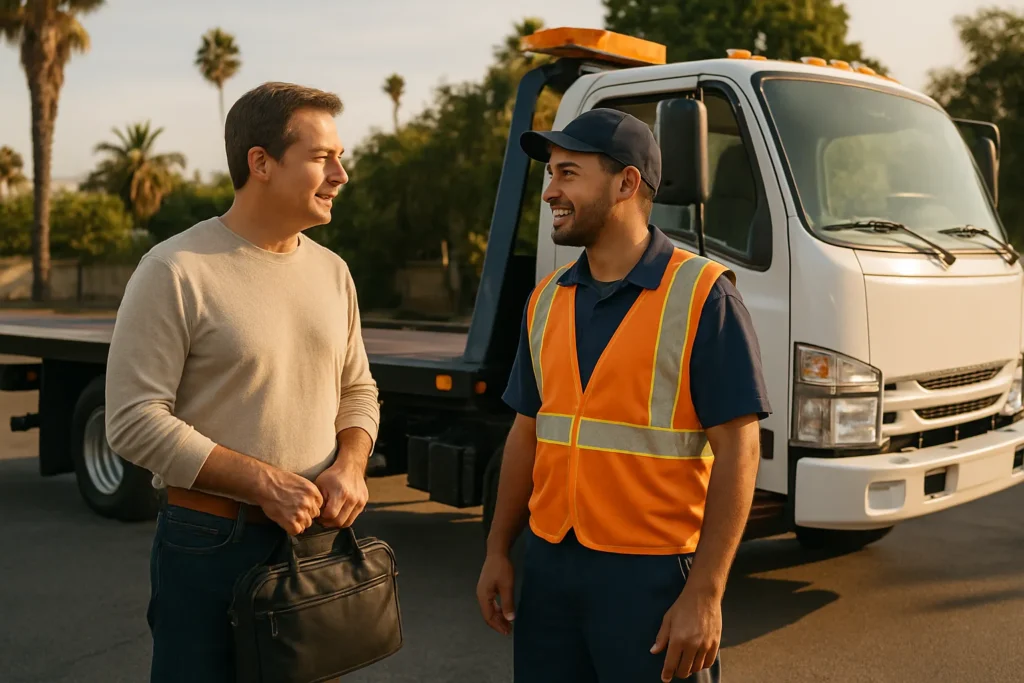
A protected parking lot may allow a technician to inspect visible leaks, battery condition, belts, or coolant level after the engine cools. A narrow freeway shoulder does not. When requesting roadside assistance, describe traffic exposure, steam, leaks, warning lights, and the surface where the car is parked.
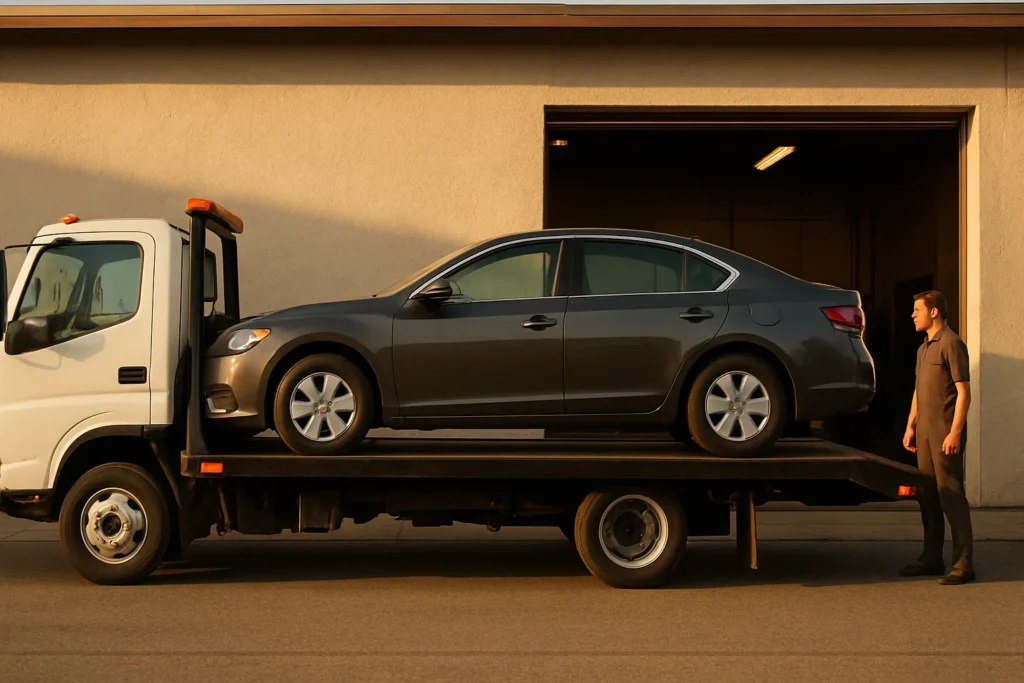
If the location is unsafe or the cause is unknown, emergency towing can move the vehicle to a repair facility without restarting it. Do not rely on a temporary cool-down if the warning returns.
Signs the vehicle should not be driven
Arrange a tow when coolant is leaking, a hose or belt is damaged, the temperature warning returns, the engine runs roughly, steam continues, or the vehicle entered reduced-power mode. Driving with little coolant or poor circulation can cause damage before the next exit.
The broader guide to common no-start problems explains what to report if the engine will not restart after cooling.
Give Dispatch Useful Details
Provide the exact location, vehicle year and model, temperature warning, visible steam, fluid color, and whether the engine shut down by itself. Say whether the car still steers, all wheels roll, and the transmission shifts to neutral. Mention an EV or hybrid system because cooling and transport procedures differ.
Drivers in the central and eastern Valley can confirm coverage through the Van Nuys towing area and Burbank towing area.
Wait Without Restarting the Heat Cycle
Once the engine is off, resist the urge to restart it repeatedly to see whether the gauge has fallen. A cooler reading after sitting does not show that coolant is circulating or that a leak has stopped. Keep hazard lights on and remain in the safest available position.
Move passengers away from traffic and hot fluid. Keep pets secured, and do not allow anyone to touch puddles under the car. If the vehicle is on a grade, leave the parking brake set and stay out of its downhill path. Tell dispatch if the leak grows, smoke appears, or emergency personnel arrive.
Reduce the Chance of Another Overheat
Inspect the cooling system when the engine is cold
Check the coolant level according to the owner’s manual, look for stains or damp areas, and inspect visible hoses for cracks or swelling. Have warning lights, fan problems, recurring coolant loss, and unusual odors diagnosed rather than repeatedly topping off fluid.
Before a summer trip, make sure routine maintenance is current and the air path in front of the radiator is not blocked. Watch the gauge on long grades and in heavy traffic. A stable temperature is more important than trying to maintain speed with an engine under strain.
Need Help With an Overheating Car?
Maps Towing serves Greater Los Angeles from our Van Nuys and Burbank offices. Call for your current ETA; arrival depends on location, traffic, truck availability, service type, weather, and access. For 24/7 help, Call (818) 797 – 1560.
Share: