





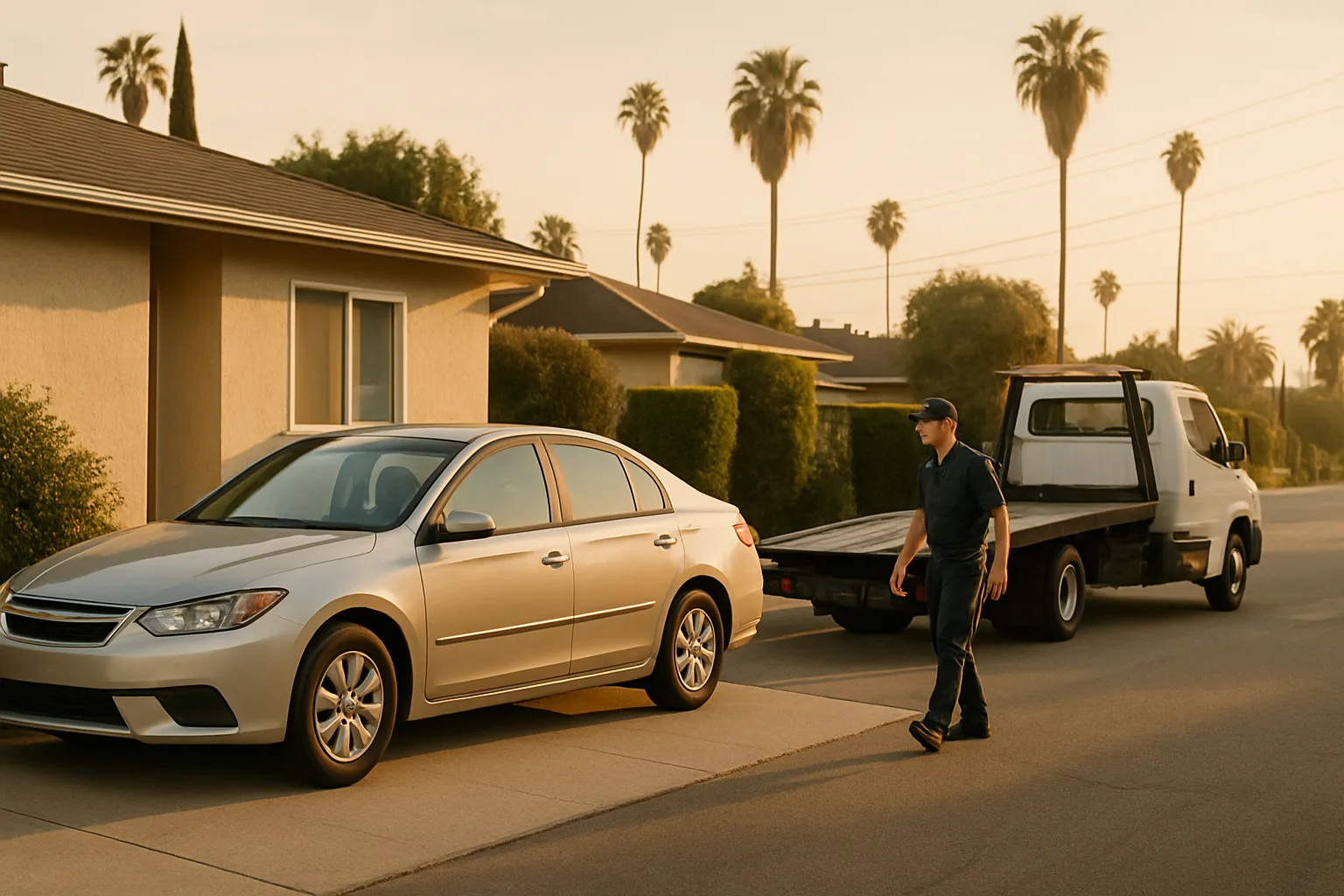
A car that will not start in your driveway may seem easier to collect than one stranded on a freeway. Sometimes it is, but residential access can create its own loading problems. A sloped entrance, tight turn, low roofline, closed gate, or vehicle parked nose-in can change how a tow should be approached.
This guide is for arranging a tow of your own vehicle, or a vehicle you are authorized to move, from a Los Angeles home. It is not about removing someone else’s car or enforcing parking rules. For customer-requested vehicle towing, start by describing the driveway as carefully as you describe the car.
Explain where the vehicle sits, not just the address
Tell dispatch whether the car is in front of the house, beside it, behind a gate, or at the far end of a shared driveway. Say whether it faces toward the street or toward the building. Mention if another vehicle blocks the approach and whether its driver can move it before pickup.
A truck may need a different approach than the one you use in a passenger car. “There is room to drive in” does not necessarily mean there is room to line up, load, and leave. Let the operator assess the available space rather than promising that a particular truck will fit.
Describe the driveway’s slope and clearance
Changes in slope
The transition between the street and driveway matters, especially with a low front bumper or a vehicle sitting lower than usual. Describe a steep entrance, a sharp crest, or a dip at the gutter. You do not need to estimate a technical angle. A clear description and a safely taken photo can be more useful than a guessed measurement.
Gates, roofs, and narrow approaches
Mention gate openings, carports, hanging branches, retaining walls, and anything that limits the approach. If there is a posted clearance, read it to dispatch. Do not climb onto a structure or stand in the roadway to measure it. Share the restrictions you know and leave the equipment assessment to the operator.
Tell dispatch whether the car can roll or steer
A no-start car is not necessarily a free-rolling car. Tell dispatch whether you have a working key, whether any wheels appear damaged, and whether the parking brake is engaged. If the vehicle has been sitting for a long time, say so. Do not test its movement by releasing the brake or pushing it down the driveway.
The transport method and the loading method are separate decisions. Flatbed transport may be appropriate for the vehicle, while getting it safely out of the driveway still needs an access assessment. Do not assume that a flatbed can enter every residential space or that the same approach works for every drivetrain.
Prepare access without trying to move the car yourself
Before the agreed pickup, arrange for gates to be opened and pets to be kept away from the work area. Move bins or lightweight loose items only if you can do so safely. Ask the owner of a blocking vehicle to relocate it rather than trying to maneuver a disabled car around it.
Leave the vehicle secure. Do not attach a rope to another car, place household objects under the tires, or crawl underneath to look for a towing point. Keep children and bystanders out of the loading area. Once the operator arrives, follow their instructions about where to wait.
Residential details matter across Los Angeles
For a pickup in Northridge, a useful description might distinguish the front driveway from a rear parking area and identify the street entrance. In Studio City, the same call should make clear whether the vehicle is at street level or up a hillside driveway. These are examples of information to provide, not assumptions about every property in either neighborhood.
Use the actual address and access point rather than a neighborhood name alone. If navigation sends visitors to the wrong side of your property, explain that before dispatch. Avoid sending someone else’s gate code; obtain permission and give access details directly to the dispatcher handling your request.
If the car is inside a garage, say that first
A residential garage adds limits that may not be visible from the street. Tell dispatch whether the door opens, whether anything blocks the vehicle, and whether the car is close to a wall. Do not assume the operator can bring the truck inside or move stored items as part of the job.
For an apartment building or multilevel structure, read our separate parking-garage towing guide. Height limits, ramps, turns, and entry permissions call for a different description than an open driveway pickup.
Confirm the receiving location before pickup
Contact the repair shop, dealership, or other agreed destination and confirm that it can receive the car. Give dispatch the precise address and any unloading instructions. If the business will be closed, arrange a handoff with it rather than assuming the vehicle can be left outside.
Ask for the pickup assessment, current ETA, and quote after explaining the access conditions. If a gate becomes unavailable or the vehicle’s condition changes, call back so the plan can be reviewed before the truck arrives.
Arrange your driveway pickup
Maps Towing has offices in Van Nuys and Burbank. Tell us where the car is parked, which direction it faces, and what may restrict access. We can discuss the job and current availability without assuming a particular setup will fit. Call (818) 797 – 1560 to plan your pickup.
Share: