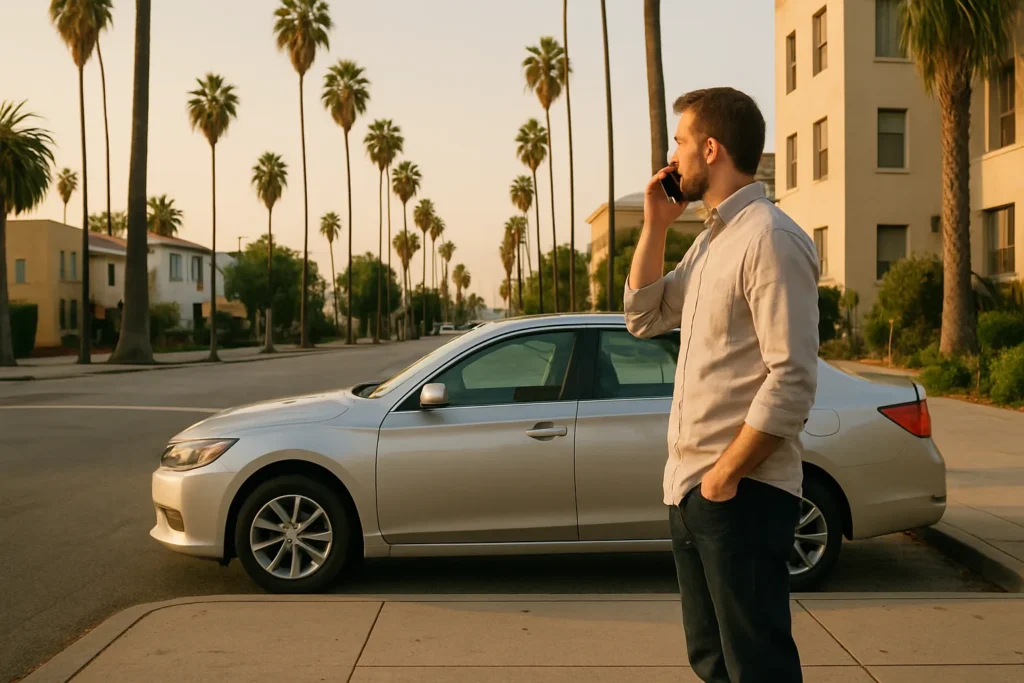

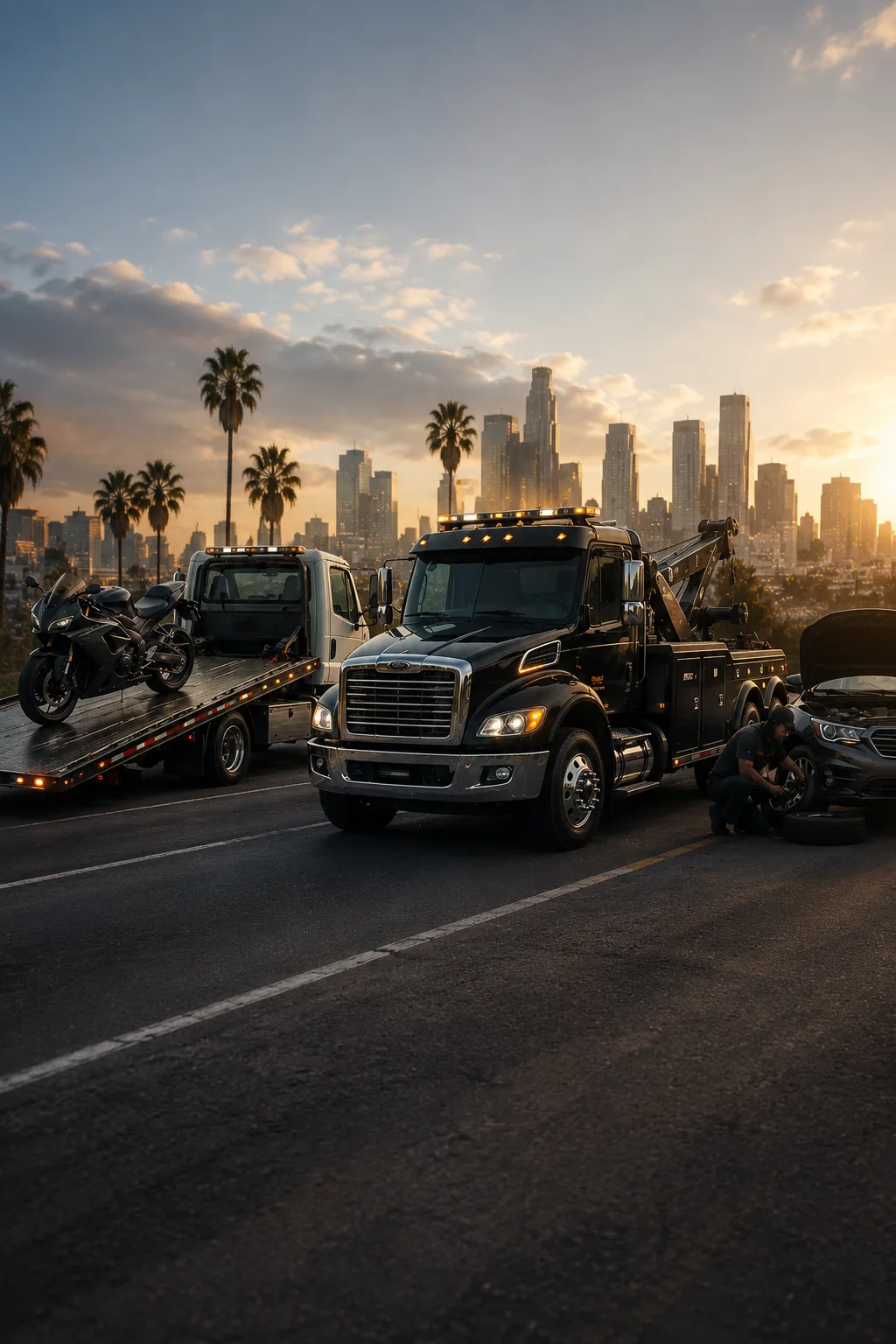




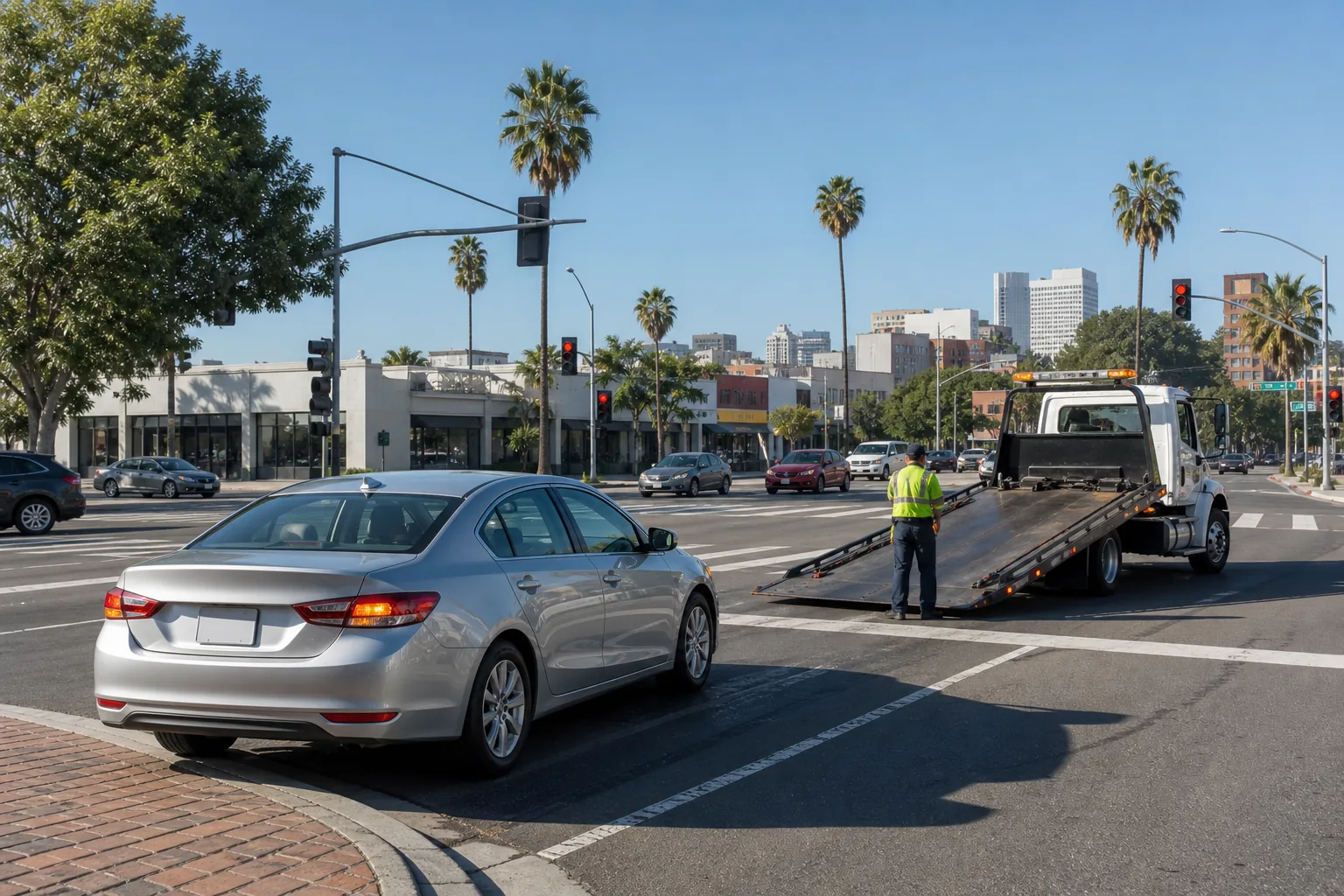
A car that stalls in a Los Angeles intersection creates an urgent problem. Traffic may approach from several directions, drivers may not expect a stopped vehicle, and the light can change before anyone understands what happened. The priority is protecting people and making the vehicle visible—not diagnosing the engine in the roadway.
If the car cannot leave the intersection, call 911 and request emergency towing in Los Angeles once you are in the safest available position. The steps below can help you respond clearly while police, roadside personnel, or a tow operator travel to the scene.
Turn on the Hazard Lights Immediately
Activate the hazard lights as soon as the vehicle loses power or stops responding. If the engine still runs and steering and brakes feel normal, signal and move toward the nearest safe curb, shoulder, parking lot, or side street. Do not make a sudden turn across active lanes.
Power-assisted steering and braking may feel heavier after an engine stalls. Use steady pressure and guide the car only as far as needed to leave the traffic path. If the vehicle will not move safely, stop attempting to reposition it and tell emergency dispatch which lanes are blocked.
Call 911 When the Vehicle Blocks Traffic
An immobile car in an intersection is a roadway hazard even when no collision has occurred. Call 911 if any part of the vehicle remains in a travel lane, traffic is moving around it unpredictably, visibility is poor, or anyone is injured or feeling unwell.
Give the street names, direction of travel, lane, nearest landmark, and vehicle description. Los Angeles intersections can span several blocks or include turn pockets and divided roadways, so a precise position helps responders approach from the correct direction.
Decide Whether Staying Inside Is Safer
There is no single answer for every intersection. Remaining belted inside may provide protection when traffic is flowing around the car and there is no fire, smoke, or immediate danger. Exiting may be necessary if the vehicle is exposed to a likely impact or there is a fuel leak, fire, or another urgent hazard.
Follow instructions from 911 or officers at the scene. If you must exit, use the side away from moving traffic when that path is clear. Move to a protected sidewalk or barrier area. Do not stand in front of, behind, or between vehicles, and do not attempt to direct traffic yourself.
Do Not Push the Car Through Moving Traffic
Pushing a vehicle may seem like the quickest solution, but an intersection exposes helpers to several traffic paths at once. Modern vehicles are also heavy, and steering or braking may not work normally without power. Wait for trained responders unless police have secured the area and direct a specific movement.
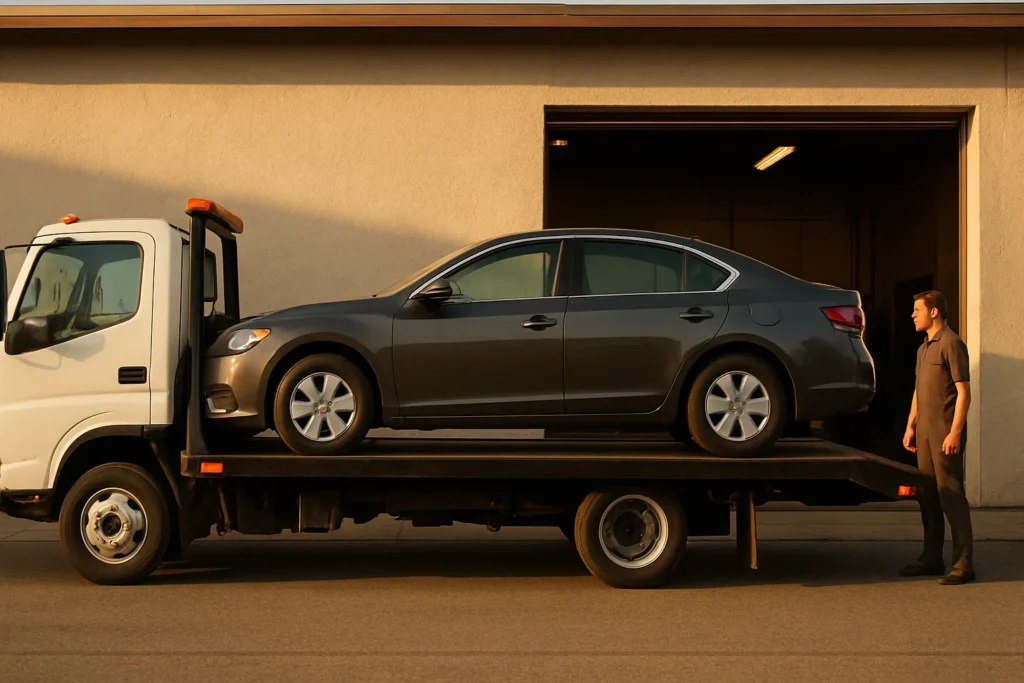
A professional tow truck service can load or move the vehicle with equipment suited to its condition. Tell dispatch if the transmission will not shift, the steering is locked, a wheel is damaged, or the parking brake will not release.
Share an Exact Pickup Position
Provide both cross streets and describe which corner or approach lane the vehicle occupies. Mention a nearby business, building number, freeway ramp, bridge, or transit lane. If you share a map pin, confirm that it marks the correct side of the street rather than only the center of the intersection.
If it is safe to take photos from a protected position, include a wide view that shows the car and available tow-truck approach. Do not walk into the roadway for a better angle. For a breakdown in the city center, the Downtown Los Angeles towing page provides local service-area information.
Notice What Happened Before the Stall
Tell dispatch whether the engine stopped suddenly, warning lights appeared, power faded, the car overheated, or you heard a mechanical noise. State whether fuel may be low and whether the vehicle restarts. Do not keep cranking the engine if there is smoke, a burning odor, fluid loss, or a severe warning.
The cause may be a battery, charging, fuel, cooling, electrical, or mechanical problem. Roadside diagnosis should wait until the car is in a protected work area. The same principle applies on faster roads; review our Los Angeles freeway breakdown safety guide before your next trip.
Prepare for the Tow
Keep the key, registration, wheel-lock tool, and destination information ready. Remove medication, identification, electronics, and other essentials if you can do so without entering traffic. Arrange separate transportation for passengers because a tow truck may not have room for everyone.
Confirm whether the vehicle should go to a repair facility, home, dealer, or another approved location. Check after-hours access before the operator arrives. Clear destination instructions reduce the time the disabled vehicle remains near the intersection.
Get Help With a Stalled Car in Los Angeles
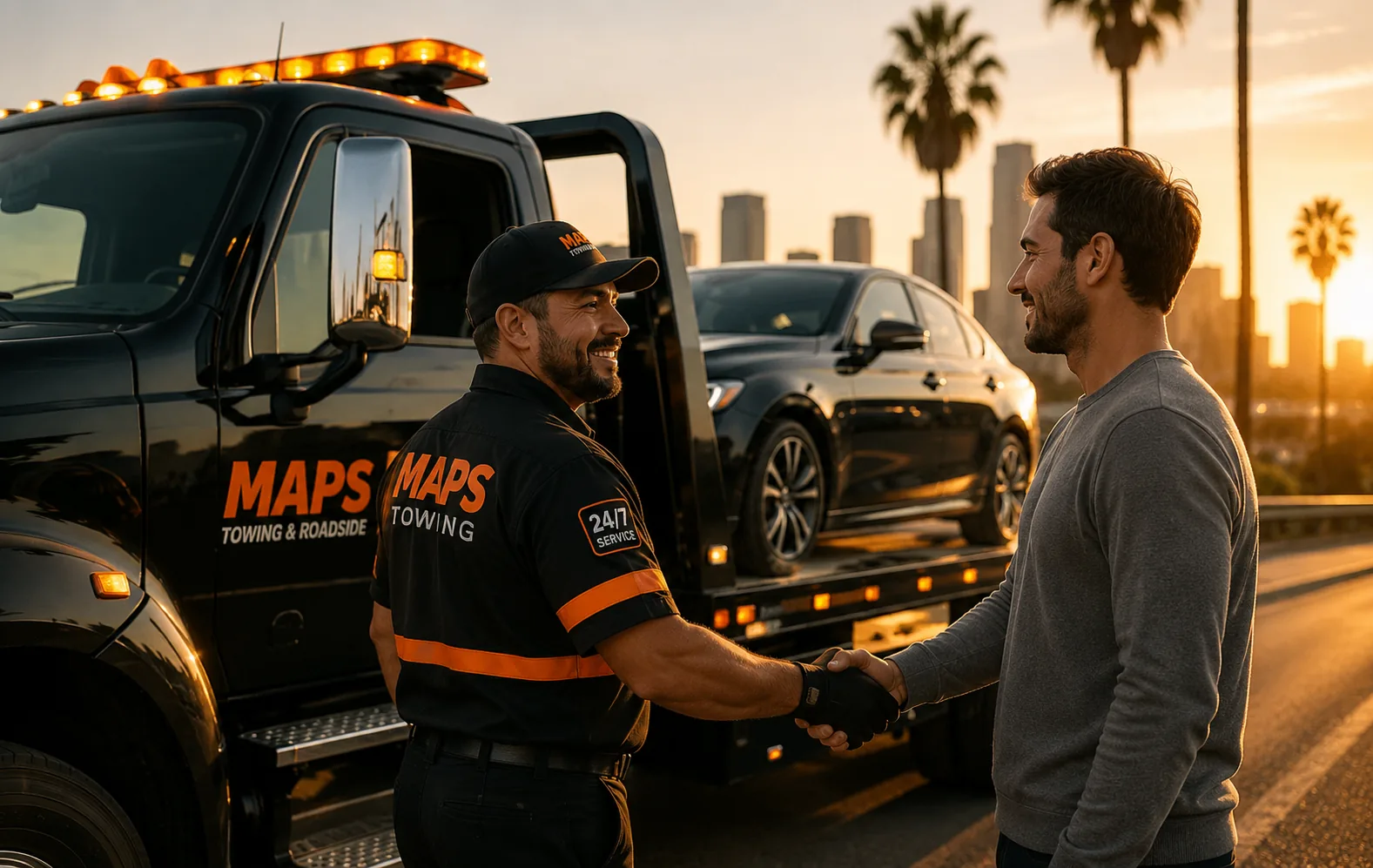
Maps Towing provides 24/7 towing and roadside assistance across Greater Los Angeles from Van Nuys and Burbank. Contact Maps Towing for non-urgent questions. If your car is blocking an intersection, call 911 first; then Call (818) 797 – 1560 with the cross streets, lane, vehicle details, symptoms, and destination.
Share: