






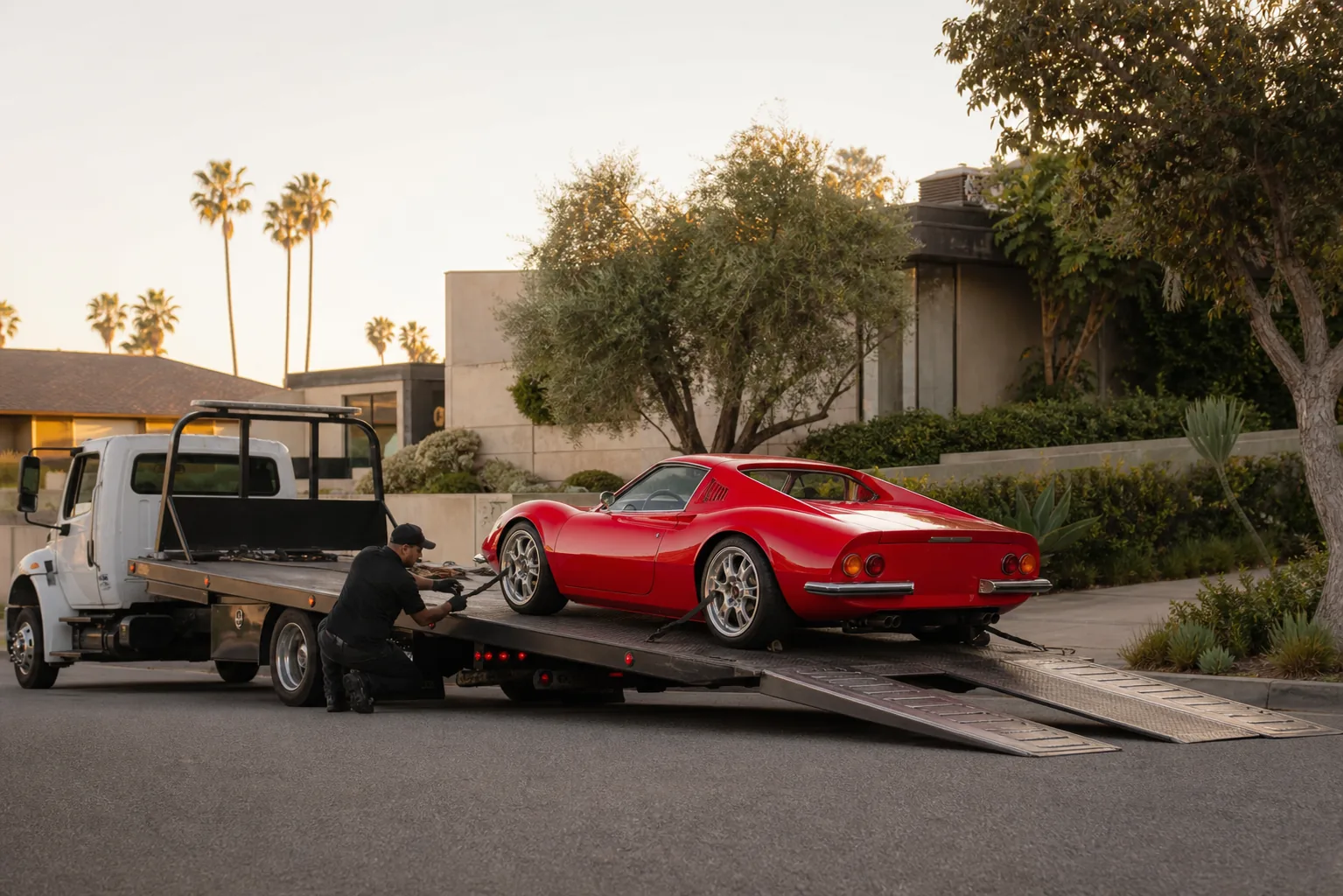
A classic, exotic, restored, or modified car can require more planning than an ordinary tow. A low front splitter, long wheelbase, custom suspension, delicate finish, or unusual tow-point location changes how the vehicle should approach the deck and where securement can be applied.
The goal of specialty towing in Los Angeles is controlled movement with equipment and preparation suited to the specific vehicle. Good results begin with an honest description of clearance, condition, access, and any modifications before the truck is dispatched.
Explain What Makes the Vehicle Different
Provide the exact year, make, model, drivetrain, and condition. Tell dispatch whether the car has coilovers, air suspension, an extended splitter, side skirts, a rear diffuser, oversized wheels, locked steering, or a nonstandard parking-brake system. Mention recent restoration work or components that should not bear load.
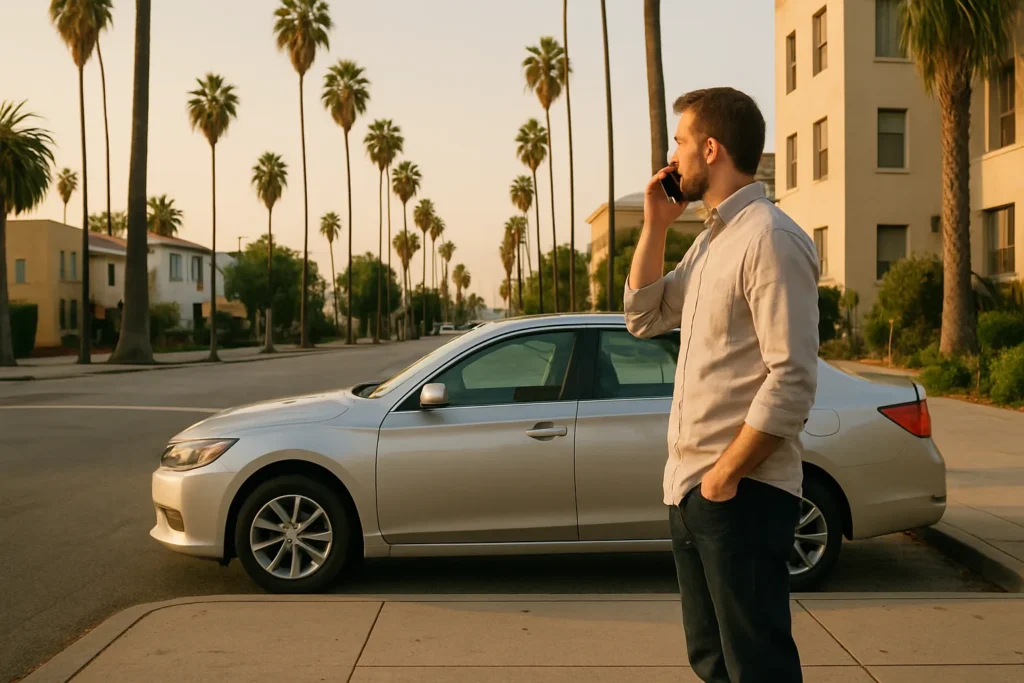
Measure ground clearance at the lowest front, center, and rear points if the car is safely parked. A photo from the side can show wheelbase and approach angle, while front and rear photos reveal overhang. Share images without lying on the roadway or entering traffic.
Why a Flatbed Is Often Preferred
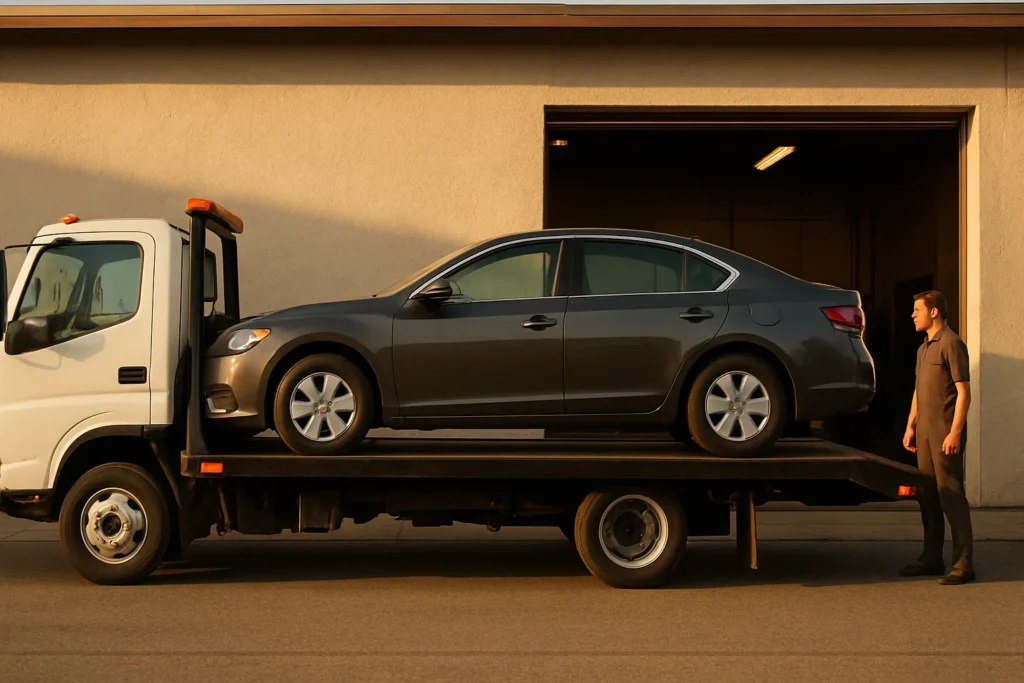
A flatbed carries all four wheels off the road and avoids continuous rolling during transport. It is commonly selected for low-clearance, all-wheel-drive, collector, and performance vehicles, subject to the manufacturer’s towing instructions and the vehicle’s condition.
Our flatbed towing service uses a loading plan based on access and clearance. A flatbed still needs room to align and extend its deck, so a tight garage or steep driveway may require additional positioning equipment or a staged move to an open area.
Loading Angle Protects the Bodywork
The angle between the road, ramp, and deck determines whether the front, center, or rear of the car may contact the surface. Longer ramps, cribbing, approach blocks, or a low-angle carrier can reduce that angle. The operator should control the winch slowly while watching multiple clearance points.
Do not add loose boards or direct the driver onto improvised ramps. Materials can shift under load. Tell the operator about fragile carbon-fiber pieces, underbody panels, exhaust components, and air-suspension settings before loading starts.
Use Approved Points and Wheel-Based Securement
Many specialty vehicles have specific tow-eye locations and manufacturer-approved procedures. Keep the tow eye, wheel-lock key, and owner’s manual with the car. Never attach a winch or chain to a bumper, control arm, trim piece, or another part simply because it is easy to reach.
Soft straps and wheel-based securement can protect finished suspension and body components when they are appropriate for the vehicle and carrier. The operator should also account for tire width, wheel finish, and any close clearances around brake or aerodynamic parts.
Flatbed and Wheel-Lift Equipment Serve Different Jobs
A wheel-lift truck can be useful in locations a flatbed cannot initially reach, but drivetrain and clearance restrictions still control the final plan. Our guide to flatbed versus wheel-lift towing explains why vehicle design, distance, condition, and access matter more than choosing one truck for every situation.
If the car cannot roll, steer, or release its parking brake, tell dispatch. Wheel skates or other positioning tools may be needed to move it without dragging a locked tire or forcing the drivetrain.
Prepare the Pickup and Destination
Confirm garage height, driveway grade, gate width, curb position, and space for the carrier. Remove loose interior items and detachable accessories. Photograph the vehicle’s condition before loading, keep the key available, and identify any alarm or transport mode the operator should know about.
The destination should have enough room to unload at a safe angle. Confirm hours, after-hours access, and where the vehicle should be placed. Drivers arranging transport in the Westside can review our Beverly Hills towing service coverage and still provide the exact access details for the pickup.
Use a Simple Pre-Transport Checklist
Before the operator arrives, confirm that the car is accessible and that no other vehicle blocks the loading path. Gather the key, tow eye, wheel-lock key, registration, alarm instructions, and any written transport procedure. Remove or secure loose covers, detachable spoilers, charging cables, and items that could move during loading.
Record the vehicle’s condition with clear photos of each side, the wheels, and areas close to the ground. Point out existing chips, cracks, rubbing, fluid leaks, or warning messages. Documentation helps the owner and operator discuss the car accurately before it moves; it should not require anyone to enter an unsafe roadway.
Check the Vehicle After Delivery
Meet the carrier at the destination when practical, or arrange for an authorized person to receive the car. Confirm that the unloading path provides enough clearance and that the vehicle is placed where the shop or owner expects it. Inspect the car in good light before signing final paperwork.
If the vehicle was disabled by a mechanical problem, do not assume it is ready to drive simply because transport is complete. Keep it parked until the underlying issue is diagnosed. A careful tow protects the vehicle during movement, but it does not repair a battery, tire, cooling, steering, or suspension fault.
Request Careful Specialty Towing
Maps Towing provides 24/7 towing and roadside assistance across Greater Los Angeles from Van Nuys and Burbank. Contact Maps Towing for planned transport questions. For immediate assistance, Call (818) 797 – 1560 with the vehicle, modifications, clearance, condition, pickup access, and destination so the safest available loading approach can be evaluated.
Share: