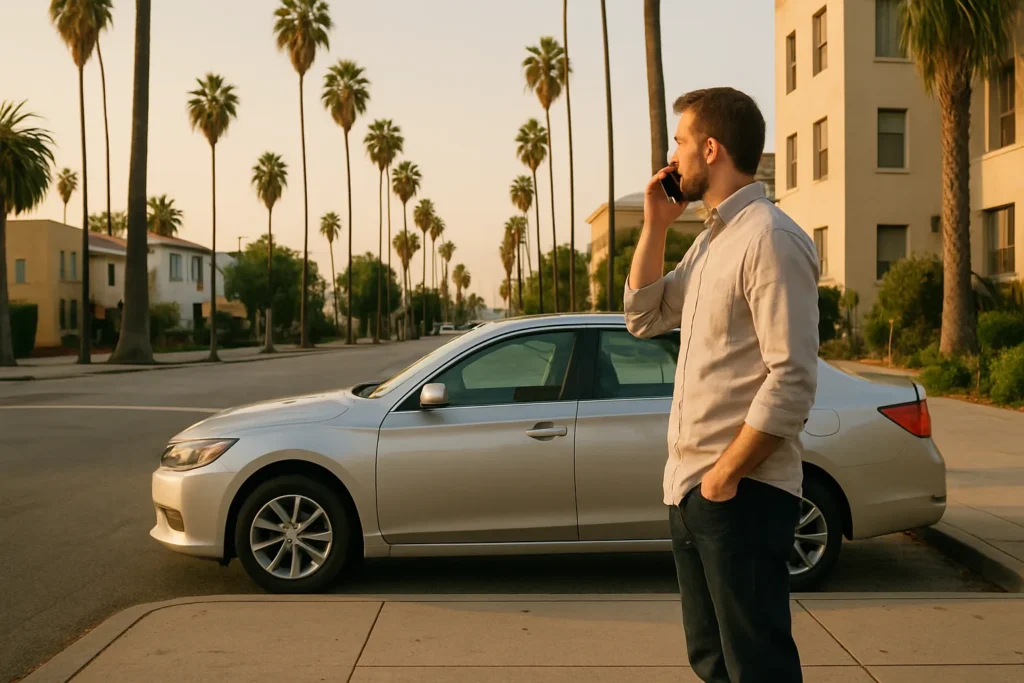







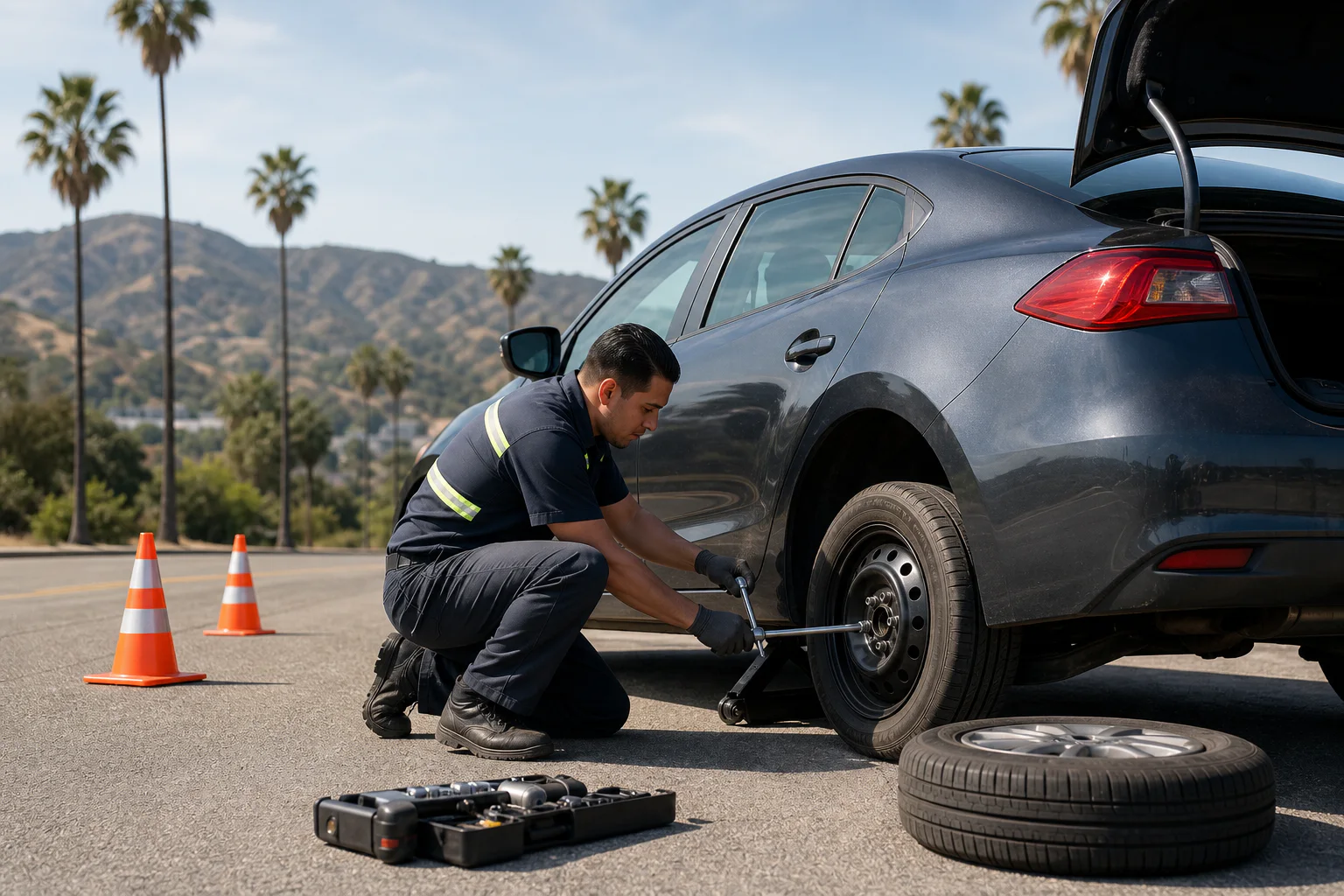
A flat tire in Los Angeles can happen on a neighborhood street, inside a parking garage, or beside a freeway where traffic leaves very little room to work. The safest response depends on the vehicle’s position, the condition of the tire and wheel, and whether a usable spare is available.
Changing a tire may look straightforward, but roadside conditions can make it unsafe. Knowing when to move, when to stop, and when to request professional tire change service protects both you and the vehicle.
Recognize a Tire Problem Early
A tire-pressure warning light may be the first sign, but sudden pulling, vibration, thumping, or heavy steering can indicate rapid air loss. Keep both hands on the wheel, ease off the accelerator, and avoid abrupt braking or steering. Signal and move toward a safe stopping place.
If the car still responds normally, continue only far enough to leave the traffic lane. Driving a long distance on a flat can destroy the tire, bend the wheel, and damage suspension components. A few extra seconds spent reaching a wide shoulder or parking lot may be necessary; continuing for miles is not.
Choose Safety Before Attempting a Tire Change
Park on firm, level ground away from moving traffic. Turn on the hazard lights, set the parking brake, and keep passengers away from the roadway. Never place yourself between the vehicle and an active lane, and do not crawl beneath a car supported only by its emergency jack.
A narrow freeway shoulder is not a suitable workspace. If the vehicle cannot get far enough from traffic, remain protected and request help. Review our freeway breakdown safety guide for practical steps while waiting on the 101, 405, 134, and other busy routes.
Check the Spare Tire and Equipment
Before lifting the car, confirm that the spare is present, inflated, and compatible with the vehicle. You will also need the correct jack, lug wrench, wheel-lock key, and the manufacturer’s designated lifting points. Some newer vehicles carry a sealant kit instead of a spare, while others use run-flat tires with specific limits.
A compact temporary spare is designed for limited speed and distance. Follow the instructions printed on the tire and in the owner’s manual, then arrange repair or replacement promptly. If the spare is flat, missing, or damaged, roadside assistance in Los Angeles can assess whether another solution or a tow is needed.
When You Should Not Change the Tire Yourself
Call for help when the car is on a slope, soft shoulder, uneven surface, or tight garage ramp. The same applies when lug nuts are seized, the wheel is bent, the tire has separated, or accident damage affects the suspension. Trying to force components can cause injury or make later repairs more difficult.
Weather and visibility matter too. Darkness, heavy rain, excessive heat, and fast traffic reduce the margin for error. A trained technician brings proper tools, lighting, and experience, but may still recommend moving or towing the vehicle if the location is not safe enough for roadside work.
What a Roadside Tire Change Includes
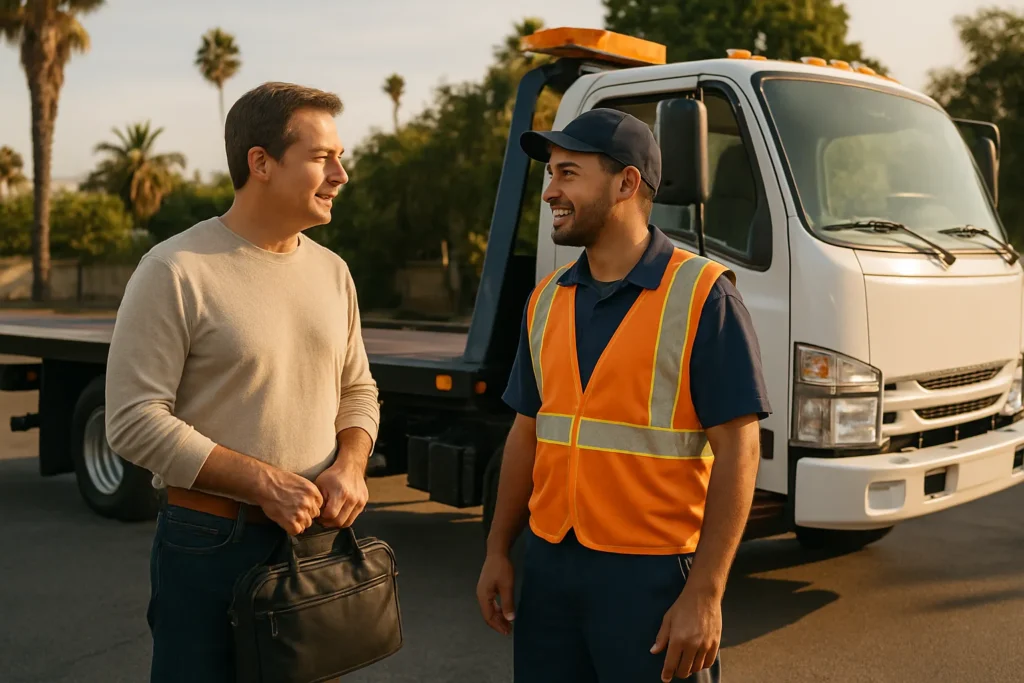
Dispatch first confirms the vehicle, location, and spare-tire situation. The technician then positions the service vehicle to create a safer work area where possible, checks the ground, identifies the proper lifting point, removes the damaged wheel, and installs the spare. Lug nuts are tightened in an appropriate sequence and the spare’s condition is checked before the vehicle moves.
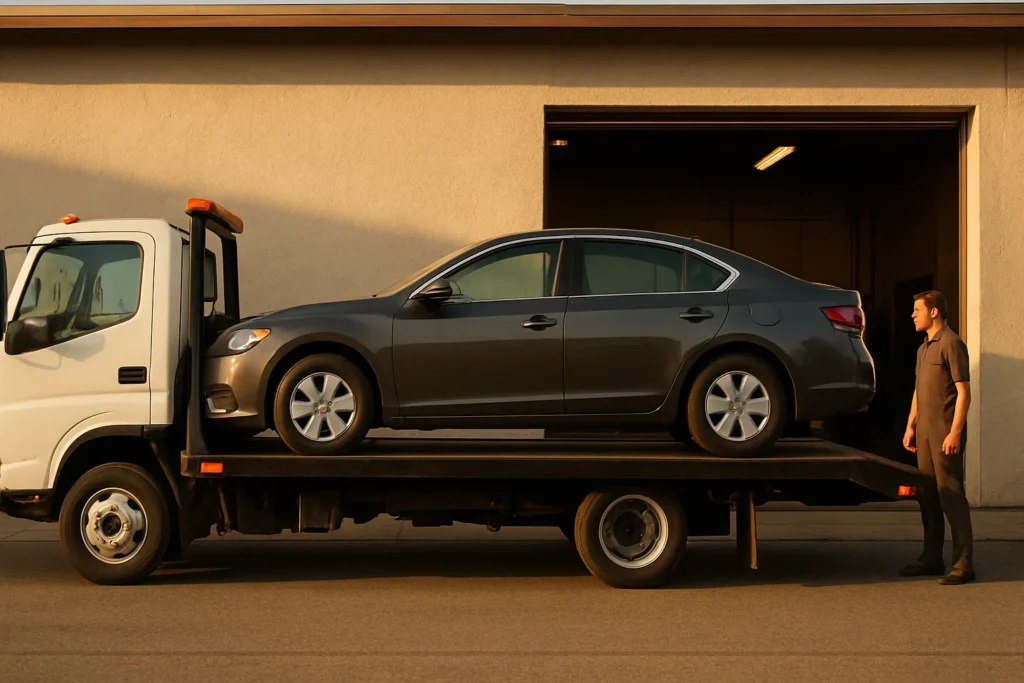
If the wheel, hub, suspension, or brake area appears damaged, driving may not be advisable. An emergency tow can take the vehicle to a tire shop or repair facility instead of risking additional damage.
What to Tell Roadside Dispatch
Give your exact location, vehicle year and model, tire position, and whether a spare and wheel-lock key are present. Explain if the tire failed after hitting a pothole or curb, because impact damage may extend beyond the rubber. Also mention low garage clearance, a steep surface, nearby traffic, or passengers who need assistance.
Clear details help dispatch decide whether to send a roadside technician or towing equipment. They also reduce the chance of arriving without a tool needed for an unusual wheel, lock, or access condition.
Reduce the Chance of Another Flat
Check tire pressure when the tires are cold, inspect tread and sidewalls, and look for nails, cracks, or bulges. Los Angeles heat and rough pavement can expose weak tires quickly. Rotate tires as recommended and replace them when wear or age makes continued use unsafe.
Include the spare in your routine checks. A spare that has been ignored for years may be unusable when you finally need it. Our Los Angeles breakdown-prevention checklist covers tires, batteries, fluids, and other items worth inspecting before a long drive.
Request a Tire Change in Los Angeles
Maps Towing provides 24/7 towing and roadside assistance across Greater Los Angeles. Call (818) 797-1560 with your exact location, vehicle details, and whether you have a usable spare. Our Van Nuys and Burbank dispatch hubs will coordinate the appropriate available assistance for your situation.
Share: