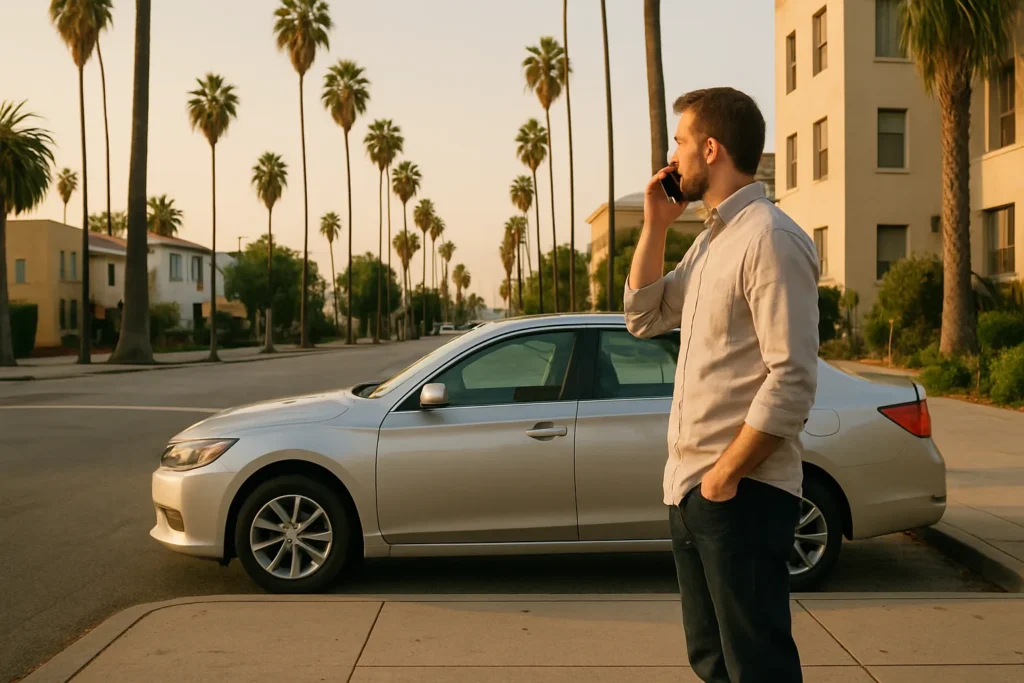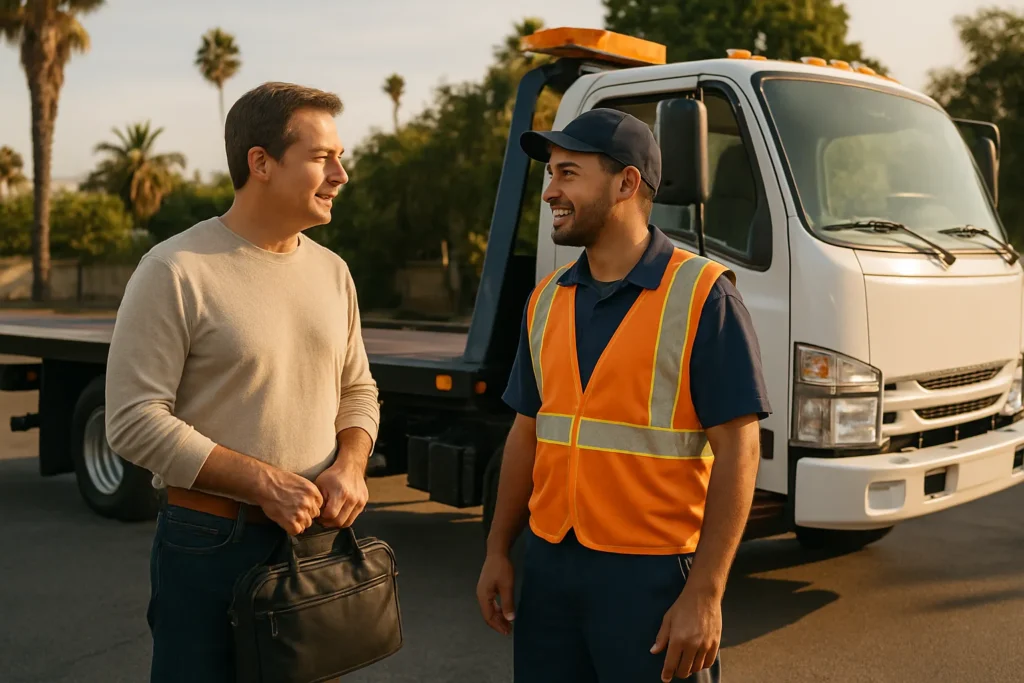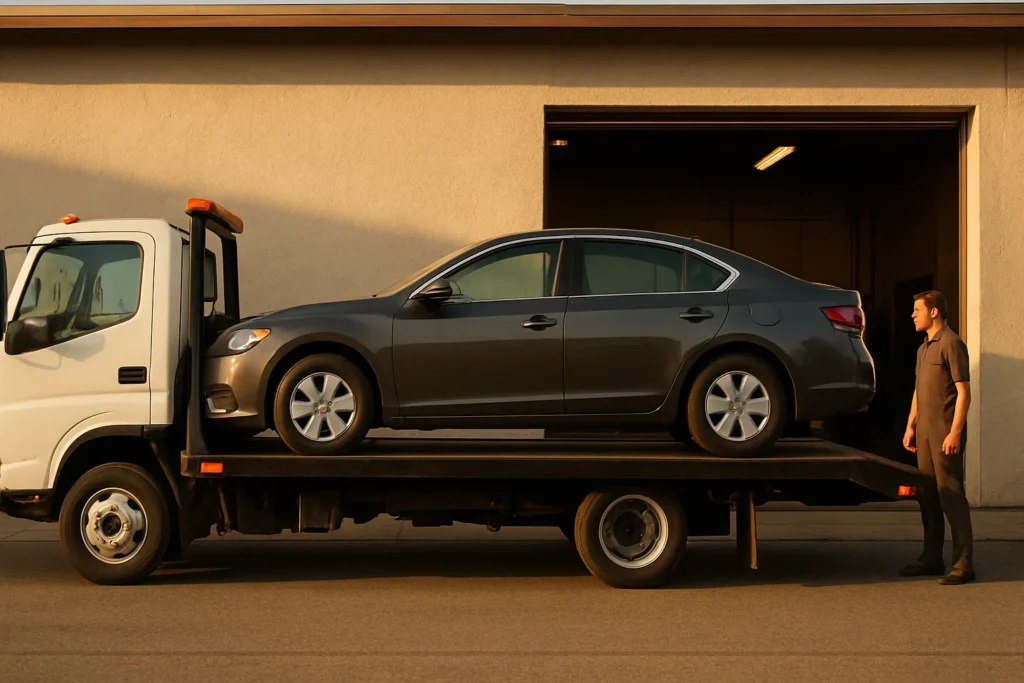




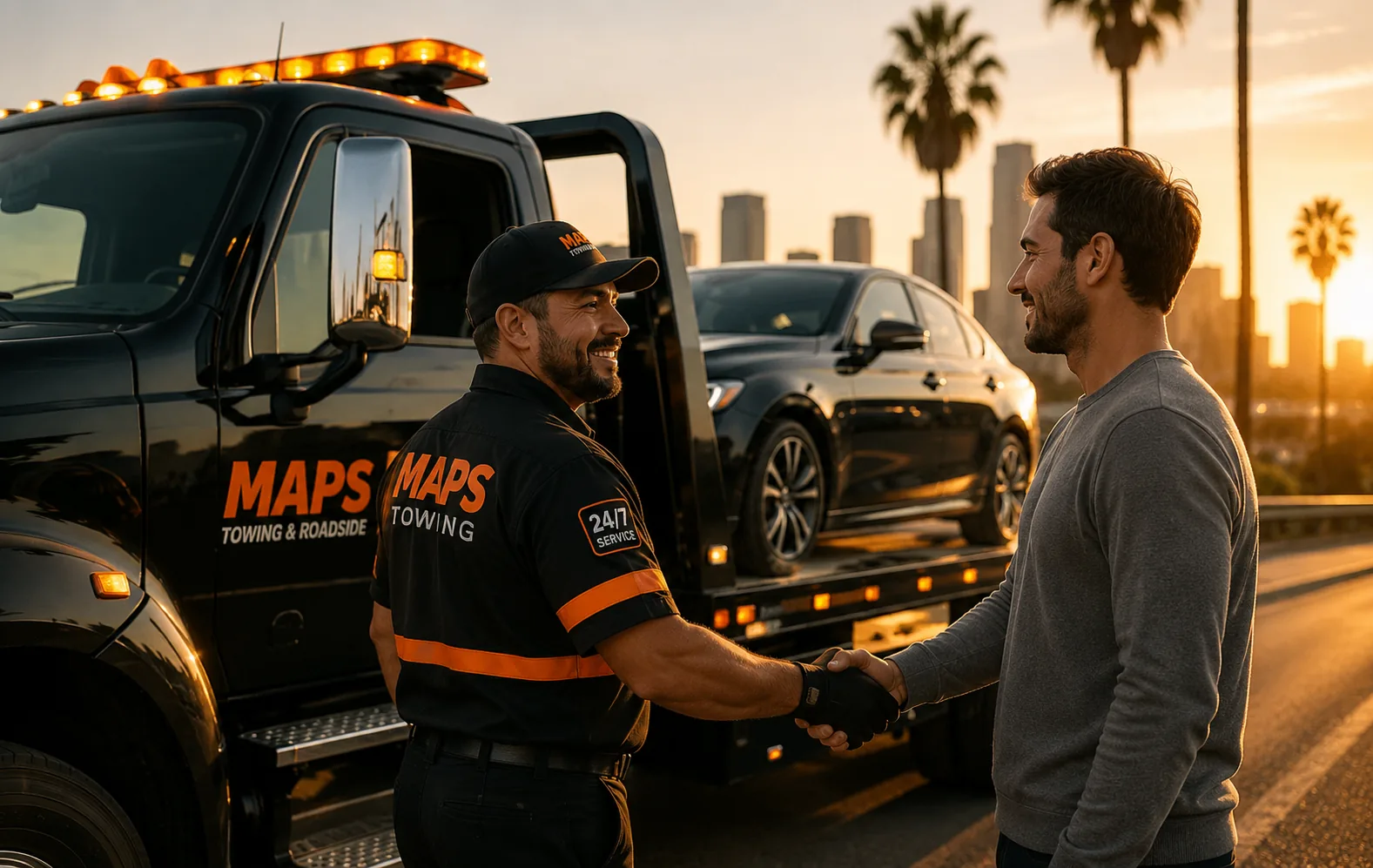


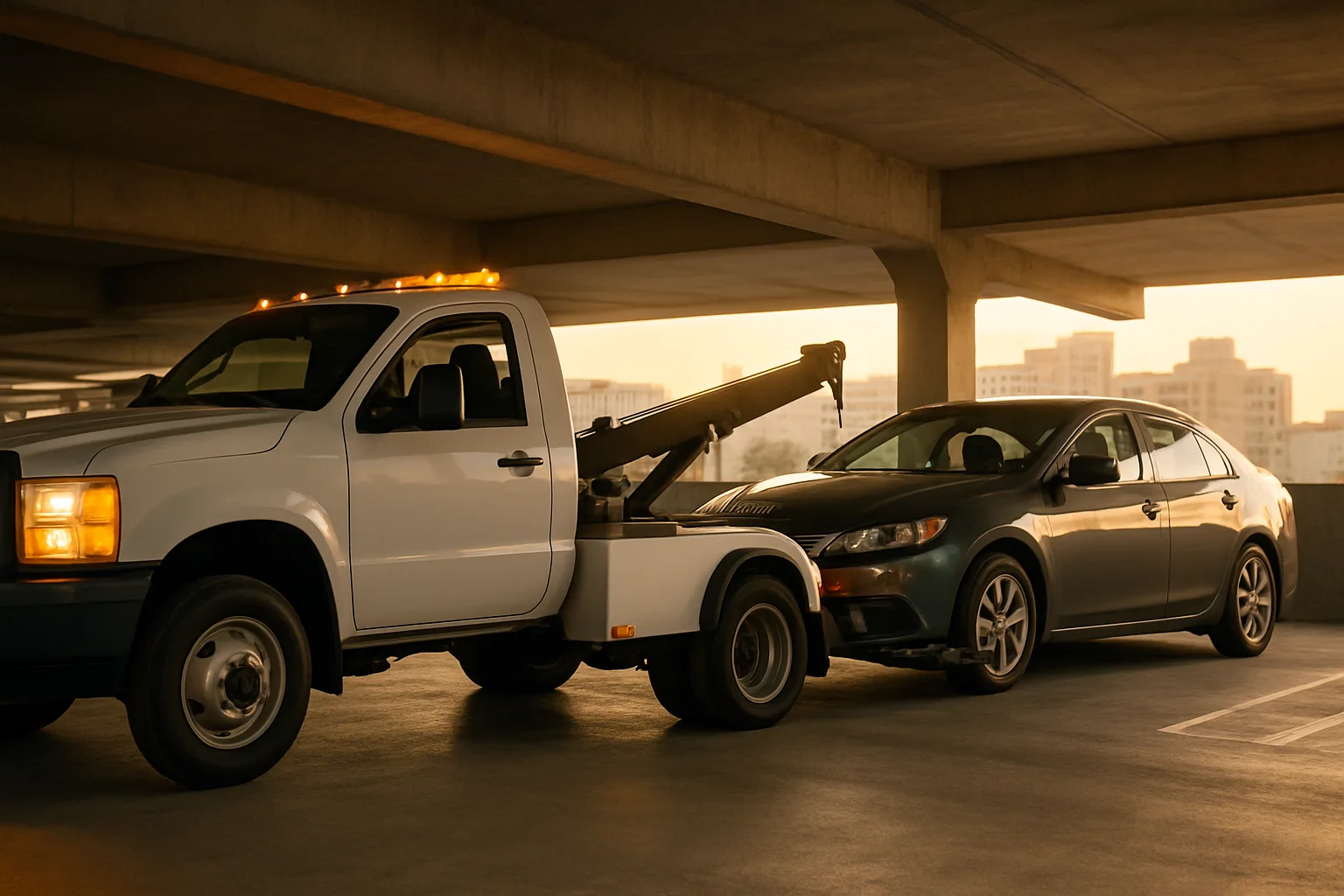
A disabled vehicle in a parking garage cannot always be handled like a car at the curb. Ceiling height, ramp slope, tight turns, gate access, wheel position, and building rules can limit which truck reaches the vehicle. Downtown Los Angeles and Glendale both have office, residential, retail, and mixed-use garages where a careful access plan is essential.
The best time to discuss those restrictions is before dispatch. Clear details help determine whether a compact truck can reach the stall, whether the vehicle must be moved to an open level, and how it should be loaded without contacting the structure or nearby cars.
Start With the Garage, Not Just the Vehicle
Measure or report posted clearance
Look for the clearance at the vehicle entrance and note whether a lower pipe, beam, sprinkler, or sign appears farther inside. Do not estimate by comparing the truck with an SUV. Give dispatch the posted height and, if possible, ask building staff whether tow trucks have a designated entrance.
Identify the parking level, stall number, nearest elevator or stairwell, and the route from the gate. In a large Downtown structure, the street address may lead to a lobby while the vehicle entrance is on another block. The Downtown Los Angeles towing area is useful for coverage, but dispatch still needs the garage entrance itself.
Confirm access with management or security
Some garages require an attendant to open a service gate, reserve an elevator lane, or escort the operator. Others close a public gate while residents retain access. Contact management, security, or the property owner and explain that a towing vehicle is coming for your car. Keep any ticket, remote, access code, or parking validation available.
If the car is not yours or you do not control the space, make sure you have authority to arrange the tow. A towing company cannot solve an ownership or property-access dispute at the ramp.
The Vehicle Condition Determines the Recovery Plan
A car that starts and rolls may be guided to an open area where a standard loading method can be used. A car with a dead battery may only need lockout help or another roadside service, but electronic parking brakes and shift interlocks can remain engaged when power is lost.
Tell dispatch whether the steering unlocks, the transmission moves to neutral, the parking brake releases, and every wheel rolls. Do not drag a locked wheel across a finished garage floor. The operator may use skates, dollies, a portable power source, or a controlled wheel-lift setup to move the vehicle without forcing the drivetrain.
Low-Clearance Towing Equipment
Moving the car to a transfer point
A compact tow truck may enter where a full flatbed cannot. Depending on the car and space, it can recover the vehicle to the street or an open loading area. Once outside, the transport method can be changed if the vehicle requires all four wheels off the road.
All-wheel-drive cars, many EVs, low-clearance vehicles, and damaged cars may ultimately need flatbed transport. The garage recovery and the road transport are two parts of one plan, not competing choices.
Downtown Los Angeles Garage Details
Downtown garages may have one-way ramps, loading docks, alley entrances, and heavy pedestrian activity. Tell dispatch the named street for the vehicle gate, not only the building address. If the entrance is in an alley, describe which cross street provides access and whether gates or delivery vehicles block the route.
Do not stop traffic on a ramp while waiting. If possible, remain near the vehicle and have another person meet the truck at the correct entrance. Keep your phone available so the operator does not circle a one-way block searching for a gate.
Glendale Garage Details
Glendale garages around apartments, offices, shopping areas, and civic buildings can have multiple entrances or separate resident levels. The Glendale towing area confirms local service, while the gate name, floor, and clearance identify the actual job.
Before the vehicle leaves, choose a destination that can accept it. Confirm repair-shop hours, after-hours drop instructions, and key handling. Remove personal items and photograph the car’s condition from a safe position in the stall.
Meet the Operator at the Correct Entrance
Large buildings often display one address while the vehicle gate sits on another street or alley. If possible, have one person remain with the car and another meet the operator outside, then guide them through authorized routes without standing in a ramp lane. Share a photo of the entrance and clearance marker when dispatch accepts images.
Keep the garage ticket, remote, and access credentials available until the truck leaves. If the exit gate requires payment or validation, arrange it with management before the vehicle reaches the gate. A recovery can pause safely in the stall; it is much harder to solve an access problem while the truck is blocking a one-way ramp.
Need a Vehicle Removed From a Parking Garage?
Maps Towing serves Greater Los Angeles from our Van Nuys and Burbank offices. Call for your current ETA; arrival depends on location, traffic, truck availability, service type, weather, and access. For 24/7 help, Call (818) 797 – 1560.
Share: